FPV Propeller Buying Guide: Size, Pitch, and Blade Count
A practical prop buying guide that connects performance, safety, and compatibility.
FPV Propeller Buying Guide: Size, Pitch, and Blade Count
The Propeller Performance Matrix: Your Ultimate FPV Propeller Buying Guide
In the thrilling world of FPV drones, pilots often obsess over flight controllers, powerful motors, and high-definition video systems. Yet, one of the most crucial components, the FPV propeller, often gets overlooked. These seemingly simple pieces of plastic or composite are the unsung heroes, directly translating motor power into thrust and profoundly influencing every aspect of your drone's flight performance.
Choosing the right propellers is not just about aesthetics; it's about unlocking your drone's full potential, whether you're chasing gates, pulling off intricate freestyle maneuvers, capturing buttery smooth cinematic shots, or embarking on epic long-range journeys.
Introduction: The Unsung Heroes of FPV Flight
Beyond the Blades: Why Propellers Matter More Than You Think
Imagine trying to drive a high-performance sports car with bicycle tires. You wouldn't get far, would you? The same principle applies to FPV drones. Your motors might be top-tier, your ESCs lightning-fast, and your frame perfectly balanced, but without the right propellers, you're leaving a significant amount of performance on the table. Propellers are the final link in the power chain, dictating how efficiently your drone generates lift, how quickly it responds to inputs, how long it stays in the air, and even how durable it is in a crash. They are the primary interface between your drone and the air, making their selection a critical decision for any FPV pilot.
Navigating the Propeller Performance Matrix: What This Guide Covers
This comprehensive guide will arm you with the knowledge to confidently navigate the vast array of FPV propellers available. We'll delve into the "Propeller Performance Matrix," comparing propellers based on crucial factors like flight style (freestyle, racing, cinematic, long-range), pilot skill level, and desired performance metrics (speed, efficiency, durability, responsiveness). By the end, you'll understand how to select the perfect props to match your drone setup, flying goals, and personal preferences, propelling your FPV experience to new heights.
Decoding Propeller Specifications: Diameter, Pitch, and Blade Count
Understanding the numbers printed on your propeller is the first step to making an informed choice. These specifications are the blueprint for its performance characteristics.
Diameter Demystified: Finding the Right Size for Your Frame
The propeller's diameter is the total length from one blade tip to the opposite blade tip, typically measured in inches. This is the first and most critical spec to consider, as it's dictated by your drone's frame size. A 5-inch frame, for instance, is designed to accommodate 5-inch propellers without the blades overlapping or hitting the frame arms.
Common FPV propeller diameters include:
- 2.5-inch to 3-inch: Ideal for micro drones (e.g., toothpick builds, cinewhoops like the BetaFPV Pavo30). These offer agility and often lower noise.
- 4-inch: A less common but versatile size, sometimes used for lightweight freestyle or specific racing classes.
- 5-inch: The most popular size for 5-inch freestyle and racing drones. This size offers a great balance of thrust, efficiency, and responsiveness. Examples include the Gemfan Hurricane 5143 or HQProp R38.
- 6-inch to 7-inch: Favored for long-range FPV drones (e.g., iFlight Chimera7, Flywoo Explorer LR). Larger props generate more thrust at lower RPMs, leading to greater efficiency and longer flight times.
Practical Tip: Always double-check your frame's maximum propeller size before buying. Trying to force larger props will result in damage or an unflyable drone.
Pitch Perfect: Understanding Thrust, Speed, and Responsiveness
Pitch refers to the theoretical distance a propeller would move forward in one complete revolution, assuming it's moving through a solid medium like a screw in wood. It's also measured in inches.
- Higher Pitch (e.g., 5.0-inch, 4.3-inch): More aggressive angle of attack. This generates more thrust and higher top speeds at the cost of requiring more power from your motors and ESCs, potentially reducing efficiency and increasing battery drain. They also tend to be less responsive at lower throttle inputs. Examples: HQProp R38 (5.1x3.8x3) has a lower pitch for more control, while Ethix S4 (5x4x3) has a higher pitch for speed.
- Lower Pitch (e.g., 3.0-inch, 2.8-inch): Less aggressive angle. These are more efficient, draw less current, and offer snappier response at lower RPMs, making them excellent for precise control and longer flight times. However, they sacrifice top-end speed and raw thrust.
Propeller Pitch vs Diameter FPV: The combination of diameter and pitch defines the "load" on your motors. A larger diameter and/or higher pitch will put more stress on your motors, demanding more current. It's crucial to match your propeller choice to your motor's KV rating and battery voltage to avoid overheating or damaging components.
Blade Count Breakdown: 2, 3, 4, and Beyond
The number of blades on a propeller significantly impacts its characteristics:
-
2-Blade (Bi-blade):
- Pros: Most efficient (less air resistance), often quieter, excellent for long-range and some cinematic setups. Very fast top speed due to minimal drag.
- Cons: Less thrust, less "grip" in the air, can feel less locked-in, might experience more vibration.
- Best for: Long-range, efficiency-focused builds, some lightweight racing.
- Example: Gemfan Flash 7040 (often used for 7-inch long-range).
-
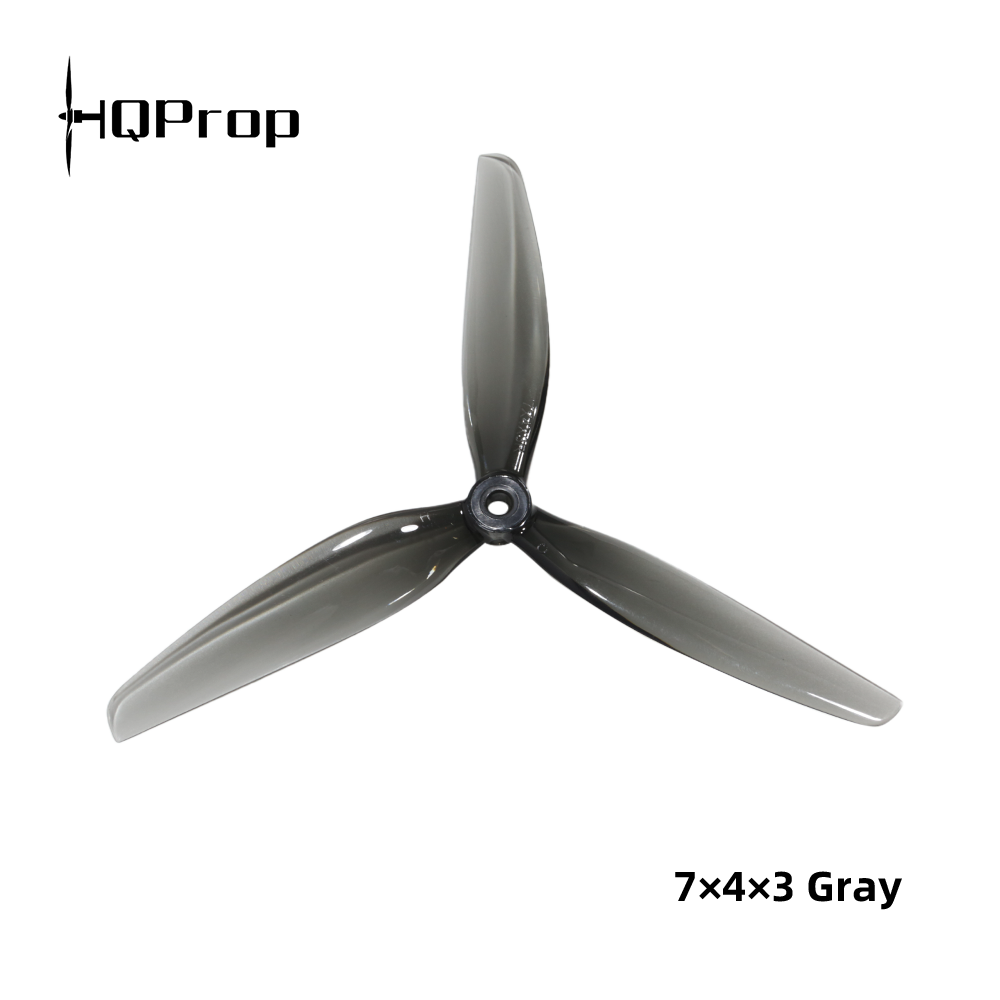
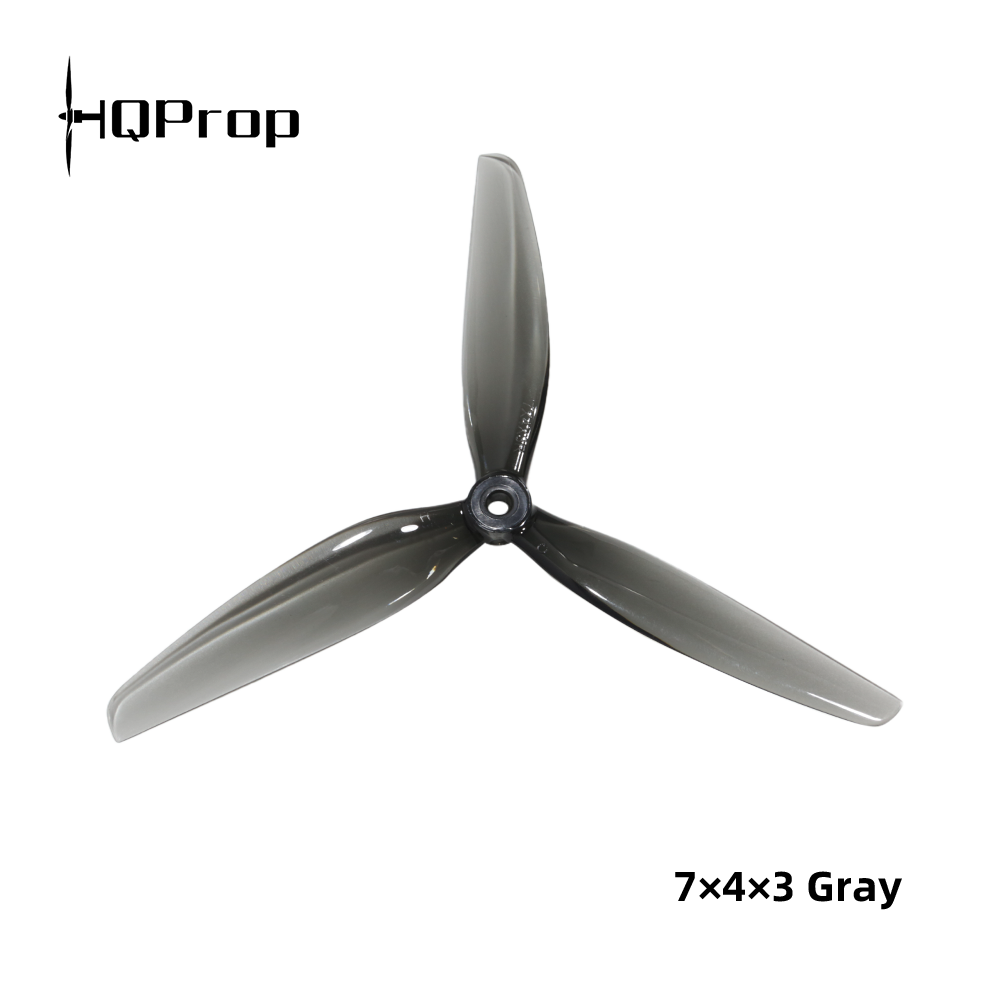
3-Blade (Tri-blade):
- Pros: The most common and versatile choice. Offers a great balance of thrust, efficiency, and control. Smooth flight characteristics, good responsiveness.
- Cons: Slightly less efficient than bi-blades, a bit more noisy.
- Best for: Freestyle, racing, general-purpose flying. This is the go-to for most 5-inch setups.
- Example: Ethix S3 (5x3x3), HQProp R38 (5.1x3.8x3), DALprop Cyclone T5040C.
-
4-Blade (Quad-blade) / 5-Blade (Penta-blade):
- Pros: Maximum thrust and "grip" in the air, very responsive, feels extremely locked-in. Excellent for aggressive maneuvering and tight turns.
- Cons: Least efficient, highest current draw, significantly reduces flight time, more noisy, heavier.
- Best for: Extreme racing, very aggressive freestyle where raw power and responsiveness are paramount.
- Example: Gemfan 51466 (quad-blade).
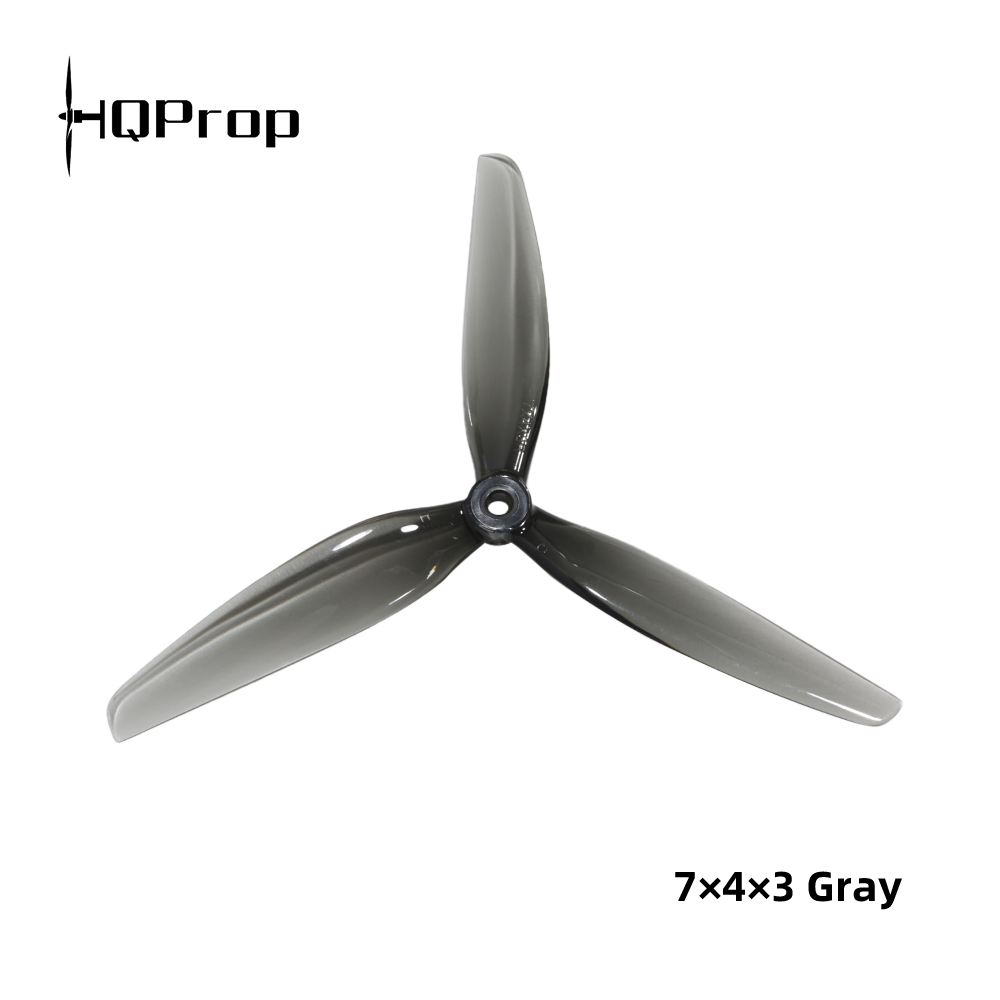
FPV Propeller Efficiency Guide: Generally, fewer blades and lower pitch lead to higher efficiency (longer flight times). More blades and higher pitch lead to higher thrust and responsiveness (shorter flight times).
Material Science: Durability, Weight, and Performance
The material your propellers are made from plays a crucial role in their durability, weight, and how they perform under stress.
Polycarbonate (PC): The Standard for Durability and Value
Polycarbonate is the most common material for FPV propellers.
- Characteristics: It's flexible, durable, and relatively inexpensive. This flexibility helps them absorb impacts during crashes, reducing the likelihood of breaking motors or frames, and often allowing the prop to bend back into shape (though always inspect for damage!).
- Performance: Offers a good balance of stiffness for thrust generation and pliability for impact resistance.
- Examples: Most propellers from Gemfan (e.g., Gemfan Hurricane series), HQProp (e.g., HQProp R38), Ethix (e.g., Ethix S3/S4) are made from various blends of polycarbonate.
Glass Fiber Reinforced Nylon: Balancing Stiffness and Toughness
Some propellers, particularly older designs or those aimed at specific applications, use glass fiber reinforced nylon.
- Characteristics: Stiffer and often slightly heavier than pure polycarbonate. This added stiffness can lead to a more direct and responsive feel, as less energy is lost to prop flex. However, they can be more brittle and prone to snapping cleanly in a crash rather than bending.
- Performance: Can offer a very 'crisp' flight feel, but their brittleness makes them less forgiving for freestyle pilots who crash frequently.
- FPV Propeller Materials Comparison: While less common in modern 5-inch freestyle/racing props, this material is still found in some cinematic or older designs where extreme stiffness was prioritized over crash resilience.
Advanced Composites: Pushing the Boundaries of Stiffness and Weight
High-end or specialized propellers might incorporate advanced composites, often proprietary blends of polycarbonate with other polymers or additives.
- Characteristics: These materials aim to combine the best of both worlds: extreme stiffness for maximum thrust and responsiveness, with improved durability over pure nylon. They are often lighter for their stiffness.
- Performance: Can provide a noticeable performance edge for competitive racers seeking every last bit of thrust and precision. However, they typically come at a higher price point.
- Examples: Brands like Lumenier or T-Motor sometimes offer propellers with unique composite blends designed for specific performance profiles.
FPV Prop Durability Test: Always carry spare propellers, regardless of material. Even the toughest props will eventually break or get bent, leading to vibrations and reduced performance.
Propellers for Every Flight Style: Racing, Freestyle, Cinematic, and Long-Range
Your chosen flight style is the ultimate determinant for your propeller selection. The "Propeller Performance Matrix" truly shines here.
Racing Dominance: Maximizing Speed and Responsiveness
For competitive FPV racing, the goal is raw speed, quick acceleration, and immediate response.
- Characteristics: High pitch (e.g., 4.0-inch to 4.8-inch), usually 3-blade or 4-blade. These provide maximum thrust and a "locked-in" feel for precise control through gates.
- Material: Stiffer polycarbonate blends are preferred to minimize flex under high RPMs.
- Examples:
- HQProp R38 (5.1x3.8x3): A very popular racing prop, known for its balance of speed and control.
- DALprop Cyclone T5045C/T5046C: Aggressive pitch, excellent for top speed.
- Gemfan Flash 51477: Another high-performance option for speed demons.
Freestyle Flow: Balancing Control, Durability, and Power
Freestyle pilots need a versatile propeller that offers good thrust for power loops, smooth control for intricate maneuvers, and sufficient durability to withstand occasional crashes.
- Characteristics: Medium to high pitch (e.g., 3.5-inch to 4.3-inch), typically 3-blade. This offers a good blend of thrust, responsiveness, and efficiency.
- Material: Durable polycarbonate is essential. Flexibility helps absorb impacts.
- Examples:
- Ethix S3 (5x3x3): A popular choice for its smooth feel and good low-end control.
- Ethix S4 (5x4x3): For pilots wanting more punch and speed than the S3, sacrificing a bit of efficiency.
- Gemfan Hurricane 51433/51466: Excellent all-round freestyle props, known for durability and good thrust.
- HQProp R42 (5.1x4.2x3): Another solid contender offering a good balance.
Cinematic Smoothness: Achieving Stable and Efficient Flight
Cinematic FPV focuses on smooth, stable flight for capturing high-quality video, often with a heavier camera payload.
- Characteristics: Lower pitch (e.g., 2.5-inch to 3.5-inch), often 3-blade, but 2-blade can be used for larger, slower drones. Emphasis on efficiency and reduced vibration. For cinewhoops, shorter props with protective ducts are common.
- Material: Durable but often slightly softer polycarbonate to minimize vibrations.
- Examples:
- Gemfan D63/D76 Ducted Props: Specifically designed for 2.5-inch to 3-inch cinewhoops.
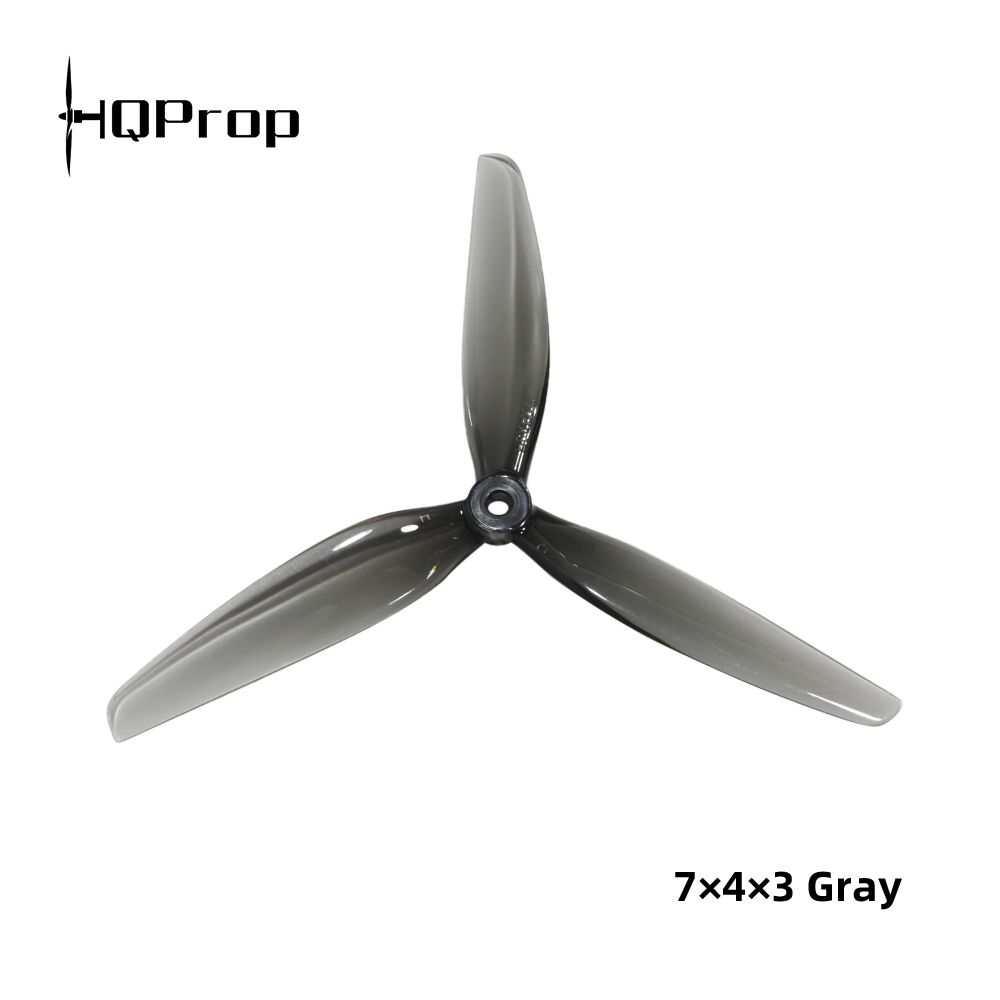
- HQProp 7x4x2: For larger, 7-inch cinematic rigs, prioritizing efficiency and smooth flight.
- Gemfan Flash 5140: A lower-pitch 5-inch prop that can offer smoother flight for cinematic applications.
Long-Range Efficiency: Optimizing for Flight Time and Endurance
Long-range FPV prioritizes maximum flight time and efficiency to cover vast distances.
- Characteristics: Larger diameter (6-inch, 7-inch, or even 8-inch), low pitch (e.g., 2.5-inch to 4.0-inch), and typically 2-blade or 3-blade. The goal is to generate sufficient thrust at the lowest possible RPMs.
- Material: Durable polycarbonate, often with a focus on lightweight construction.
- Examples:
- Gemfan Flash 7040-2: A very popular 7-inch bi-blade prop for long-range, known for its efficiency.
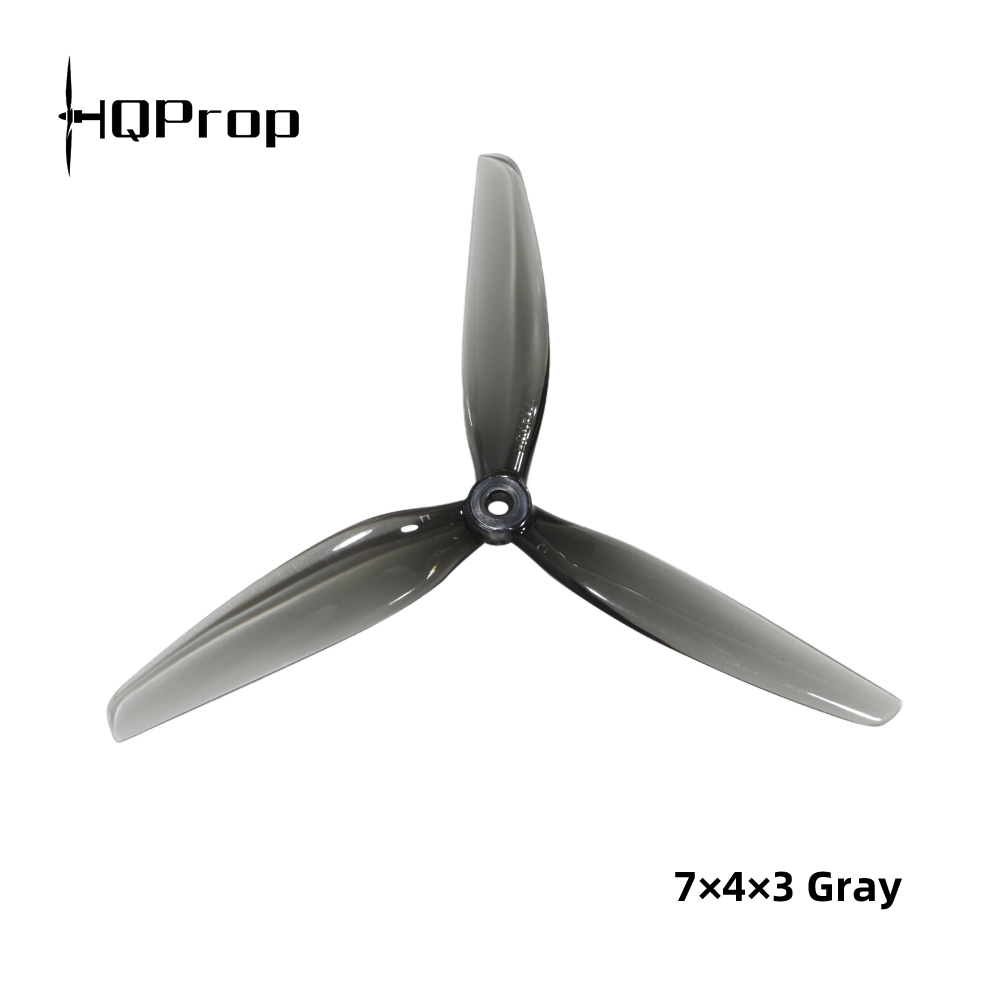
- HQProp 7x3.5x3: A 3-blade option for those wanting a bit more grip and control on a 7-inch LR drone, with a slight efficiency trade-off.
- DALprop Foldable F7: Foldable props can be great for portability and crash resistance on LR builds.
The Impact of Propellers on Overall FPV Performance
Thrust vs. Efficiency: Finding Your Sweet Spot
This is the core trade-off.
- High Thrust: Achieved with higher pitch and/or more blades. Results in faster acceleration, higher top speed, and a more "punchy" feel. Demands more power, reducing flight time.
- High Efficiency: Achieved with lower pitch and fewer blades. Results in longer flight times, less current draw, and cooler motors. Sacrifices some raw power and top speed.
Finding your sweet spot depends entirely on your flight style and battery capacity.
Battery Life and Flight Time: The Propeller Connection
Propellers are directly responsible for how much current your motors draw. More aggressive props (high pitch, more blades) will draw more amps, leading to significantly shorter flight times. Conversely, efficient props will extend your battery life. This is a critical factor for long-range pilots and anyone looking to maximize airtime.
Noise and Vibration: Mitigating Unwanted Side Effects
- Noise: More blades and higher pitch generally mean a louder drone. This is due to more air being disturbed and higher RPMs. 2-blade props are typically the quietest.
- Vibration: Damaged, bent, or unbalanced propellers are a primary cause of vibrations. These vibrations can degrade video quality (jello effect), confuse your flight controller's gyros, and even lead to component fatigue. Always replace damaged props immediately.
Propeller Durability: Surviving Crashes and Extending Lifespan
The durability of your propellers is paramount, especially for freestyle pilots.
- Good Durability: Polycarbonate props are designed to flex and absorb impact. This means fewer broken props, but also less chance of transferring impact force to your motors or frame.
- Poor Durability: Brittle props will snap easily, requiring frequent replacements. While they might feel stiffer, the cost of constant replacement and potential motor damage can quickly outweigh any performance benefit.
How Propellers Affect FPV Flight: Every choice you make in diameter, pitch, blade count, and material has a tangible effect on how your drone feels, performs, and lasts.
Ultimate FPV Propeller Buyer's Guide: Making Your Choice
Assessing Your Needs: Skill Level, Drone Setup, and Flight Goals
Before buying, ask yourself:
- Skill Level: Beginners might prefer more durable, slightly less aggressive props for easier control and crash forgiveness. Experienced pilots can fine-tune for specific performance.
- Drone Setup: What's your frame size? What are your motor KV ratings? What battery voltage are you running? These dictate compatible propeller sizes and the maximum load your power system can handle.
- Flight Goals: Are you racing? Practicing freestyle? Filming? Flying long-range? Your primary goal will steer you towards specific propeller characteristics.
Top FPV Propeller Brands and Recommended Models
The FPV market is rich with excellent propeller manufacturers. Here are some of the most respected:
- Gemfan: Known for a wide range of durable and high-performing props.
- Recommended: Gemfan Hurricane 51433/51466 (Freestyle/Racing), Gemfan Flash 7040-2 (Long-Range), Gemfan D63/D76 (Cinewhoop).
- HQProp: Highly regarded for quality control and consistent performance.
- Recommended: HQProp R38 (5.1x3.8x3) (Racing/Freestyle), HQProp R42 (5.1x4.2x3) (Freestyle/Speed), HQProp 7x3.5x3 (Long-Range).
- Ethix (by Steele): Popular for freestyle, often praised for their smooth feel and durability.
- Recommended: Ethix S3 (5x3x3) (Smooth Freestyle), Ethix S4 (5x4x3) (Aggressive Freestyle/Speed).
- DALprop: Known for very durable and robust propellers, often with a stiffer feel.
- Recommended: DALprop Cyclone T5040C/T5045C/T5046C (Racing/Freestyle).
- Lumenier: Offers premium props, often with unique designs and material blends.
- Recommended: Lumenier 5x4x3 Gatebreaker (Racing/Freestyle).
- EMAX: Good value, especially for smaller drones.
- Recommended: EMAX Avan Flow/Scimitar series.
FPV Drone Propeller Recommendations: It's common for pilots to have several sets from different brands to swap depending on conditions or desired flight feel.
Testing and Tuning: Fine-Tuning Your Propeller Performance
The best way to find your perfect propeller is to test them yourself.
- Buy a variety: Get a few different sets from recommended brands with varying pitches and blade counts within your drone's compatible diameter.
- Fly and compare: Pay attention to how each set feels.
- Thrust: How quickly does it accelerate? How much punch does it have?
- Responsiveness: How quickly does the drone react to stick inputs?
- Efficiency: How long is your flight time with a given battery?
- Smoothness/Vibration: Is the flight smooth? Is there any "jello" in your video?
- Monitor temperatures: Check motor and ESC temperatures after aggressive flights. Overheating indicates too much load.
- Listen: A good propeller will sound "crisp" and consistent. A bad one might sound whiny or uneven.
Practical Tip: Keep a log of your flight experiences with different props. This will help you remember what works best for you.
Frequently Asked Questions About FPV Propellers
How often should I replace my FPV propellers?
You should replace propellers immediately if they are:
- Visibly bent, chipped, or cracked.
- Showing signs of stress whitening at the hub or blade root.
- Causing noticeable vibrations or "jello" in your FPV feed.
- Making your drone feel sluggish or unresponsive. Even minor damage can significantly degrade performance and increase vibrations. Always carry spares!
Can I mix different propeller brands or models on my drone?
No, absolutely not. All four (or more) propellers on your drone must be identical in brand, model, diameter, pitch, and blade count. Using mixed propellers will lead to unbalanced thrust, uncontrollable flight characteristics, and potential crashes. The only exception is if you are intentionally flying a specific type of experimental setup (which is not recommended for general flying).
What's the difference between bullnose and standard propellers?
- Standard (Pointed Tip): The blade tapers to a point at the end. These are generally more efficient.
- Bullnose (Blunt Tip): The blade ends are squared off or blunted. This effectively increases the blade area, providing more thrust and "grip" at the cost of slightly reduced efficiency and increased current draw. Bullnose props were popular in the past but have largely been superseded by modern high-performance pointed-tip designs that offer similar thrust with better efficiency.
Do propeller colors affect performance?
No, propeller color has no impact on performance. It's purely an aesthetic choice. However, brighter colors can sometimes make your drone easier to spot in the air or after a crash.
How do I properly install and balance FPV propellers?
- Orientation: Ensure each propeller is installed on the correct motor and spinning in the correct direction (clockwise or counter-clockwise). Most props are marked with an 'R' for reverse/clockwise.
- Tightening: Use the provided prop nuts (often self-locking nuts) and tighten them securely but do not overtighten. Overtightening can crack the propeller hub. A good rule of thumb is snug plus a quarter turn.
- Balancing (Less common for FPV miniquads): For FPV racing/freestyle props, balancing is usually not necessary due to modern manufacturing tolerances and high RPMs. However, for cinematic or larger drones, a propeller balancer can be used to ensure perfectly smooth flight and eliminate vibrations. If you notice persistent vibrations, try swapping to a new set of props first.
Conclusion: Propel Your FPV Experience to New Heights
Recap: The Right Propellers for the Right Flight
We've explored the intricate world of FPV propellers, dissecting how diameter, pitch, blade count, and material profoundly impact your drone's performance. From the raw speed of high-pitch racing props to the quiet efficiency of bi-blade long-range cruisers, the choice is yours, guided by your specific flight style and desired outcomes. Remember, there's no single "best" propeller; only the best propeller for your needs.
Call to Action: Experiment, Fly, and Discover Your Perfect Propeller Setup
The journey to finding your ideal propeller setup is an exciting one. Don't be afraid to experiment! Start with recommendations for your flight style, but then branch out. Try different brands, pitches, and blade counts. Pay attention to how your drone feels, how long it flies, and how it handles in various conditions. Each propeller swap is an opportunity to fine-tune your FPV experience and truly connect with your machine. So grab some spares, get out there, and discover the propellers that will propel your FPV journey to new, exhilarating heights!
Copyright-safe media generated locally by FPVLovers
Catalog/source image: HQProp
Catalog/source image: Ethix
Catalog/source image: Gemfan
HQProp
Ethix
Gemfan