Best FPV Radios for ELRS Pilots: Buying Guide by Budget
A buyer guide for ELRS radios that helps pilots avoid buying twice while staying honest about product-fit criteria.
Best FPV Radios for ELRS Pilots: Buying Guide by Budget
Welcome to fpvlovers.com.tr, your ultimate resource for everything FPV!
The Ultimate Guide to ELRS FPV Radios: Beyond the Specs
The world of FPV (First Person View) drones is constantly evolving, and at the heart of every pilot's control setup lies the radio transmitter. For years, pilots sought the perfect blend of range, latency, and reliability. Enter ExpressLRS (ELRS) – an open-source, high-performance radio link protocol that has revolutionized FPV control. Offering unparalleled range, incredibly low latency, and robust link quality, ELRS has quickly become the gold standard for pilots across all disciplines.
But with a growing array of ELRS-compatible radios on the market, choosing the right one can feel daunting. From compact gamepad styles to full-sized box transmitters, each offers a unique set of features, ergonomics, and performance characteristics. This comprehensive guide goes beyond the specifications, offering a hands-on comparison of the best ELRS FPV radios available today. We'll delve into ergonomics, firmware experience, real-world performance, and help you find the perfect controller to elevate your FPV journey, whether you're a seasoned long-range explorer or a freestyle phenom.
Understanding ExpressLRS: The Game Changer in FPV Control
ExpressLRS isn't just another radio protocol; it's a community-driven revolution that has fundamentally changed what pilots expect from their control link.
What is ExpressLRS and Why It Matters?
ExpressLRS, often simply called ELRS, is an open-source radio control link project based on the Semtech SX127x/SX128x LoRa hardware for RF. Developed by a passionate community, it leverages the CRSF protocol, but optimizes it for extreme performance. Why does it matter so much?
First, unbelievably low latency. ELRS boasts packet rates that can go as high as 500Hz (2ms end-to-end latency) and even 1000Hz (1ms) on some custom setups, making your drone feel like an extension of your thoughts. This is a game-changer for precise maneuvers in racing and freestyle. Second, incredible range. Even at low power outputs (e.g., 100mW), ELRS can achieve several kilometers of reliable range, and with higher power modules, tens of kilometers are achievable. Third, robust link quality. The LoRa modulation provides excellent penetration and resistance to interference, giving you confidence in challenging environments. Finally, affordability. Being open-source, ELRS hardware is generally much cheaper than proprietary alternatives, making high-performance control accessible to everyone.
ELRS vs. Other Protocols: A Quick Comparison (Crossfire, Tracer)
Before ELRS, the FPV landscape was largely dominated by a few key players. Let's see how ELRS stacks up:
- TBS Crossfire: For years, Crossfire was the king of long-range and reliable control. Operating on 900MHz, it offered excellent range and decent latency. However, ELRS, particularly its 900MHz version, often surpasses Crossfire in raw range and can achieve lower latency with higher refresh rates. Crossfire remains a solid, mature, and easy-to-set-up system, but ELRS typically offers better performance for less cost.
- TBS Tracer: Designed for high-speed racing and freestyle, Tracer operates on 2.4GHz and focuses on ultra-low latency. While Tracer delivers on its promise, ELRS 2.4GHz can achieve comparable or even lower latencies with similar or better range, again at a significantly lower price point due to its open-source nature.
In essence, ELRS offers comparable or superior performance to these established protocols across the board, often at a fraction of the price, with the added benefit of rapid community-driven development.
Internal vs. External ELRS Modules: What's the Difference?
When choosing an ELRS radio, you'll encounter two main configurations for the ELRS transmitter module:
- Internal ELRS Modules: These are built directly into the radio's chassis.
- Pros: Cleaner setup, no external module dangling, often more integrated power management, and a sleeker look. They're ready to fly right out of the box.
- Cons: Power output is usually limited (e.g., 250mW or 500mW, though some newer radios like the Radiomaster Boxer offer up to 1W internally). You're locked into the frequency band (2.4GHz or 900MHz) and can't easily upgrade to higher power or a different band without buying a new radio.
- External ELRS Modules: These plug into a dedicated module bay on your radio, typically a JR bay (standard size) or a Nano bay (smaller).
- Pros: Incredible flexibility. You can choose any ELRS module (2.4GHz for low latency, 900MHz for extreme range), swap it between compatible radios, and often get much higher power outputs (up to 1W, 2W, or even more with external battery modules). This allows for future upgrades without replacing your entire radio.
- Cons: Adds bulk to your radio, requires a separate purchase, and some high-power modules might require an external battery for optimal performance, adding another component to manage.
Pro Tip: If you plan on exploring both freestyle and long-range, or want the option to upgrade power in the future, a radio with an external module bay (like the Radiomaster Zorro or Boxer) is highly recommended.
Key Factors to Consider When Choosing an ELRS FPV Radio
Selecting the perfect ELRS radio involves more than just looking at the price tag. Here are the critical factors that will define your flying experience:
Ergonomics and Form Factor: Gimbals, Switches, and Hand Feel
This is arguably the most personal aspect. Radios come in two main form factors:
- Gamepad Style: Compact, resembling a video game controller (e.g., Radiomaster Zorro, TBS Tango 2). Ideal for pilots who "thumb" the sticks and prioritize portability.
- Box Style: Larger, traditional transmitter shape (e.g., Radiomaster Boxer, TX16S). Favored by "pinchers" (who hold the sticks between thumb and forefinger) and those who prefer a more substantial feel with more space for switches.
Beyond the form factor, consider:
- Gimbals: These are your direct interface with the drone. Hall effect gimbals are the standard, offering smooth, contactless operation and excellent durability. Premium radios might offer AG01 gimbals, which are CNC machined, incredibly precise, and highly adjustable for tension and throw. The feel of the gimbals directly impacts control precision.
- Switches and Buttons: How many switches do you need? Are they 2-position or 3-position? Are they easily accessible without repositioning your hands? Racers might need fewer, while freestyle pilots often utilize many for modes, arming, turtle mode, etc.
- Hand Feel: Does the radio feel balanced, comfortable, and grippy? Does it cause fatigue during long flying sessions? This is highly subjective, so if possible, try to hold a few models before buying.
Firmware and User Experience: EdgeTX, OpenTX, and Customization
The operating system of your radio is crucial for managing models, settings, and interacting with ELRS.
- EdgeTX: This is the modern successor to OpenTX, offering a more intuitive user interface, touch screen support (on compatible radios), and active development. It's generally recommended for new radios and offers a smoother, more feature-rich experience.
- OpenTX: Still widely used and very stable, OpenTX was the gold standard for years. However, its development for new features has slowed down, and its interface can feel a bit dated compared to EdgeTX.
- Customization: Both firmware options offer extensive customization. You can set up logical switches, special functions, custom curves for gimbals, and utilize Lua scripts for ELRS settings. The ease of navigation and setup within the firmware will greatly impact your overall experience.
Practical Tip: Always ensure your radio's firmware (EdgeTX/OpenTX) and your ELRS module's firmware are up-to-date and compatible. Using the ExpressLRS Configurator is the easiest way to flash ELRS firmware to both your module and receivers.
Power Output, Range, and Latency: Real-World Performance
These are the technical heart of ELRS's appeal:
- Power Output: ELRS modules can output anywhere from 10mW to 1W (or even 2W with some external modules). Higher power generally translates to greater range and better signal penetration through obstacles. However, it also consumes more battery and generates more heat. Dynamic Power is a fantastic ELRS feature that automatically adjusts power based on signal quality, saving battery and reducing interference.
- Range: As mentioned, ELRS excels here. For 2.4GHz, you can expect several kilometers of reliable range even at 250mW. For 900MHz, tens of kilometers are common.
- Latency: This is where ELRS truly shines. Packet rates (how many times per second the radio communicates with the receiver) directly affect latency.
- 500Hz/1000Hz: Ultra-low latency (2ms/1ms) for high-precision racing and aggressive freestyle.
- 250Hz: Excellent balance for most freestyle and general flying.
- 100Hz/50Hz: Still very low latency, but optimized for maximum range and stability, ideal for long-range and cinematic flights where every bit of link robustness counts.
Budget and Build Quality: Durability vs. Affordability
FPV gear can be an investment, and radios range from budget-friendly to premium:
- Budget: Entry-level radios offer excellent value but might use more plastic, have slightly less refined switches, or smaller screens.
- Mid-Range: These often hit the sweet spot, offering great features, good build quality, and internal ELRS at competitive prices.
- Premium: Expect top-tier materials (e.g., metal gimbals, robust plastics), impeccable build quality, and often unique features.
Consider the durability – FPV radios take a beating sometimes. Look for solid construction, firm buttons, and robust gimbals. A good warranty and community support are also valuable.
Top ELRS FPV Radios Reviewed: A Deep Dive
Let's break down the most popular and highly-regarded ELRS radios on the market today.
Radiomaster Zorro ELRS: The Compact Powerhouse
The Radiomaster Zorro is a game-changer for pilots who love the gamepad form factor.
- Form Factor: Compact, ergonomic gamepad style. It feels great in the hands for both thumb and hybrid flyers.
- Gimbals: Comes standard with smooth, reliable Hall effect gimbals. An upgrade option for Radiomaster AG01 mini gimbals provides unparalleled precision.
- Internal ELRS: Features an internal 2.4GHz ELRS module capable of up to 250mW output, which is more than enough for most freestyle and mid-range flying.
- Battery: Powered by two 18350 Li-ion cells, offering decent flight time for its size.
- Connectivity: Crucially, it includes a full-size JR module bay, allowing you to easily plug in an external 900MHz ELRS module for long-range or a higher-power 2.4GHz module.
- Pros: Highly portable, comfortable, bright LCD screen, excellent build quality for its price, full JR module bay.
- Cons: 18350 batteries might require more frequent charging for heavy users, smaller screen than box radios, some pilots find the switches a bit stiff.
- Best For: Freestyle, casual flying, travel, pilots who prefer a gamepad style and desire expandability.
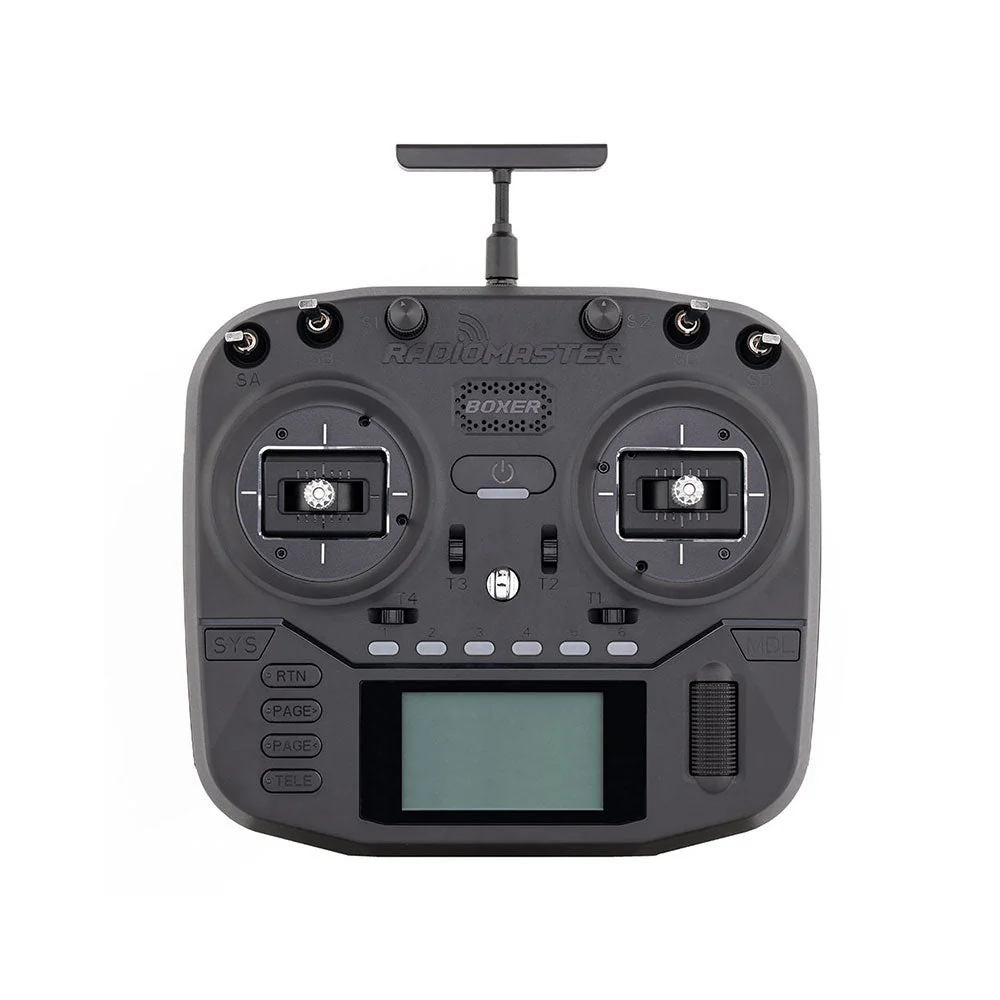
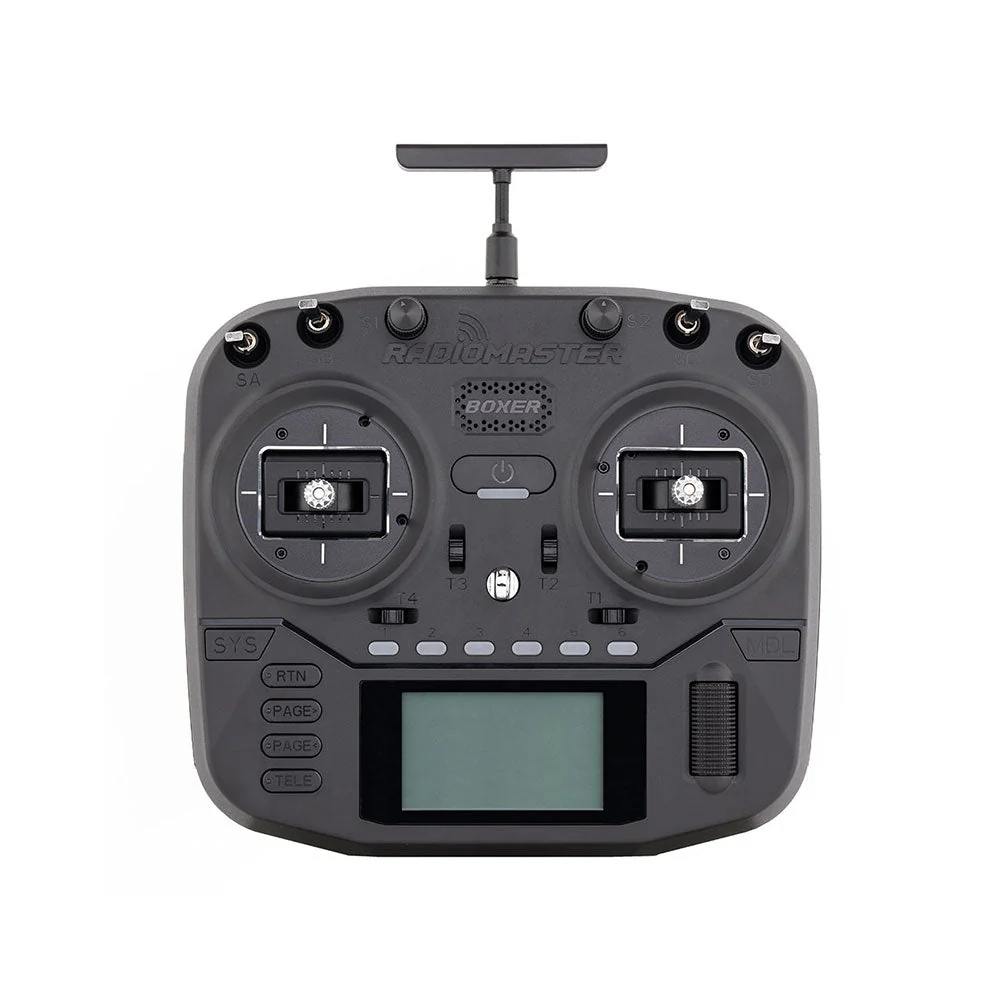
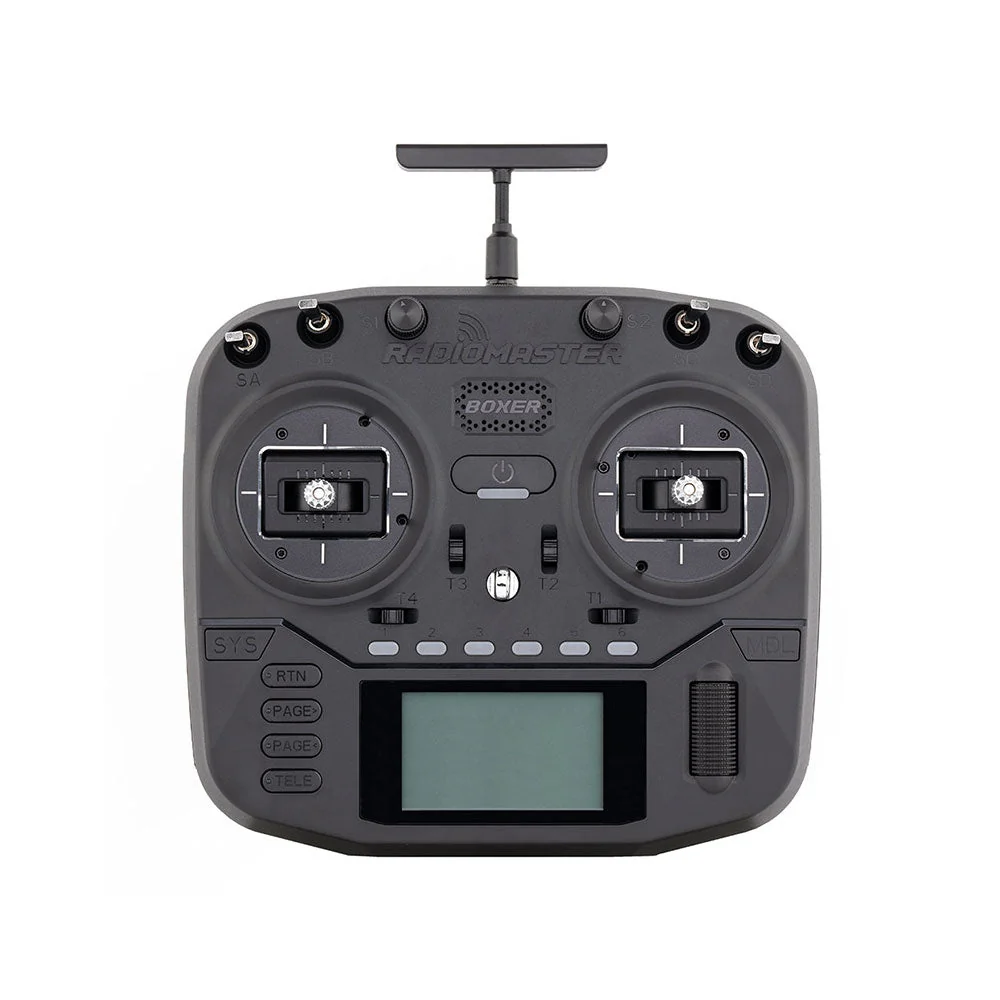
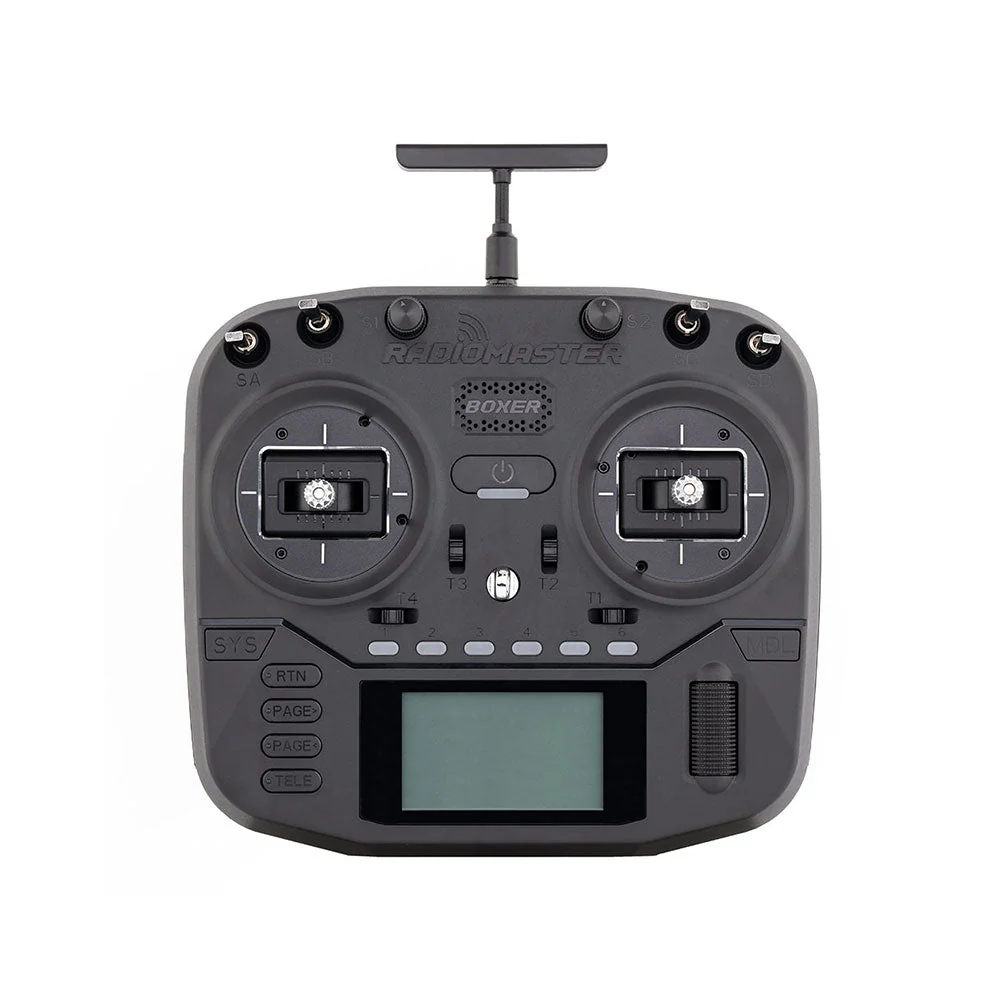
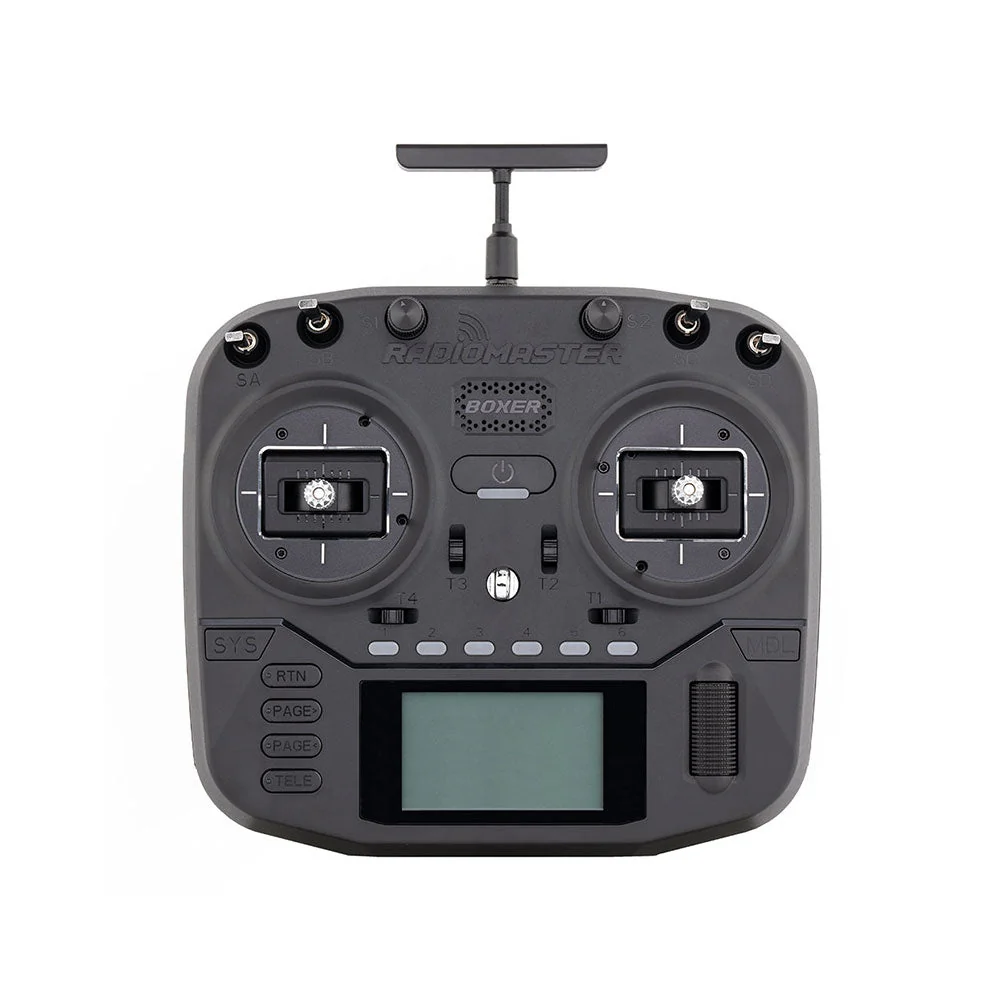
Radiomaster Boxer ELRS: The Feature-Rich Contender
The Radiomaster Boxer has quickly become a community favorite, offering a fantastic balance of features, ergonomics, and value.
- Form Factor: Compact box-style radio, but smaller and more refined than older box radios like the TX16S. It's incredibly comfortable for both pinchers and thumbers.
- Gimbals: Equipped with high-quality Hall effect gimbals as standard, with an option to upgrade to the buttery-smooth AG01 gimbals.
- Internal ELRS: A standout feature is its powerful internal 2.4GHz ELRS module, capable of up to 1W (1000mW) output. This is a significant advantage for long-range and penetration without needing an external module.
- Battery: Uses a single 18650 Li-ion cell (or a 2S LiPo pack), providing excellent battery life, especially with the 1W internal module.
- Connectivity: Includes a full-size JR module bay for maximum versatility, allowing you to add 900MHz ELRS or other protocols.
- Pros: Superb ergonomics, bright and clear LCD screen, powerful 1W internal ELRS, excellent battery life, robust build, full JR module bay.
- Cons: Larger than gamepad radios, might be slightly too bulky for pilots with very small hands.
- Best For: An all-rounder. Long-range, freestyle, racing, cinematic flying – it handles everything with ease and offers incredible value.
Jumper T-Pro ELRS: Versatility in a Small Package
The Jumper T-Pro offers a budget-friendly entry into the ELRS gamepad radio market, often seen as an alternative to the Zorro.
- Form Factor: Compact gamepad style, very similar in size and feel to the Radiomaster Zorro.
- Gimbals: Features Hall effect gimbals, which provide a decent control feel for its price point.
- Internal ELRS: Comes with an internal 2.4GHz ELRS module, typically rated up to 250mW.
- Battery: Powered by two 18650 Li-ion cells, offering good battery life.
- Connectivity: Includes a Nano module bay, which can accommodate smaller external ELRS modules (like the Happymodel ES24TX Pro or BetaFPV Nano TX) if you need higher power or 900MHz.
- Pros: Very portable, budget-friendly, good battery life for its size, decent build quality.
- Cons: Screen can be smaller and less bright than the Zorro, switches might feel less premium, the Nano module bay offers fewer external module options than a full JR bay.
- Best For: Beginners, budget-conscious pilots, tiny whoop and micro drone enthusiasts, or as a secondary travel radio.
TBS Tango 2 Pro ELRS: Premium Performance, Compact Design
The TBS Tango 2 was a pioneer in the compact FPV radio space, now available with native ELRS.
- Form Factor: Ultra-compact, robust gamepad style. Known for its exceptional build quality and premium feel.
- Gimbals: Features custom-designed Hall effect gimbals (the V3 gimbals are particularly good), offering precise and smooth control.
- Internal ELRS: The ELRS version of the Tango 2 includes an internal 2.4GHz ELRS module, typically with up to 250mW output.
- Battery: Houses an internal 5000mAh 1S LiPo battery, offering long flight times.
- Connectivity: Features a Nano module bay, suitable for smaller external ELRS modules if you want to expand beyond 2.4GHz or need higher power.
- Pros: Legendary TBS build quality, extremely durable, super compact and portable, excellent gimbals, comfortable ergonomics.
- Cons: Higher price point, limited number of switches compared to other radios, internal battery is not easily swappable (though it offers excellent duration), no full-size JR module bay.
- Best For: Pilots prioritizing premium feel, ultimate portability, robust build quality, and those who don't need a huge number of switches. Ideal for freestyle and travel.
Buyer's Guide: Matching Your ELRS Radio to Your Flying Style and Budget
Choosing the right ELRS radio is about aligning its features with your specific needs.
For the Beginner and Budget-Conscious Pilot
- Recommendation: Jumper T-Pro ELRS or the standard Radiomaster Zorro ELRS.
- Why: These radios offer an excellent entry point into ELRS without breaking the bank. They are relatively easy to set up, durable enough for learning, and provide more than enough range and performance for initial flights and basic freestyle. The T-Pro is slightly more budget-friendly, while the Zorro offers a step up in screen quality and a full JR bay for future expansion.
For Freestyle and Acro Enthusiasts
- Recommendation: Radiomaster Zorro ELRS (especially with AG01 gimbals) or Radiomaster Boxer ELRS.
- Why: Freestyle demands precise, responsive control. The Zorro's compact form factor and optional AG01 gimbals make it incredibly agile. The Boxer, with its comfortable box style and premium AG01 gimbal option, offers a larger feel with equally precise control and accessible switches for complex maneuvers. Low latency (250Hz/500Hz packet rates) is key here.
For Long-Range and Cinematic Explorers
- Recommendation: Radiomaster Boxer ELRS (especially with its 1W internal module or an external 900MHz module) or Radiomaster Zorro ELRS (with an external 900MHz module).
- Why: Long-range requires maximum power output, robust link quality, and excellent battery life. The Boxer's 1W internal ELRS is a huge advantage, and both the Boxer and Zorro can accommodate powerful external 900MHz ELRS modules. Comfortable ergonomics are crucial for long, uninterrupted flights. Prioritize 100Hz or 50Hz packet rates for maximum link reliability.
For Competitive Racers and Advanced Pilots
- Recommendation: Radiomaster Boxer ELRS (with AG01 gimbals) or TBS Tango 2 Pro ELRS.
- Why: Racers need the absolute lowest latency and the most precise gimbals. The Boxer with AG01s provides incredible accuracy and a full suite of features. The Tango 2 Pro offers a premium, ultra-compact experience with excellent gimbals and legendary TBS reliability, perfect for fast-paced action where every millisecond counts. Target 500Hz or even 1000Hz packet rates.
Setting Up Your New ELRS Radio: First Steps
Congratulations on your new ELRS radio! Here's how to get started on the right foot.
Initial Setup and Firmware Flashing (EdgeTX/OpenTX)
Most modern ELRS radios come pre-installed with EdgeTX, the recommended firmware.
- Download EdgeTX Companion: This software helps you manage your radio's firmware and settings.
- Backup Your Radio (Optional but Recommended): Before any updates, connect your radio to your computer and back up its existing settings and models.
- Flash Radio Firmware: Use EdgeTX Companion to download and flash the latest stable EdgeTX firmware for your specific radio model. Follow the on-screen instructions, usually involving putting the radio into bootloader mode.
- Flash ELRS Firmware: Use the ExpressLRS Configurator application. Select your radio's internal ELRS module (or your external module), choose the correct target, desired packet rate, and crucial binding phrase. Flash the firmware via Wi-Fi or USB. The binding phrase is paramount for ELRS security and convenience – make it unique and remember it!
Binding Your Receiver and Basic Model Setup
- Create a New Model: On your radio, navigate to the Model Select screen and create a new model.
- Internal RF Setup: Go to the Model Setup page, scroll down to "Internal RF," and set "Mode" to "CRSF" (for ELRS). Turn on the internal module.
- ELRS Lua Script: Access the ELRS Lua script from your radio's Tools menu. Here, you'll manage your ELRS settings.
- Bind Your Receiver: Power up your drone's ELRS receiver. If it doesn't automatically bind (which it will if you've set the same binding phrase on both TX and RX), you can put it into binding mode (usually by cycling power three times). Then, from the ELRS Lua script on your radio, select "Bind."
- Basic Channel Setup: In your radio's Mixer menu, ensure your channels (Aileron, Elevator, Throttle, Rudder) are correctly assigned. Assign switches for essential functions like Arm, Angle/Acro mode, and Turtle mode.
Essential Settings and Customizations for Optimal Performance
- Packet Rate: Adjust this based on your flying style. 250Hz/500Hz for freestyle/racing, 100Hz/50Hz for long-range. You can change this in the ELRS Lua script.
- Telemetry Ratio: This determines how often telemetry data is sent back to your radio. 1:32 or 1:64 is good for most, 1:2 for very fast updates (e.g., racing).
- Dynamic Power: Enable this! It automatically adjusts your ELRS module's power output based on signal quality, optimizing range, reducing heat, and saving battery.
- Failsafe: This is CRITICAL. In Betaflight or your flight controller firmware, ensure your failsafe is set to "No Pulses" or "Cut" to immediately disarm your drone and drop it safely in case of signal loss. Test it on the bench!
Frequently Asked Questions About ELRS FPV Radios
Is ELRS truly better than Crossfire or Tracer for FPV?
For most pilots, yes. ELRS generally offers superior or comparable performance (latency, refresh rates, range) at a significantly lower cost. Its open-source nature means faster innovation and broader community support. Crossfire still holds an edge for some in terms of out-of-the-box simplicity, but ELRS is rapidly closing any gaps.
Can I use an external ELRS module with any FPV radio?
You can use an external ELRS module with any FPV radio that has a compatible module bay. Most radios have a standard JR module bay, while smaller radios like the TBS Tango 2 or Jumper T-Pro might have a Nano module bay. Ensure the module's form factor matches your radio's bay.
What's the difference between 2.4GHz and 900MHz ELRS?
- 2.4GHz ELRS: Offers lower latency and higher available packet rates (up to 500Hz/1000Hz). It's ideal for close-to-mid-range flying, freestyle, and racing, providing excellent range in most environments (several kilometers).
- 900MHz ELRS: Provides superior range and penetration, making it ideal for extreme long-range flights (tens of kilometers) and flying through obstacles. It has slightly higher latency than 2.4GHz but is still very low compared to older protocols.
How often should I update my ELRS firmware?
It's good practice to update your ELRS firmware periodically, especially when new stable releases offer significant bug fixes, performance improvements, or new features you want. However, you don't need to update every single nightly build. Always check the changelog, and ensure your transmitter and receiver firmware versions are consistent for optimal performance.
Which ELRS radio is best for tiny whoops and micro drones?
The Radiomaster Zorro ELRS and Jumper T-Pro ELRS are excellent choices for tiny whoops and micro drones. Their compact, gamepad form factor makes them comfortable to hold for extended indoor flights, and their internal 250mW ELRS modules provide more than enough power and range for these small aircraft.
Conclusion
Choosing the best ELRS FPV radio is a personal decision, deeply influenced by your flying style, budget, and ergonomic preferences. ExpressLRS has undeniably raised the bar for FPV control, offering a robust, low-latency, and long-range link that empowers pilots to push boundaries. Whether you opt for the compact versatility of the Radiomaster Zorro, the powerful features of the Boxer, the adaptable Jumper T-Pro, or the premium feel of the TBS Tango 2, you're investing in a superior flying experience.
By considering the factors outlined in this guide – from gimbals and form factor to firmware and real-world performance – you can confidently select a radio that feels like an extension of yourself. Ready to elevate your FPV experience? Choose your ideal ELRS radio today and take to the skies with unparalleled confidence and control!
RELATED GUIDES
Copyright-safe media generated locally by FPVLovers
Catalog/source image: RadioMaster
Catalog/source image: TBS
RadioMaster
TBS