FPV Flight Controller Buying Guide for Beginner Builds
A component buying guide that explains selection criteria without inventing missing technical specs.
FPV Flight Controller Buying Guide for Beginner Builds
The FPV Pilot's Personalized FC Matchmaker: Your Ultimate Flight Controller Buying Guide
The flight controller (FC) is the beating heart and intelligent brain of your FPV drone, dictating how it flies, responds to your commands, and interacts with its environment. Choosing the right one can transform your flying experience, while a mismatch can lead to endless frustration. With a dizzying array of options, from compact All-In-One (AIO) boards to powerful modular stacks, finding the perfect FC can feel like navigating a maze. But fear not, aspiring pilot! This comprehensive FPV flight controller buying guide is your personalized matchmaker, designed to help you select the ideal FC based on your drone build, skill level, and budget. Let's unlock your FPV drone's true potential together!
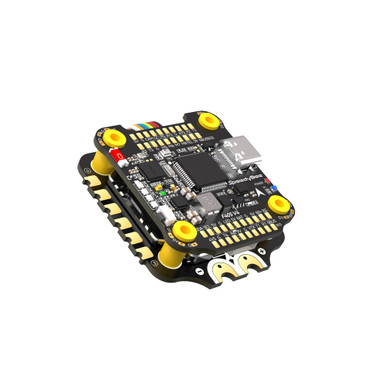
What is an FPV Flight Controller and Why Does it Matter?
Before diving into specific recommendations, it's crucial to understand what an FPV flight controller does and why it's arguably the most critical component in your drone build.
The Brain of Your Drone: Core Functionality
At its core, an FPV flight controller is a sophisticated circuit board that processes data from various sensors (like gyroscopes and accelerometers), interprets your commands from the radio receiver, and translates them into precise instructions for the Electronic Speed Controllers (ESCs) and motors. It's what keeps your drone stable, allows it to perform acrobatic maneuvers, and ensures a responsive connection between you and your aircraft. Think of it as the central nervous system, constantly making thousands of calculations per second to keep your drone airborne and obedient to your sticks. Most modern FCs run open-source firmware like Betaflight, EmuFlight, or INAV, which are highly customizable and allow pilots to fine-tune every aspect of their drone's flight characteristics.
Key Components and Their Roles
Modern FCs integrate several critical components that work in harmony:
- Microcontroller Unit (MCU): This is the central processor, the "brain" that executes the flight control algorithms. Common MCUs are F4, F7, and H7, each offering increasing processing power.
- Inertial Measurement Unit (IMU): Comprising a gyroscope and accelerometer, the IMU provides the FC with crucial orientation data – how the drone is rotating and its current acceleration. Popular gyros include the MPU6000 (older, robust), ICM20602 (fast, low noise), and the more advanced BMI270 (highly resilient to vibrations).
- On-Screen Display (OSD): This chip overlays vital flight data (battery voltage, current, flight time, RSSI, GPS coordinates) directly onto your FPV video feed, giving you real-time information while flying.
- UARTs (Universal Asynchronous Receiver/Transmitter): These are serial ports that allow the FC to communicate with various peripherals like your radio receiver, Video Transmitter (VTX), GPS module, Bluetooth modules, and more.
- Blackbox Recorder: Often an onboard flash memory chip or an SD card slot, this records detailed flight data, invaluable for tuning your drone, diagnosing issues, and analyzing crashes.
- BEC (Battery Eliminator Circuit): Regulates the main battery voltage down to lower, stable voltages (e.g., 5V, 9V) to power sensitive components like your receiver, VTX, and FPV camera.
- Current Sensor: Measures the actual current draw of your drone, providing essential real-time power consumption data for battery management and OSD display.
- Barometer: A pressure sensor that provides accurate altitude data, useful for altitude hold features in cinematic or long-range flights.
Understanding these parts is the first step in making an informed choice, as the quality and quantity of these components directly impact an FC's performance and versatility.
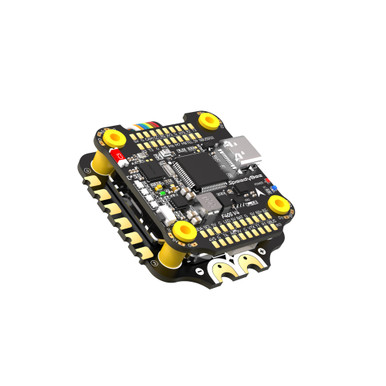
AIO vs. Separate Stack: Which Setup is Right for You?
One of the first major decisions you'll face is whether to opt for an All-In-One (AIO) flight controller or a modular FC/ESC stack. This choice heavily influences wiring complexity, repairability, and the overall size of your build.
All-In-One (AIO) Flight Controllers
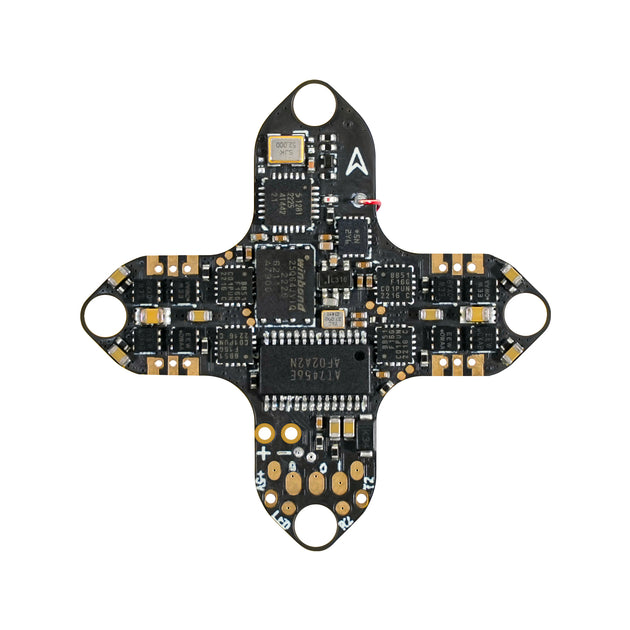
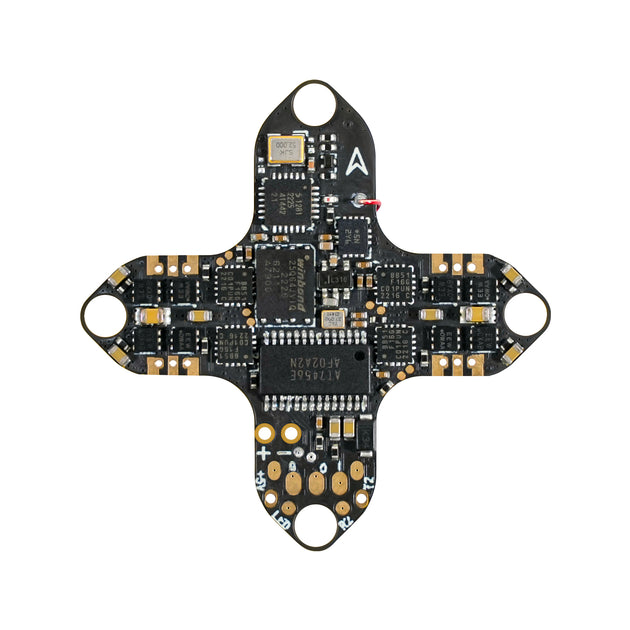
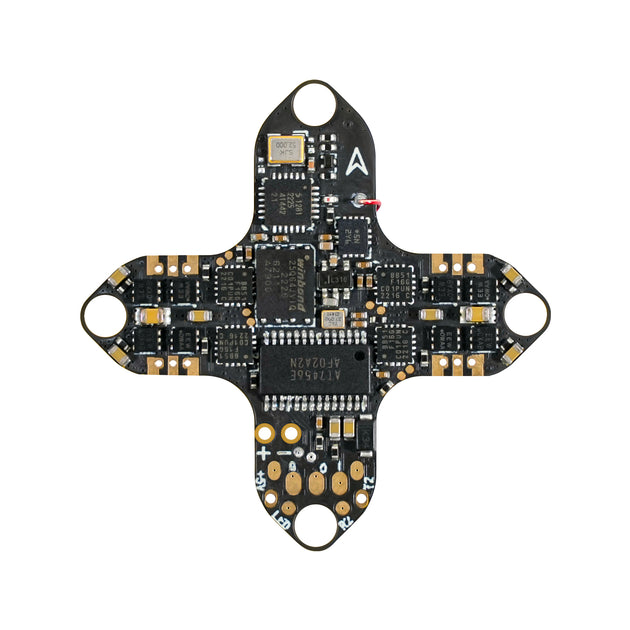
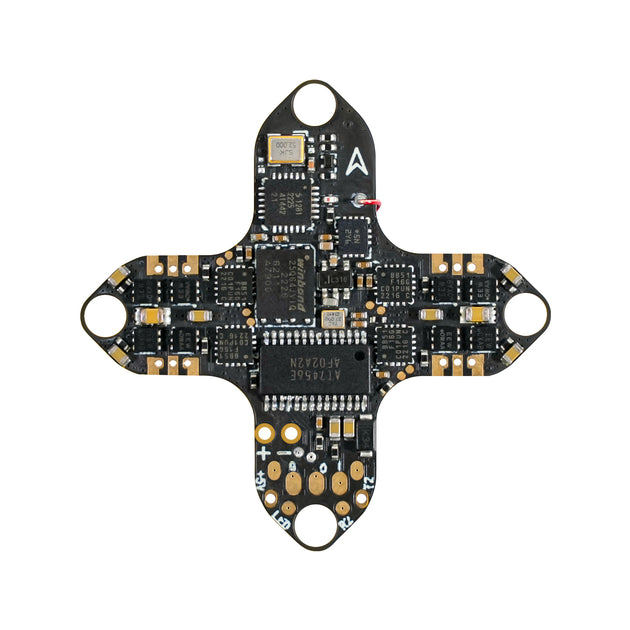
AIO flight controllers integrate the FC and ESCs (and sometimes even a VTX or receiver) onto a single board. They are renowned for their simplicity, ease of wiring, and compact footprint, making them popular for smaller builds like Tiny Whoops, CineWhoops, or space-constrained micro drones. Instead of soldering many wires between separate boards, you often just connect your motors, battery, and FPV system to the single AIO board.
- Pros: Simpler wiring, smaller size, lighter weight, often more affordable for micro builds. Great for beginners due to reduced complexity.
- Cons: If one component (e.g., an ESC) fails, you often have to replace the entire board, which can be more expensive than replacing a single component in a stack. Power handling might be limited compared to separate ESCs.
- Examples: Happymodel Crazybee series (F4/F7 AIOs for Whoops), Betafpv F4/F7 AIO boards.
The Modular FC/ESC Stack
A separate FC/ESC stack consists of individual boards for the flight controller and the ESCs, often mounted one above the other using standoffs. This modular approach offers greater flexibility for customization, easier component replacement (if an ESC blows, you only replace the ESC board), and typically higher power handling capabilities, making it the go-to choice for larger racing, freestyle, and cinematic drones (typically 3-inch and up).
- Pros: Better repairability (replace individual components), higher current ratings for ESCs, more flexibility in choosing specific FC and ESC features, often better thermal management.
- Cons: More complex wiring and soldering, larger footprint, potentially higher overall cost for premium components.
- Examples: iFlight Beast F7 V2 Stack, SpeedyBee F7 V3 Stack, Holybro Kakute H7 Mini Stack.
Pros and Cons for Different Builds
Weighing the benefits and drawbacks of AIOs (simplicity, compact size vs. repair difficulty) against stacks (flexibility, power vs. more complex wiring, larger footprint) is crucial.
- Tiny Whoops/Micro Drones (e.g., Mobula7, Meteor75): Almost exclusively use AIOs due to severe space and weight constraints.
- 3-inch to 5-inch Freestyle/Racing Drones: Typically use modular stacks. The extra space allows for better cooling and the higher power demands benefit from dedicated ESC boards. Repairability is a huge plus for freestyle pilots who crash often.
- Cinematic/Long-Range Drones: Often use modular stacks for their robust power delivery, flexibility to add multiple peripherals (GPS, compass, larger capacitors), and better noise filtering capabilities.
Your drone's size, intended use, and your comfort level with soldering will heavily influence this decision. For a beginner building their first 5-inch, a robust F7 stack might be intimidating but offers long-term benefits. For a first micro drone, an AIO is undoubtedly the easier path.
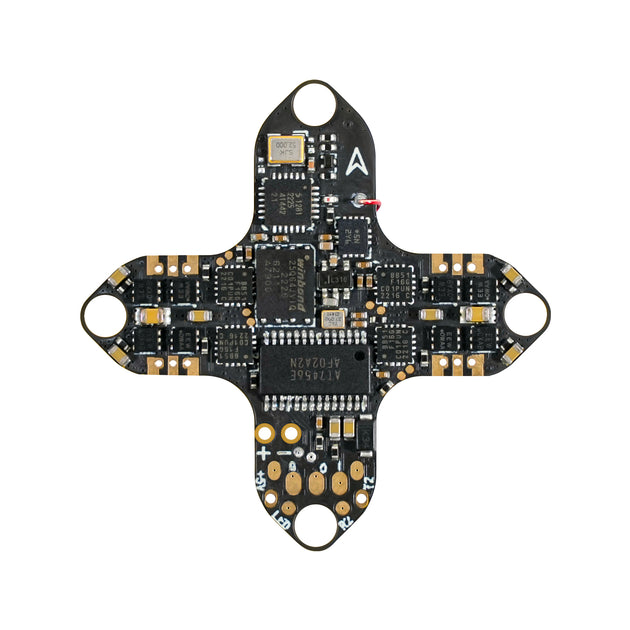
Essential Features to Look for in an FPV FC
Once you've decided between an AIO and a stack, it's time to scrutinize the specific features that will define your flight experience.
Processing Power & Gyro (MCU & IMU)
- MCU (F4, F7, H7): The MCU determines the FC's processing speed and capability, impacting loop times (how often the FC processes sensor data and sends commands to ESCs) and feature support.
- F4: Older generation, still perfectly capable for most 3-inch to 5-inch freestyle/racing builds, especially on Betaflight 4.2 and earlier. Can run into resource limitations with too many features or higher loop rates. Good for budget builds.
- F7: More powerful, offering more headroom for complex filters, faster loop times (e.g., 8K/8K), and more UARTs. Excellent all-rounder for modern freestyle, racing, and cinematic builds.
- H7: The newest and most powerful, providing the highest processing speed and future-proofing. Ideal for cutting-edge builds, those requiring advanced filtering, or a multitude of peripherals.
- IMU (Gyroscope and Accelerometer): The quality of the IMU directly affects flight smoothness and stability.
- MPU6000: An older, very robust gyro, but can be more susceptible to noise. Still found on many budget FCs.
- ICM20602/ICM42688P: Faster and generally lower noise than the MPU6000, offering excellent performance.
- BMI270: Newer, highly resilient to vibrations and noise, often leading to a smoother, more locked-in flight feel straight out of the box. Considered top-tier for performance.
Practical Tip: While an F7 or H7 is great, don't underestimate a well-tuned F4. For beginners, the difference might be negligible, but as you progress, faster MCUs and better gyros allow for more aggressive tuning and cleaner flight.
Connectivity & Peripherals (UARTs, OSD, Blackbox)
- UARTs: Each peripheral you connect (receiver, VTX, GPS, Bluetooth module, external compass) requires a dedicated UART. A minimum of 3-4 UARTs is generally recommended for a versatile build (RX, VTX, GPS). Long-range or cinematic drones might benefit from 5-6+ UARTs. Always check the number of available UARTs after accounting for pre-assigned functions.
- Integrated OSD: Absolutely vital for displaying critical flight data in your FPV goggles. Almost all modern FPV FCs include one. Ensure it's a Betaflight OSD for full customization.
- Blackbox Recorder: Invaluable for tuning, diagnosing flight issues, and analyzing crashes. Look for onboard flash memory (e.g., 8MB, 16MB) or an SD card slot for larger data storage. Larger blackbox memory is always better.
- LED Pads & Buzzer Support: Dedicated pads for programmable LEDs (like WS2812) and a buzzer output enhance visibility, provide audible alerts (lost drone, low battery), and add flair.
Power Delivery & Sensors (BEC, Current Sensor, Barometer)
- BECs: Ensure the FC has adequate BECs to power your receiver, VTX, and camera at the correct voltages (typically 5V for receiver/camera, 9V or 12V for VTX). Some FCs have multiple BECs for flexibility.
- Integrated Current Sensor: Provides real-time power consumption data, crucial for accurately monitoring battery usage and knowing when to land. Essential for any FPV drone.
- Barometer: A barometric pressure sensor enables altitude hold features, which can be beneficial for cinematic shots, maintaining a specific height during cruising, or for long-range flights where precise altitude information is helpful. For pure freestyle, it's a "nice-to-have" but not strictly necessary.
Ensuring Compatibility: The Cornerstone of Your Build
Even the most feature-rich FC is useless if it's not compatible with the rest of your drone components. This is where many beginners encounter their first hurdles.
Matching with Your ESCs and Motors
- ESC Protocol: Ensure your FC supports the ESC protocol that your ESCs use. Modern ESCs almost universally use DShot (DShot300, DShot600, DShot1200), which is a digital protocol offering superior performance and reliability over older analog protocols like OneShot or MultiShot.
- Mounting Pattern (for Stacks): For separate FC/ESC stacks, the physical mounting pattern (e.g., 20x20mm, 30.5x30.5mm, 25.5x25.5mm) must match between your FC, ESC board, and frame.
- Voltage Input Range: Verify the FC's voltage input range matches your battery (e.g., 2S-6S). Most modern FCs support up to 6S LiPo, but always double-check.
- Motor Plugs (for AIOs): For Tiny Whoop AIOs, ensure the motor plugs (e.g., JST-1.25mm, PH2.0) match your chosen brushed or brushless motors.
Receiver, VTX, and Camera Integration
- Receiver Protocol: Check for dedicated pads and protocols for your receiver. Common protocols include SBUS, PPM, iBUS, F.Port, and the increasingly popular CRSF (Crossfire) and ELRS (ExpressLRS). Ensure your FC has a UART dedicated to your receiver.
- VTX Control: Most FCs offer control over your VTX settings (channels, power levels) via SmartAudio (TBS VTXs) or Tramp Telemetry (ImmersionRC VTXs) protocols. This requires a dedicated UART.
- FPV Camera Power: Ensure your FC can supply the necessary power (typically 5V or sometimes 9V) to your FPV camera. Many FCs have dedicated camera pads for simplified wiring.
Frame Size and Mounting Patterns
The physical size of your FC (and stack, if applicable) must fit within your drone frame. Common mounting patterns are:
- 30.5x30.5mm: Standard for most 5-inch and larger freestyle/racing drones.
- 20x20mm: Popular for smaller 3-inch to 4-inch drones, or where space is limited.
- 25.5x25.5mm (Whoop Style): Primarily for Tiny Whoops and micro drones, often found on AIO boards.
Always double-check your frame's specifications before purchasing an FC to avoid frustrating fitment issues. A good rule of thumb is to buy your frame first, then select components that fit.
The FPV Pilot's Personalized FC Matchmaker: Choosing for Your Build Type
Now let's tailor our advice to specific drone build types, matching features to your flying style and goals.
Racing Drones: Speed and Precision
For racing, prioritize FCs with fast MCUs (F7 or H7) for low latency and high loop rates (e.g., 8K/8K or 32K/16K gyro/PID loop). Robust, low-noise gyros (like ICM42688P or BMI270) are crucial for precise control and filtering out prop wash. Sufficient UARTs for essential peripherals (receiver, VTX) are needed, but excess features might just add weight. Simplicity in design and lightweight construction are also key. Many racers opt for modular stacks for their performance, robust power delivery, and easier repairability after inevitable crashes.
- Recommended: Holybro Kakute H7 Mini, SpeedyBee F7 V3, T-Motor F7 HD. Look for FCs with excellent vibration dampening for the gyro.
Freestyle & Cinematic: Smoothness and Reliability
Freestyle and cinematic pilots benefit from FCs with excellent noise filtering capabilities, reliable gyros (BMI270 is a favorite), and ample UARTs for GPS, external blackbox, or other creative additions like LED strips or Caddx Vista/DJI O3 Air Unit integration. An F7 or H7 MCU is recommended for advanced filtering (like dynamic filtering in Betaflight) and running slower loop times for smoother flight. A barometer can be a nice-to-have for altitude awareness during cinematic shots. Durability, ease of tuning, and sufficient onboard flash memory for blackbox are also important.
- Recommended: iFlight Beast F7 V2 Stack, GEPRC F722-45A Stack, Aikon F7 Mini Stack. These often provide robust power delivery and good noise isolation.
Tiny Whoops & Micro Drones: Compact Power
Space is at an absolute premium here. AIO flight controllers are almost mandatory, often integrating FC, ESCs, VTX, and sometimes even an RX. Look for boards with appropriate motor plugs (e.g., PH2.0, JST-SH) and sufficient current rating for your chosen motors (usually 5A-12A per ESC). F4 MCUs are common and perfectly capable for these smaller builds, offering excellent performance without overkill. Integrated ELRS or FrSky receivers are a common and convenient feature on these boards.
- Recommended: Happymodel Crazybee F4/F7 AIO series, Betafpv F4/F7 AIO boards. Ensure the VTX power output (e.g., 25-400mW) is suitable for your flying environment.
Long Range & Exploration: Stability and Features
Long-range drones demand stability, reliability, and extensive features. An F7 or H7 FC with multiple UARTs for GPS, compass, and potentially external sensors (like a variometer) is essential. A barometer for accurate altitude hold, a reliable current sensor, and robust power delivery with plenty of capacitance are critical for safe and successful long-distance flights. Large blackbox memory is also highly recommended for analyzing long flights. The ability to run INAV firmware, which is more geared towards GPS navigation, might also be a consideration.
- Recommended: Holybro Kakute H7 V2, SpeedyBee F7 V3 Stack, Matek H743-SLIM. These boards offer a high number of UARTs and robust power architecture.
Buyer's Guide: Top Picks and Budget Considerations
Finding the "best FPV flight controller" is subjective, but here are some general recommendations based on skill level and budget.
Best FPV Flight Controllers for Beginners
For beginners, ease of use, durability, and good documentation are key. Consider robust F4 or F7 AIO boards from reputable brands. These often come pre-flashed with Betaflight and offer straightforward wiring. Look for integrated OSD and current sensors to simplify your initial setup. Starting with an AIO for a smaller build (like a 3-inch) can ease the learning curve significantly.
- Recommendations:
- Happymodel Crazybee F4 Lite AIO: Excellent for 1S Tiny Whoops, incredibly light and compact.
- Betafpv F4 1S 12A AIO Brushless FC: A solid choice for 1S-2S micro builds, offering good current handling.
- iFlight BLITZ F7 Mini Stack: For beginners venturing into 5-inch, this modular stack offers good performance and iFlight is known for quality, though wiring is more involved.
Practical Tip: Don't chase the absolute latest MCU or gyro if you're a beginner. A reliable F4 or F7 with a good MPU6000 or ICM20602 gyro will perform perfectly well and be easier to tune. Focus on getting airborne and practicing.
High-Performance Options for Experienced Pilots
Experienced pilots seeking cutting-edge performance will gravitate towards F7 or H7 FCs with advanced gyros (e.g., BMI270), multiple UARTs, and robust power delivery. Brands like Holybro, SpeedyBee, and T-Motor offer top-tier options designed for competitive racing or demanding freestyle. Consider FCs with advanced filtering capabilities, large blackbox memory, and excellent build quality.
- Recommendations:
- Holybro Kakute H7 V2 / H7 Mini: Known for their robust design, numerous UARTs, and excellent flight performance with the H7 MCU.
- SpeedyBee F7 V3 Stack / F405 V3 Stack: SpeedyBee offers feature-packed FCs with integrated Bluetooth for wireless configuration, making tuning incredibly convenient. The F7 V3 is a powerhouse.
- T-Motor F7 HD Stack: Designed for demanding pilots, often featuring high-quality components and excellent power filtering.
Budget-Friendly FCs That Don't Compromise
You don't need to break the bank for a capable FC. Many F4-based FCs from brands like JHEMCU, GEPRC, or even older generation F7 boards offer excellent value. Focus on essential features like OSD, sufficient UARTs (at least 3-4), and a reliable gyro. While they might lack some premium features (like Bluetooth or a barometer), they provide solid performance for most pilots on a tighter budget.
- Recommendations:
- JHEMCU GHF405AIO: A popular F4 AIO that offers great value for micro builds, often with an integrated VTX.
- GEPRC F405 AIO (Whoop/Micro): Another strong contender for budget-friendly AIOs in smaller form factors.
- Diatone Mamba F405 Mini Stack: A reliable F4 stack for 3-5 inch builds, offering solid performance at an attractive price point.
Practical Tip: Read reviews and watch build videos for budget FCs. While they offer good value, component quality can sometimes vary. Stick to well-known budget brands with a decent track record.
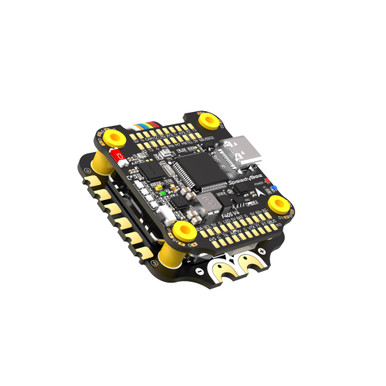
Frequently Asked Questions About FPV Flight Controllers
What is the best FPV flight controller for a beginner?
For beginners, an F4 or F7 AIO (All-In-One) flight controller is often recommended. They simplify wiring, are compact, and provide all necessary functions on a single board. Look for models from reputable brands known for good documentation and community support, such as Happymodel or Betafpv for micro drones, or a robust F4/F7 AIO for a 3-inch.
Can I use any flight controller with any ESC?
No, not necessarily. While many FCs and ESCs are compatible, you must ensure their mounting patterns match (e.g., 20x20mm, 30.5x30.5mm) if using a stack. More importantly, the FC needs to support the ESC protocol (like DShot, OneShot) that your ESCs use. Also, check the voltage input range of both components; most modern systems support 2S-6S.
What's the difference between an F4, F7, and H7 flight controller?
These refer to the generation and processing power of the microcontroller unit (MCU).
- F4s are older but still capable for many builds, especially with Betaflight 4.2 and earlier. They are budget-friendly.
- F7s offer more processing power, allowing for faster loop times, more advanced filtering, and more UARTs. They are the current sweet spot for most builds.
- H7s are the newest and most powerful, offering the highest performance and future-proofing, ideal for cutting-edge builds or those requiring many peripherals and complex calculations.
How many UARTs do I really need?
The number of UARTs depends on your peripherals. You'll typically need one for your receiver, one for your VTX (for SmartAudio/Tramp control), and potentially others for GPS, Bluetooth, external blackbox, or LED control. A minimum of 3-4 UARTs is generally recommended for a versatile build, while long-range or cinematic drones might benefit from 5-6+. Always check the FC diagram to see which UARTs are available after dedicated functions (like USB) are accounted for.
Is a barometer necessary for FPV freestyle?
For pure FPV freestyle, a barometer is not strictly necessary. It provides altitude hold capabilities, which can be useful for cinematic flying or maintaining a specific height, but most freestyle pilots prefer direct manual control over altitude. It adds a slight cost and complexity without being a core requirement for freestyle maneuvers.
Conclusion: Your Perfect FPV Flight Controller Awaits
Recap and Final Advice
Choosing the right FPV flight controller is a critical decision that impacts every aspect of your drone's performance. By understanding the core functions, weighing the pros and cons of AIO vs. stacks, identifying essential features (MCU, gyro, UARTs, OSD, blackbox), and ensuring compatibility with your other components, you're well on your way to making an informed choice. Remember to match your FC to your specific build type and skill level, and don't be afraid to start with a reliable, budget-friendly option if you're new to the hobby. The FPV community is vast and helpful, so leverage online resources, forums, and build guides if you get stuck.
Ready to Build? Take Flight!
Now that you're equipped with the knowledge to navigate the FPV flight controller landscape, it's time to put that expertise into action. Research specific models, read reviews, and confidently select the FC that will bring your FPV drone dreams to life. Happy building, and we'll see you in the skies!
RELATED GUIDES
Copyright-safe media generated locally by FPVLovers
Catalog/source image: BETAFPV
Catalog/source image: SpeedyBee
Catalog/source image: Diatone
BETAFPV
SpeedyBee
Diatone