FPV Battery Buying Guide: Cells, Capacity, and C-Rating Explained
A safety-aware battery guide that supports charger, starter kit, and build compatibility pages.
FPV Battery Buying Guide: Cells, Capacity, and C-Rating Explained
The Ultimate FPV Battery Buying Guide: Powering Your Flight with Precision
Diving into the exhilarating world of FPV drones brings with it a crucial decision: choosing the right battery. It's not just about power; it's about performance, flight time, and most importantly, safety. With a myriad of options – from varying voltages and capacities to different C-ratings and connector types – selecting the perfect LiPo can feel overwhelming. But fear not, pilot! This ultimate FPV Battery Buying Guide is your co-pilot, designed to demystify the complexities and help you power your drone with confidence.
The Core of Flight: Understanding FPV Battery Fundamentals
Before you make any purchase, it's essential to grasp the fundamental characteristics that define FPV batteries. These specifications dictate how your drone will perform and what components it can support.
LiPo vs. LiHV: What's the Difference?
At the heart of FPV power lies the Lithium Polymer (LiPo) battery. These are the workhorses of our hobby, known for their high energy density and ability to deliver significant current.
- Standard LiPo batteries have a nominal voltage of 3.7V per cell, charging to a maximum of 4.2V per cell.
- High Voltage Lithium Polymer (LiHV) batteries are a newer variant. They have a nominal voltage of 3.8V per cell and can be safely charged to 4.35V per cell.
Performance Benefits: Charging a LiHV battery to its full 4.35V per cell provides a slightly higher voltage throughout the discharge cycle compared to a standard LiPo. This translates to a marginal increase in power and potentially longer flight times (around 5-10% more energy). However, to fully utilize LiHV, you need a charger with a dedicated "LiHV" mode. If charged with a standard "LiPo" mode, it will only charge to 4.2V per cell, essentially making it perform like a regular LiPo.
Practical Tip: While LiHV offers a slight edge, standard LiPo batteries remain a popular and cost-effective choice for most pilots, especially beginners. Ensure your ESCs and motors can handle the slightly higher voltage if opting for LiHV.
Cell Count (S-Rating): Powering Your Drone's Voltage
The 'S-rating' (e.g., 3S, 4S, 6S) indicates the number of cells connected in series within the battery pack. Each 'S' represents a single LiPo cell.
- 1S: (1 x 3.7V) = 3.7V (nominal) - Common for tiny whoops and micro drones.
- 2S: (2 x 3.7V) = 7.4V (nominal) - Used for larger toothpicks and smaller micro quads.
- 3S: (3 x 3.7V) = 11.1V (nominal) - Often found on older 3-inch builds or some beginner kits.
- 4S: (4 x 3.7V) = 14.8V (nominal) - The classic standard for 5-inch freestyle and racing drones, offering a great balance of power and efficiency.
- 6S: (6 x 3.7V) = 22.2V (nominal) - Increasingly popular for 5-inch and larger drones, providing more power, higher RPMs with lower KV motors, and often smoother flight characteristics.
Impact on Performance: A higher S-rating means higher voltage, which in turn means more power to your motors. However, your motors and Electronic Speed Controllers (ESCs) must be rated to handle that voltage. Using a 6S battery on a drone designed for 4S will likely fry your electronics! Always check your motor's KV rating (e.g., 2400KV for 4S, 1700KV for 6S) and ESC voltage limits.
Capacity (mAh): How Long Can You Fly?
Milliamp-hours (mAh) measure a battery's total energy storage capacity. Simply put, a higher mAh rating means a longer flight time.
- Small capacity (e.g., 300mAh - 850mAh): Ideal for micro drones where weight is paramount, offering shorter flight times but extreme agility.
- Medium capacity (e.g., 1000mAh - 1500mAh): The sweet spot for most 5-inch freestyle and racing drones, balancing flight time with manageable weight.
- Large capacity (e.g., 1800mAh - 3000mAh+): Reserved for cinematic, long-range, or larger X-class drones where extended endurance is the primary goal, even at the cost of agility.
Balancing Act: While more mAh equals longer flight, it also means more weight. A heavier battery will make your drone less agile, consume more power to stay airborne, and potentially reduce overall flight efficiency if it's oversized for your setup. The goal is to find the optimal balance for your drone size and flying style.
C-Rating: Delivering the Punch Your Motors Need
The 'C-rating' indicates a battery's maximum continuous discharge rate relative to its capacity. It's a crucial factor for aggressive flying, as it determines how much current the battery can safely deliver to your motors without excessive voltage sag or damage.
Calculation: To find the maximum continuous current (in Amps) a battery can deliver, multiply its C-rating by its capacity in Amp-hours (mAh / 1000). Example: A 1300mAh (1.3Ah) 75C battery can deliver 1.3 Amps * 75 C = 97.5 Amps.
Why it matters: FPV drones, especially 5-inch freestyle or racing quads, can draw massive amounts of current during aggressive throttle punches. Each motor on a 5-inch quad might draw 25-35A at full throttle. For a 4-motor quad, that's 100-140A total! Your battery's C-rating needs to comfortably exceed this total current draw.
Practical Tip: Aim for a C-rating that is at least 2-3 times your drone's maximum expected current draw. For 5-inch quads, a 75C to 120C rating is common. Don't be fooled by excessively high "burst" C-ratings; focus on the continuous rating. A higher C-rating generally means lower internal resistance and less voltage sag under load, leading to a more consistent power delivery.
Matching the Battery to Your Build and Flying Style
Choosing the right battery isn't a one-size-fits-all decision. It's deeply intertwined with your drone's specific build and how you intend to fly it.
Micro Drones (Whoops & Toothpicks): Small but Mighty Power Needs
For the smallest of FPV drones, like tiny whoops (65mm-75mm) and toothpicks (2-3 inch props), weight is the ultimate enemy.
- Voltage: Typically 1S or 2S.
- Capacity: 300mAh to 550mAh for 1S whoops (e.g., GNB 1S 300mAh 60C), or 300mAh to 450mAh for 2S toothpicks (e.g., Tattu R-Line 2S 350mAh 95C).
- Connectors: BT2.0 or PH2.0 are standard for 1S, with BT2.0 offering superior current delivery. For 2S, XT30 is common.
- Focus: Lightweight, high C-rating for their size, and robust connectors.
3-inch to 5-inch Freestyle & Racing Quads: The Sweet Spot for Performance
This category represents the vast majority of FPV drones and demands a careful balance of power, weight, and flight time.
- Voltage: 4S or 6S. Many pilots now prefer 6S for its smoother power delivery and efficiency with lower KV motors (e.g., T-Motor F60Pro IV 1750KV for 6S vs. 2500KV for 4S).
- Capacity:
- Freestyle: 1300mAh to 1550mAh for 4S (e.g., CNHL Black Series 4S 1500mAh 100C) or 1100mAh to 1300mAh for 6S (e.g., Tattu R-Line V4 6S 1300mAh 120C). These offer a good balance of flight time and agility.
- Racing: Slightly lower capacity for lighter weight and maximum agility, typically 1100mAh to 1300mAh for 4S (e.g., Lumenier 4S 1300mAh 120C) or 1050mAh to 1200mAh for 6S (e.g., RaceDayQuads 6S 1100mAh 100C).
- C-Rating: High! 75C to 120C continuous is recommended to prevent voltage sag during aggressive maneuvers and throttle bursts.
- Connectors: Almost universally XT60.
Practical Tip: For 5-inch freestyle, a 6S 1300mAh 120C battery like the Tattu R-Line V4 is a fantastic all-rounder, offering excellent punch and decent flight time.
Cinematic & Long-Range Rigs: Prioritizing Endurance and Stability
These drones are built for smooth, stable footage or extended flights, making capacity and consistent power delivery paramount.
- Voltage: Often 6S or even higher (e.g., 8S, 12S for large industrial drones).
- Capacity: Significantly higher, ranging from 1800mAh up to 4000mAh or more, depending on the drone's size and mission. For a 7-inch long-range quad, a 6S 2200mAh to 3000mAh pack is common (e.g., GNB 6S 2200mAh 100C).
- C-Rating: While still important, the C-rating might be slightly lower than racing packs, as peak current demands are often less extreme. 60C-80C is often sufficient.
- Connectors: XT60 is common for medium-sized long-range, but larger rigs might use XT90 or AS150 for higher current.
Practical Tip: Consider using Li-Ion packs (e.g., Molicel P42A 21700 cells in a custom 6S2P configuration) for ultra-long-range builds, as they offer higher energy density for their weight, albeit with lower continuous discharge rates than LiPos.
Connector Types: XT30, XT60, and Beyond
The connector is your battery's interface to your drone and charger. Using the wrong type or a low-quality connector can lead to power loss, heat, and even fire.
- XT30: Rated for up to 30 Amps continuous. Common on 2S-3S micro and toothpick drones.
- XT60: Rated for up to 60 Amps continuous. The most ubiquitous connector for 4S-6S 5-inch drones. Reliable and widely supported.
- BT2.0 / PH2.0: Small, lightweight connectors for 1S micro drones. BT2.0 offers significantly lower resistance and better current delivery than PH2.0.
- EC2 / EC3 / EC5: Traxxas-style connectors, less common in FPV but found on some hobby electronics.
- XT90 / AS150: Higher current connectors for larger drones (7-inch+, cinematic, heavy lifters) or higher cell count setups (8S+).
Compatibility: Always ensure your battery's connector matches your drone's ESC pigtail and your charger's output. Adapters exist but can introduce resistance and should be used cautiously.
Beyond the Basics: Advanced Battery Considerations
Once you've got the fundamentals down, a few more advanced concepts can help you refine your battery choices and maintain your fleet.
Internal Resistance: A Key Indicator of Battery Health
Internal Resistance (IR) is a measure of how much opposition a battery's internal components present to the flow of current.
- Why it matters: Lower IR means the battery can deliver more current with less voltage sag and less heat generation.
- Monitoring IR: Most modern balance chargers can measure individual cell IR.
- What to look for:
- New batteries: Should have very low, consistent IR across all cells (e.g., below 5mΩ per cell for a 5-inch quad battery).
- As batteries age: IR will gradually increase.
- Signs of trouble: A significant difference in IR between cells within the same pack, or IR values consistently above 15-20mΩ per cell (for a 5-inch quad battery) can indicate a degrading or damaged pack. High IR leads to poor performance, excessive heat, and reduced flight time.
Practical Tip: Keep a log of your battery's IR values when new and check them periodically. This helps you track health and identify packs nearing retirement before they cause a mid-flight failure.
Weight vs. Performance: Finding Your Balance
Every gram matters in FPV. Battery weight directly impacts your drone's:
- Agility: Lighter batteries allow for quicker changes in direction and more responsive controls.
- Thrust-to-weight ratio: A lighter drone with the same thrust will feel more powerful and "floatier."
- Flight time: While higher capacity means longer flight, a disproportionately heavy battery can actually reduce efficiency and flight time by forcing motors to work harder.
Optimization: For freestyle, many pilots prefer a slightly heavier battery (e.g., 1300-1500mAh for 5-inch 4S/6S) for a smoother, more predictable feel. Racers often go for the lightest possible pack (e.g., 1100-1200mAh) to maximize speed and agility. Cinematic pilots prioritize capacity and smooth flight over raw agility.
Battery Form Factor and Dimensions: Will It Fit?
It sounds obvious, but a battery won't do you any good if it doesn't fit in your drone's battery strap or frame.
- Measurements: Always check the battery's dimensions (length, width, height) against the available space on your drone.
- Configurations: Batteries come in various shapes:
- "Shorty" packs: Shorter and wider, can help centralize mass.
- "Long" packs: Longer and thinner, might fit better on some frames or allow for different weight distribution.
- "Pancake" packs: Very flat, useful for specific low-profile builds.
Practical Tip: Use a ruler or caliper to measure your drone's battery compartment before buying. Consider how the battery's weight distribution will affect your drone's center of gravity (CG). A well-balanced CG is crucial for stable flight.
Maximizing Battery Life and Ensuring Safe Operations
FPV batteries are powerful and require respect. Proper care extends their lifespan and, more importantly, prevents dangerous incidents.
Charging Best Practices: Balancing, Storage, and Discharge Rates
- Balance Charging: ALWAYS balance charge your LiPo batteries. This ensures all individual cells within the pack are charged to the same voltage (e.g., 4.2V or 4.35V for LiHV), preventing cell imbalance which can lead to reduced performance, puffing, or fire.
- Charge Rate: Most FPV LiPos can be safely charged at 1C (1 times their capacity). For example, a 1300mAh battery can be charged at 1.3 Amps. Some modern LiPos are rated for higher charge rates (e.g., 2C or even 5C), but 1C is always safest and prolongs battery life.
- Storage Voltage: Never store LiPo batteries fully charged or fully discharged for extended periods. Store them at their nominal voltage (3.7V-3.8V per cell, or 22.2V-22.8V for a 6S pack). Most chargers have a "Storage" mode for this purpose.
- Avoiding Over-Discharge: Do not fly your battery below 3.3V-3.5V per cell under load. Over-discharging severely damages cells and can lead to permanent capacity loss or puffing. Set voltage alarms on your FPV OSD.
Storage and Transportation: Keeping Your LiPos Happy and Safe
- LiPo Bags: Always store and transport your LiPo batteries in a fire-resistant LiPo safety bag or a metal ammunition box. This contains potential fires if a battery malfunctions.
- Temperature Control: Store batteries in a cool, dry place, away from direct sunlight or extreme temperatures. Avoid leaving them in a hot car.
- Physical Protection: Protect batteries from punctures, dents, or crushing. Even minor physical damage can compromise a cell's integrity.
- Transportation: When flying commercially, always carry LiPo batteries in your carry-on luggage (never checked baggage) and ensure they are at storage voltage. Check airline regulations regarding maximum Wh (Watt-hour) ratings.
Recognizing and Handling Damaged Batteries: When to Retire a Pack
- Puffing: This is the most common and critical sign of a damaged LiPo. If a battery swells or "puffs up," it means gases are building up inside, indicating a serious internal issue. Retire it immediately.
- Punctures/Dents: Any significant physical damage, especially a puncture that exposes the internal layers, is extremely dangerous.
- Severe Voltage Sag: If a battery sags excessively under load, even when charged, it's losing its ability to deliver current efficiently.
- High/Inconsistent IR: As mentioned, consistently high or widely varying internal resistance between cells is a red flag.
Safe Disposal:
- Fully Discharge: The safest way to dispose of a damaged LiPo is to fully discharge it to 0V. This can be done by connecting it to a high-wattage resistor bulb (like a car headlight bulb) or submerging it in a bucket of saltwater for several days (ensure the connections are exposed and the water fully covers the battery).
- Recycle: Once fully discharged and verified at 0V, you can often take them to local battery recycling centers or hazardous waste facilities. Do NOT put them in regular household trash.
Top FPV Battery Brands: A Comparative Overview
The FPV market is rich with battery manufacturers, each with its own strengths. Here's a look at some leading names:
Leading Manufacturers and Their Specialties
- Tattu R-Line: Widely regarded as a premium brand, known for consistent performance, high C-ratings, and excellent durability. Often a favorite among racers and top freestyle pilots. Higher price point. (e.g., Tattu R-Line V4 6S 1300mAh 120C)
- GNB (Gaoneng Battery): Popular for offering a great balance of performance and value. They produce a wide range of batteries from 1S micro packs to larger 6S packs, often with solid C-ratings. (e.g., GNB 1S 550mAh 80C, GNB 6S 1500mAh 100C)
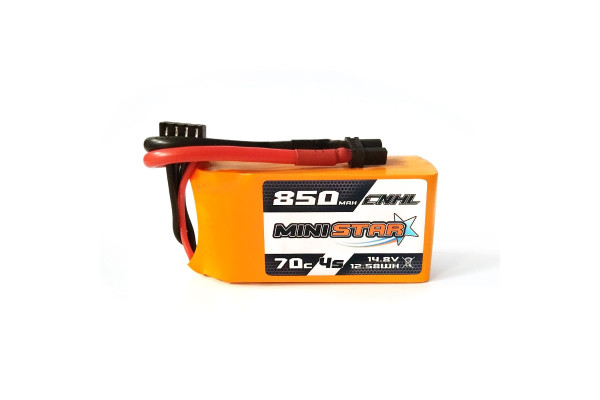
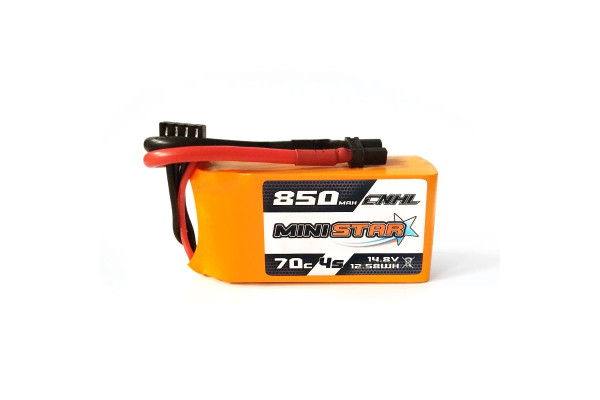
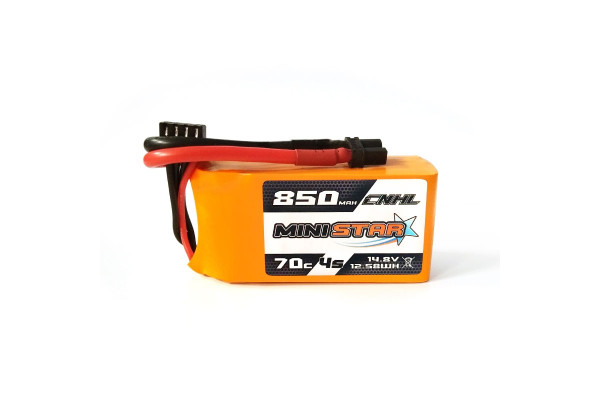
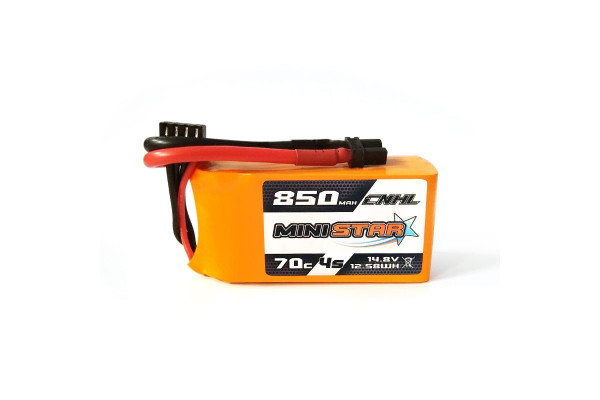
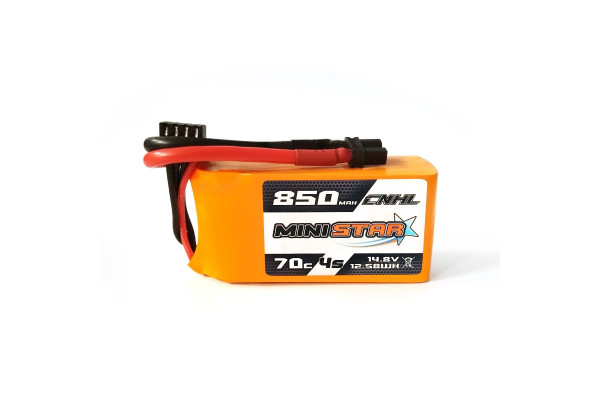
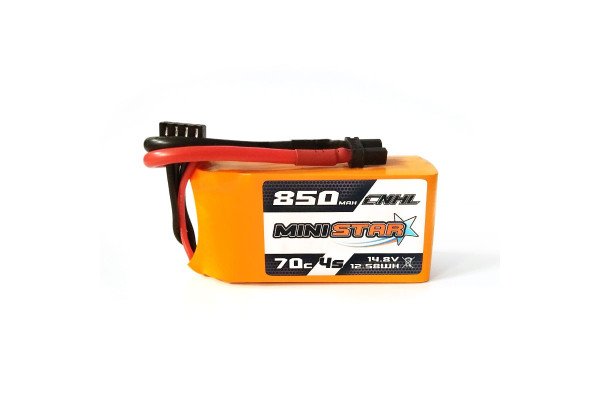
- CNHL (China Hobby Line): Another strong contender for value, CNHL batteries often deliver impressive performance for their price. Their "Black Series" and "MiniStar" lines are well-regarded. (e.g., CNHL Black Series 4S 1500mAh 100C)
- Lumenier: A well-known FPV brand that also produces high-quality batteries, often emphasizing durability and consistent power. Can be on the higher end of the price spectrum. (e.g., Lumenier 4S 1300mAh 120C)
- RaceDayQuads (RDQ Series): RDQ's house brand batteries offer competitive performance at a good price, often catering to the specific needs of the racing and freestyle community. (e.g., RaceDayQuads 6S 1100mAh 100C)
- Gens Ace: Another strong brand from the same parent company as Tattu, offering a wide range of reliable LiPo batteries for various applications.
What to Look for in a Quality FPV Battery
Beyond advertised specs, a good quality battery will exhibit:
- Consistent Cell Voltage: Cells should hold voltage well under load and remain balanced.
- Robust Casing and Wiring: Durable shrink wrap, well-secured balance leads, and thick gauge main power wires (e.g., 12AWG for 5-inch quads).
- Low Internal Resistance: As discussed, this is a key indicator of health and performance.
- Positive Community Feedback: Brands with a solid reputation for reliability and customer service.
User Reviews and Community Feedback: Real-World Performance
Always supplement manufacturer specifications with real-world reviews. FPV community forums, YouTube reviews, and online store comments provide invaluable insights into a battery's actual performance, longevity, and reliability under various flying conditions. A battery might look good on paper but perform poorly in practice if its true C-rating is exaggerated.
The Ultimate FPV Battery Decision Flow: Find Your Perfect Pack
Let's put it all together. Follow these steps to narrow down your choices and find the ideal battery for your FPV setup.
Step 1: Determine Your Drone Size and Motor KV
- Micro Whoop (65-75mm): Likely 1S or 2S.
- Toothpick (2-3 inch): Likely 2S-3S.
- 3-inch Freestyle/Cinematic: Often 3S-4S.
- 5-inch Freestyle/Racing: Most commonly 4S or 6S.
- 7-inch Long Range/Cinematic: Typically 6S or higher.
Also, note your motor's KV rating (e.g., 2400KV, 1700KV). This is crucial for selecting the correct S-rating.
Step 2: Define Your Flying Style (Freestyle, Racing, Cinematic, Cruising)
- Aggressive Racing/Freestyle: Prioritize high C-rating, moderate capacity, and lighter weight.
- Smooth Cinematic/Cruising: Prioritize higher capacity for flight time, stable voltage, and moderate C-rating.
- Long-Range: Maximize capacity, consider Li-Ion, moderate C-rating.
Step 3: Select Your Ideal Voltage (S-Rating)
Based on your drone's motor KV and ESC capabilities:
- High KV (e.g., 2400-2700KV): Generally pairs well with 4S.
- Medium KV (e.g., 1700-2000KV): Ideal for 6S.
- Always check your specific motor and ESC manufacturer's recommendations.
Step 4: Choose the Right Capacity (mAh) and C-Rating
- Capacity (mAh):
- Short, punchy flights (racing): Lower end of the recommended range (e.g., 1100-1200mAh for 5-inch 6S).
- Balanced flight time (freestyle): Middle of the range (e.g., 1300mAh for 5-inch 6S).
- Longer flights (cinematic/long-range): Higher end of the range (e.g., 1800-3000mAh for 6S).
- C-Rating:
- Calculate your drone's estimated maximum current draw (e.g., 4 motors * 30A/motor = 120A total).
- Ensure your chosen battery's continuous discharge rate (C-rating * Capacity in Ah) comfortably exceeds this. For 5-inch quads, aim for 75C-120C.
Step 5: Compare Top Brands Based on Your Criteria
Now that you have your ideal S-rating, mAh, and C-rating, consult reviews and compare brands like Tattu R-Line, GNB, CNHL, and RaceDayQuads. Consider their reputation for durability, consistency, and your budget.
Frequently Asked Questions About FPV Batteries
What is the ideal C-rating for a 5-inch freestyle drone?
For a 5-inch freestyle drone, a C-rating of 75C to 120C (or even higher burst ratings) is generally recommended to provide sufficient current for aggressive maneuvers without excessive voltage sag or battery strain.
Can I use a LiHV battery with a LiPo charger?
Yes, but only if your LiPo charger specifically has a 'LiHV' charging mode. Attempting to charge a LiHV battery in standard 'LiPo' mode will only charge it to 4.2V per cell, missing out on its full capacity and voltage potential.
How do I properly dispose of old FPV LiPo batteries?
To safely dispose of old LiPo batteries, they must be fully discharged to 0V. This can be done by connecting them to a high-wattage resistor (like a car headlight bulb) or submerging them in saltwater for several days. Once fully discharged, they can often be disposed of at local battery recycling centers or hazardous waste facilities. Never throw them in regular trash.
What's the difference between a high C-rating and a high mAh battery?
A high C-rating indicates the battery's ability to deliver a large amount of current quickly (power output), crucial for punchy throttle response. High mAh (capacity) indicates how much energy the battery can store, directly correlating to longer flight times. You need a balance of both for optimal performance, depending on your flying style.
How often should I balance charge my FPV batteries?
It is highly recommended to balance charge your FPV batteries every time you charge them. This ensures that all individual cells within the pack maintain similar voltage levels, which is crucial for battery health, safety, and longevity.
Conclusion
Choosing the right FPV battery is a critical step towards unlocking your drone's full potential and ensuring safe, enjoyable flights. By understanding the core principles of voltage, capacity, C-rating, and proper care, you're now equipped to make informed decisions. Remember, the 'best' battery is always the one that perfectly matches your specific drone, flying style, and safety practices. So, go forth, power up, and conquer the skies! Ready to upgrade your flight experience? Explore our recommended FPV battery selections and find your next perfect pack today!
RELATED GUIDES
Copyright-safe media generated locally by FPVLovers
Catalog/source image: CNHL
Catalog/source image: GNB
CNHL
GNB