The Ultimate FPV Video Ecosystem Guide in 2026: DJI vs Walksnail vs HDZero vs Analog
A comparative review of the four major FPV video systems, outlining the tradeoffs in latency, image quality, cost, signal penetration, and weight to help new pilots choose.
The Ultimate FPV Video Ecosystem Guide in 2026: DJI vs Walksnail vs HDZero vs Analog
The 2026 FPV Pilot's Dilemma: A Future-Proofing Guide to Analog vs. Digital Systems (Beyond Just Specs)
The FPV world is a whirlwind of innovation, and as we navigate towards 2026, pilots face a pivotal decision: stick with the tried-and-true analog systems or embrace the rapidly evolving digital frontier? This isn't just about choosing a better picture; it's about defining your entire FPV experience, from the adrenaline of a race to the serene beauty of cinematic flights. Are you looking for raw, unadulterated speed, or crystal-clear immersion? This comprehensive guide will cut through the noise, comparing analog and the leading digital FPV systems – DJI O3 (and its future iterations), Walksnail, and HDZero – to help you future-proof your FPV choice and ensure your setup perfectly matches your flying aspirations in 2026 and beyond.
Understanding the Core Technologies: Analog vs. Digital FPV Fundamentals
Before diving into the specifics of each system in 2026, let's establish a foundational understanding of how analog and digital FPV fundamentally differ. This knowledge is key to appreciating the pros and cons of each.
How Analog FPV Works: The Classic, Raw Experience
Analog FPV, the veteran of the FPV world, operates on a straightforward principle: a video transmitter (VTX) on your drone converts the camera's image into an electrical signal, which is then broadcast directly over a radio frequency (typically 5.8GHz). Your FPV goggles, equipped with a video receiver (VRX), pick up this signal and display it.
This direct signal transmission is incredibly simple and results in the lowest theoretical latency. However, it's also susceptible to interference. As you fly further or encounter obstacles, the signal degrades gracefully, meaning you'll see static, lines, or "snow" before losing the picture entirely. This characteristic "snow" can be a pilot's early warning system, but it also means a less pristine image. For many years, this traditional method has remained a favorite due to its reliability and responsiveness.
The Digital FPV Revolution: A New Era of Clarity and Data
Digital FPV systems take a more complex, but ultimately more powerful, approach. Instead of a direct electrical signal, the drone's camera captures video, which is then digitized, compressed, and encoded into data packets by the digital air unit (VTX). These data packets are then transmitted wirelessly to your digital FPV goggles, which decode, decompress, and display the high-definition visuals.
This processing provides a significantly cleaner, more robust image, often in stunning HD resolutions. Digital systems can also incorporate advanced features like on-screen display (OSD) integration, DVR recording directly on the air unit, and even flight data telemetry. The trade-off for this clarity and feature set is typically slightly higher latency (though rapidly decreasing) and a phenomenon known as "cliffing," where the image remains perfect until the signal is almost completely lost, at which point it pixelates severely or drops out entirely.
Why the '2026' Perspective Matters: Evolving Standards and Expectations
The "2026" perspective is crucial because the FPV landscape is dynamically evolving. What was true for analog vs. digital in 2020 or even 2023 has significantly shifted. Technological advancements, particularly in digital compression, transmission protocols, and hardware efficiency, have drastically reduced latency and improved signal robustness in digital systems.
Market trends show a clear move towards digital for its immersive qualities, with manufacturers continually pushing the boundaries. Pilot expectations have also risen; many new pilots today expect HD visuals as standard, akin to a video game experience, rather than the traditional analog feed. This makes the analog vs. digital debate more nuanced than ever before, requiring a look at the current state-of-the-art and anticipated developments rather than just historical comparisons.
The Enduring Appeal of Analog FPV in 2026
Despite the digital revolution, analog FPV is far from obsolete. It continues to hold significant appeal for specific niches and flying styles.
Unmatched Latency and Simplicity: The Racer's Edge
For competitive FPV racing and highly responsive freestyle flying, analog systems still boast the lowest theoretical latency. While digital systems have made incredible strides, analog's direct signal path often translates to a millisecond or two less delay, which can be the difference between winning and losing a race or pulling off a complex trick flawlessly. Many seasoned pilots argue that this raw, immediate connection provides an unparalleled sense of control.
Furthermore, analog setups are inherently simpler. Troubleshooting often involves basic component swaps or frequency adjustments, rather than firmware updates or complex digital pairing processes. This straightforward nature makes it a reliable choice for pilots who prioritize raw performance and minimal fuss.
Cost-Effectiveness and Robustness: Budget-Friendly Entry
One of analog FPV's biggest advantages in 2026 remains its significantly lower entry cost. A complete analog FPV setup, including goggles, VTX, and camera, can be acquired for a fraction of the price of a comparable digital system. This makes it an incredibly accessible entry point for beginners or pilots on a tight budget.
Analog components are also renowned for their robustness. They can often take a beating and continue to function. And crucially, analog systems handle signal degradation gracefully. Instead of a sudden pixelated freeze or blackout (the "cliffing" effect of digital), analog signals gradually introduce static, giving the pilot more time to react and often fly back to a clear signal area. This can be a huge confidence booster in challenging environments.
The Legacy Ecosystem and Upgrade Paths: A Vast Community
The analog FPV ecosystem is vast and mature. There's an extensive range of compatible components from countless manufacturers, offering unparalleled flexibility for customization and upgrades. Need a new camera? There are dozens of options. VTX burned out? Easy to replace with any brand.
This also means a huge, active community knowledge base. If you encounter an issue, chances are someone else has already found a solution and shared it online. The potential for incremental upgrades keeps analog systems relevant and customizable, allowing pilots to slowly improve their setup without needing a complete overhaul.
The Digital FPV Landscape: A 2026 Deep Dive
The digital FPV market in 2026 is dominated by a few key players, each with unique strengths and target audiences.
DJI O3 (and Beyond): The Benchmark for Quality and Ease of Use
The DJI O3 Air Unit continues to be a market leader, known for its stunning HD video quality (up to 1080p at 100fps), integrated 4K recording, and user-friendly experience. DJI's ecosystem offers a relatively "plug-and-play" experience, making it highly appealing to cinematic pilots and those who prioritize ease of setup and visual fidelity. The O3's latency, while not the absolute lowest, is incredibly competitive and perfectly suitable for most freestyle and even casual racing.
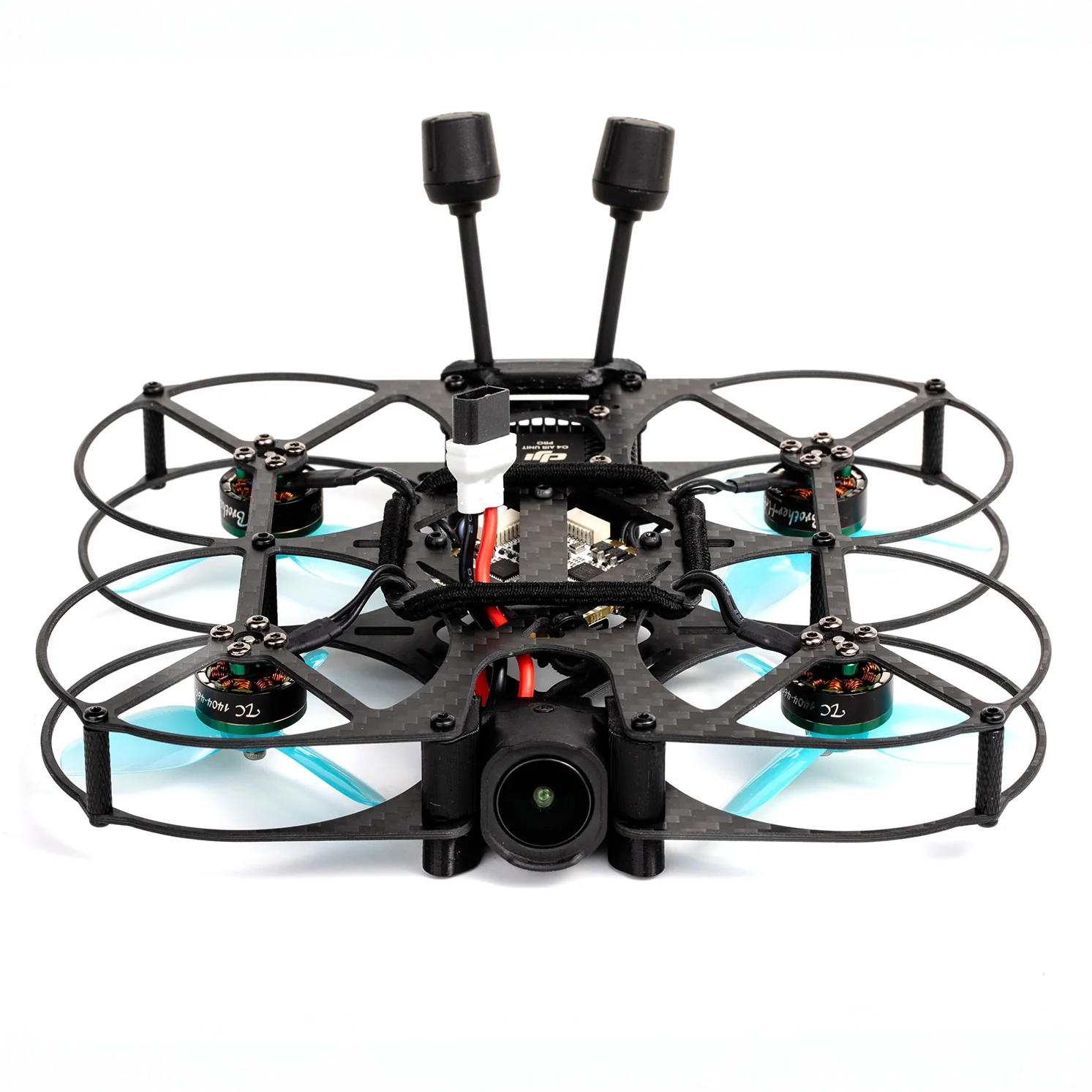
Looking ahead, whispers of a potential O4 Air Unit Pro or similar iterations suggest further improvements in latency, range, and image processing. For instance, iFlight has been a pioneer in optimizing low latency in the digital world with its O4 Air Unit Pro integration, making a truly fast system. These future developments aim to close the performance gap even further with analog, solidifying DJI's position as a benchmark for high-quality, immersive FPV.
Walksnail Avatar: The Open-Source Challenger with Growing Features
Walksnail Avatar has rapidly grown to become a formidable challenger to DJI. It focuses on offering a high-quality digital experience with a more open-source philosophy, appealing to pilots who desire more control and flexibility over their system. Walksnail provides competitive video quality, often praised for its natural color reproduction, and a growing feature set including multiple power levels, smaller form factors, and increasingly robust firmware.
Its ecosystem is expanding rapidly, with more third-party camera and VTX options becoming available. Walksnail offers a compelling alternative for pilots looking for excellent digital clarity without being locked into a single manufacturer's ecosystem, often at a slightly more accessible price point than DJI.
HDZero: Prioritizing Low Latency for Competitive Flying
HDZero carves out its niche by prioritizing ultra-low latency, aiming to deliver a digital experience that rivals analog in responsiveness, but with significantly improved clarity. While its video quality (typically 720p at 90/60fps) isn't as high-resolution as DJI or Walksnail, it's a massive step up from analog.
HDZero's unique selling proposition is its dedication to minimal delay, making it the preferred choice for competitive racers and aggressive freestyle pilots who demand the most immediate control without sacrificing too much visual fidelity. Its "no-artifact" mode further refines the signal, ensuring a clean image even under challenging conditions, which is crucial for high-speed precision flying.
Emerging Digital Systems and Future Innovations
The FPV market is always innovating. While DJI, Walksnail, and HDZero dominate, other niche or developing digital FPV systems might emerge. We can expect future advancements in compression algorithms, more efficient transmission protocols, longer range capabilities, and tighter integration with flight controllers. The goal is always to achieve higher resolution, lower latency, and greater signal robustness, pushing the boundaries of what's possible in the FPV experience.
Head-to-Head: Key Comparison Metrics for 2026 Pilots
Choosing between analog and digital, or among the digital systems, boils down to how they perform across critical metrics.
Video Quality and Immersion: HD vs. SD
This is where digital systems truly shine. The crisp, high-definition visuals of DJI O3 (1080p) and Walksnail Avatar (720p/1080p) offer an incredibly immersive "video game" like experience. Details are sharp, colors are vibrant, and the sense of being "in the drone" is significantly enhanced. This is especially beneficial for cinematic flights, long-range exploration, or simply enjoying the scenery.
Analog, by contrast, provides a standard definition (SD) feed, typically 640x480 or similar. While perfectly functional for flying, it lacks detail, colors can be muted, and static interference further reduces clarity. For many, the visual downgrade from digital is a significant factor.
Latency: The Unseen Factor in Control
Latency refers to the delay between the camera capturing an image and that image appearing in your goggles. For fast, precise flying, lower latency is always better.
- Analog: Generally boasts the lowest latency, often quoted at ~10-20ms. This near-instantaneous feedback is why racers still favor it.
- HDZero: Designed specifically for low latency, often achieving ~20-25ms. It's the closest digital system to analog in terms of responsiveness.
- Walksnail Avatar: Typically sits around ~25-35ms. Very competitive and suitable for most pilots, with some modes offering lower latency at reduced quality.
- DJI O3: Ranges from ~28ms in low-latency mode to ~40ms in high-quality mode. While slightly higher than HDZero or analog, it's still very good and imperceptible to most non-racers.
Even a few milliseconds can make a significant difference in control feel and precision, especially when navigating tight gaps or performing high-speed maneuvers.
Range, Penetration, and Signal Reliability
Digital systems generally offer superior range and penetration compared to analog, thanks to more efficient encoding and error correction. However, their signal behavior is different:
- Digital (DJI, Walksnail, HDZero): Tend to maintain a clear image for longer, but when the signal degrades past a certain point, it "cliffs" – meaning the image can pixelate, freeze, or cut out entirely with little warning. This can be disorienting and lead to crashes if you're not prepared.
- Analog: Suffers gradual degradation, introducing static and snow as the signal weakens. This provides a visual cue, allowing pilots to react and often fly back to a clearer area before a complete loss of signal.
For confidence in flight, especially when flying behind obstacles or at the edge of range, understanding these differences is crucial. Digital systems often require higher power VTX settings and robust antenna setups to maximize their range potential.
Cost of Entry vs. Long-Term Investment
- Analog: The most budget-friendly entry. Goggles can start from $100-200, and a VTX/camera combo is typically $50-80. A full analog setup for a drone can be as low as $300-400. Long-term, components are cheap and widely available.
- Digital (HDZero): Goggles are in the $400-600 range. Air units are $100-150. A drone setup might be $500-700. Mid-range cost, excellent value for low latency.
- Digital (Walksnail): Goggles are around $400-600. Air units are $90-130. Similar overall cost to HDZero, offering higher resolution.
- Digital (DJI O3): Goggles (like the DJI Goggles 2 or Integra) are the most expensive, often $600-900+. The O3 Air Unit itself is around $220-250. A full DJI setup for a drone could easily be $800-1000+.
The long-term cost implications also include upgrade paths. Analog allows for cheap, incremental upgrades. Digital systems often require upgrading entire components (air units, goggles) to take advantage of new features or resolutions, which can be a more significant investment.
Beyond the Specs: User Experience, Ecosystems, and Future-Proofing
Choosing an FPV system isn't just about numbers; it's about the overall experience.
Ease of Setup and User Friendliness
- DJI O3: Generally considered the most "plug-and-play." Pairing is straightforward, and the OSD is integrated seamlessly. Firmware updates are managed through the DJI Assistant software.
- Walksnail/HDZero: More modular than DJI, requiring some basic understanding of wiring and firmware flashing. However, they are becoming increasingly user-friendly with improved software interfaces and community-driven guides.
- Analog: Can be the simplest (just wire and fly) or the most complex (requiring specific channel knowledge, antenna choices, etc.). It depends on the level of customization.
Community Support and Component Availability
- Analog: Boasts the largest and most established community. Endless tutorials, troubleshooting guides, and a vast array of spare parts are readily available worldwide.
- DJI: Strong official support and a large user base, though less open to third-party modifications. Component availability is generally good but tied to DJI's production.
- Walksnail/HDZero: Rapidly growing communities with active Discord servers and forums. Third-party component support is good and improving, but still smaller than analog.
The Upgrade Path: Investing in Longevity
- Analog: Highly flexible. You can upgrade individual components (camera, VTX, antennas) without replacing the entire system. This offers great longevity for the core setup.
- Digital (Walksnail/HDZero): Generally offers a good upgrade path within their respective ecosystems. New air units or cameras are usually backward compatible with existing goggles.
- Digital (DJI): Tends to have a more defined upgrade path dictated by DJI. While O3 is backward compatible with older DJI goggles, future iterations might introduce new protocols requiring new goggles, making it a more significant investment to stay current.
Consider the "future-proof" aspect of your investment. While no tech is truly future-proof, some systems offer more flexibility for incremental improvements.
The 2026 FPV Buyer's Guide: Making Your Informed Choice
So, in 2026, which system is right for you?
For the Absolute Beginner: Where to Start?
If you're an absolute beginner in 2026, the decision hinges on your budget and desire for clarity.
- Budget-conscious beginner: Start with analog. It's cheaper to get into, easier to repair, and the learning curve is less steep on the hardware side. You can focus on flying skills without fear of expensive crashes.
- Beginner prioritizing immersion: Consider Walksnail or DJI's entry-level digital options. While pricier, the HD visuals can be incredibly motivating and make the learning process more enjoyable. Just be prepared for the higher initial investment and potential repair costs. Practical tip: Always start with a simulator (e.g., Velocidrone, Liftoff) regardless of your chosen system!
For Freestyle and Cinematic Pilots: Prioritizing Immersion
For pilots focused on creative flying, smooth lines, and high-quality recording, DJI O3 (or its future O4 iteration) is often the top recommendation. Its stunning video quality, integrated 4K recording, and robust signal for smooth, immersive flights make it ideal for capturing breathtaking footage. Walksnail is an excellent alternative, offering comparable visual quality and a more open system.
For Racers and Acro Enthusiasts: Latency is King
If every millisecond counts, and responsive control is your absolute priority, then HDZero is your best digital bet. It delivers near-analog latency with a significant clarity upgrade. For the absolute purists, analog still holds its ground, especially in official race circuits where its minimal delay is paramount. Practical tip: For racing, ensure your entire chain—from camera to VTX to goggles—is optimized for low latency.
Budget-Conscious Choices and Scalability
- Lowest budget: Go analog. You can get a full setup for the price of just digital goggles.
- Mid-range budget, want digital: Walksnail or HDZero offer excellent performance for their price. They provide a clear digital image without the premium cost of DJI.
- Scalability: Analog systems are the most scalable due to component interchangeability. Digital systems like Walksnail and HDZero are also building solid ecosystems allowing for future upgrades within their brand.
Frequently Asked Questions (FAQ)
Is analog FPV dead in 2026?
Absolutely not! While digital FPV continues to gain market share, analog FPV thrives in specific niches, particularly for its unmatched low latency, cost-effectiveness, and robustness. Many racers, budget-conscious pilots, and those who appreciate the simplicity and graceful signal degradation still prefer analog. It continues to be a viable and popular option.
Which digital system has the lowest latency in 2026?
In 2026, HDZero generally boasts the lowest latency among digital FPV systems, often achieving figures very close to analog. Systems like the iFlight O4 Air Unit Pro integration are also making significant strides in optimizing low latency within the digital world, making them incredibly fast and responsive. Walksnail and DJI O3 follow, offering slightly higher but still excellent latency for most flying styles.
Can I use analog and digital FPV gear together?
You cannot directly mix analog VTX with digital goggles (or vice-versa) to get a video feed. However, you can use hybrid goggles (like some Fat Shark models) that have both analog and digital receivers built-in or via modules. This allows you to switch between analog and digital feeds with the same pair of goggles. Alternatively, many pilots simply own separate analog and digital setups.
What's the best FPV system for a beginner in 2026?
For a beginner in 2026, the "best" system depends on priorities.
- For lowest cost and ease of repair: Analog is a great starting point.
- For an immersive experience and higher quality video from day one: Walksnail offers a good balance of features and price for a digital system. DJI O3 is excellent but comes at a premium.
- General Tip: Regardless, start with a simulator to learn flying basics before investing heavily in hardware.
How much does a full digital FPV setup cost in 2026?
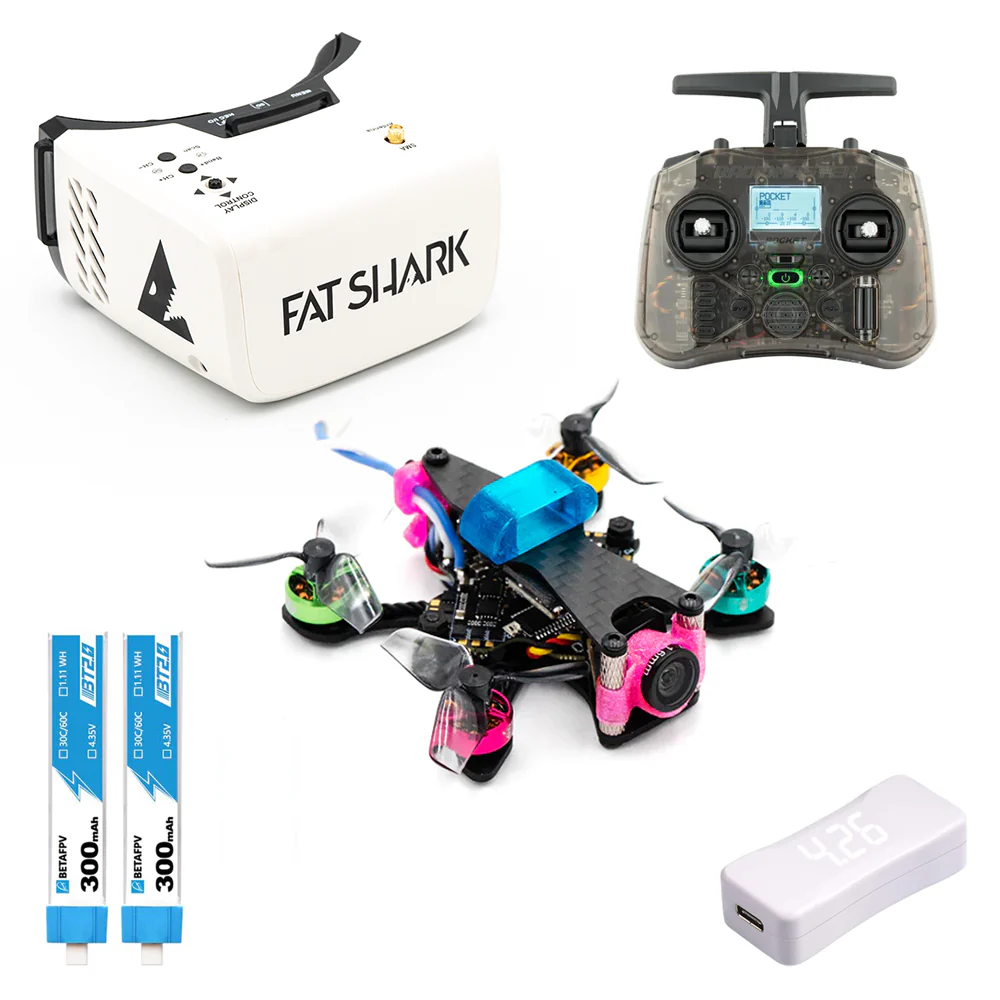
A full digital FPV setup in 2026, including digital goggles, a quadcopter equipped with a digital air unit (VTX and camera), a radio transmitter, batteries, and a charger, can range significantly:
- HDZero/Walksnail: Expect to spend approximately $800 - $1200 USD.
- DJI O3: Expect to spend approximately $1000 - $1500+ USD.
This estimate can vary based on the specific components chosen, sale prices, and whether you're building a custom drone or buying a pre-built BNF (Bind-N-Fly) model.
Conclusion
The choice between analog and digital FPV in 2026 is less about one being definitively 'better' and more about aligning the technology with your personal flying style, priorities, and budget. While digital systems like DJI O3, Walksnail, and HDZero offer incredible visual fidelity and advanced features, analog continues to hold its ground with unmatched latency and affordability.
As you embark on or continue your FPV journey, consider what truly matters to you: the crisp, immersive views of digital, or the raw, immediate connection of analog. The future of FPV is vibrant and diverse, offering incredible options for every pilot. Which path will you choose? Share your thoughts and experiences in the comments below, or explore our other guides to deepen your FPV knowledge!
RELATED GUIDES
Copyright-safe raster media generated locally by FPVLovers
Source: racedayquads.com
racedayquads.com