FPV Goggles Buying Guide: Analog vs Digital for Beginners
A comparison-led guide to the first goggle purchase, with a clear look at analog and digital tradeoffs for new pilots.
Unveiling Your FPV Vision: The Ultimate Goggles Buying Guide
Welcome, fellow FPV enthusiast! If you're reading this, you're likely on the thrilling quest to unlock the immersive world of First-Person View. But before you take to the skies, there's one piece of gear that stands as your essential gateway: FPV goggles. These aren't just screens strapped to your face; they are your eyes in the sky, transforming a drone into an extension of your will. The right pair of goggles can elevate your flying experience from merely observing to truly feeling the flight.
The FPV Pilot's Essential Lens: Why Goggles Are Your Gateway
Imagine soaring through breathtaking landscapes, weaving through obstacles with precision, or racing against friends at breakneck speeds. All of this is experienced through the crystal-clear (or delightfully static-filled, depending on your system!) feed beamed directly to your FPV goggles. They are arguably the most personal piece of FPV equipment you'll own, directly impacting your comfort, reaction time, and overall enjoyment. Choosing the right pair is crucial, whether you're a beginner taking your first tentative flights or a seasoned pro looking for an upgrade.
Lost in the Static? Your Personalized Guide to Crystal Clear FPV
The market for FPV goggles is vast and can be overwhelming. With countless brands, models, and technologies – from analog to digital, box goggles to sleek slimlines – how do you navigate this landscape to find your perfect match? This guide is designed to be your personalized "FPV Goggle Navigator." We'll break down the jargon, compare the systems, highlight the best options for different budgets and flying styles, and help you make an informed decision that you won't regret. Let's dive in!
Analog vs. Digital: Navigating the FPV Video Divide
The first, and perhaps most critical, decision you'll face is whether to go with an analog or digital FPV system. Each offers a distinctly different visual and flying experience.
The Enduring Charm of Analog FPV: Affordability and Accessibility
Analog FPV has been the backbone of the hobby for years, and for good reason. It's the most affordable entry point, making it accessible to a wider range of pilots. Analog systems transmit a continuous, low-latency video signal, which, while prone to static and interference, provides an incredibly direct and responsive connection to your drone.
Pros of Analog:
- Low Latency: Often below 20ms, crucial for racing and highly acrobatic freestyle.
- Affordability: Goggles and video transmitters (VTXs) are significantly cheaper.
- Simplicity & Robustness: Generally easier to set up and more forgiving of signal degradation. You get a "graceful degradation" with static, allowing you to often fly back before total signal loss.
- Compact VTXs: Analog VTXs are typically smaller and lighter, ideal for micro drones.
- Modularity: Many analog goggles feature modular bays, allowing you to upgrade your receiver module (e.g., to a RapidFire or TBS Fusion) for improved signal reception.
Cons of Analog:
- Image Quality: Lower resolution (typically 640x480 or similar), prone to static, "snow," and color distortion.
- Interference: Can be easily affected by other analog pilots or environmental noise.
Popular analog goggles include the Fat Shark Dominator HDO2 and Skyzone SKY04X/L. These often feature high-quality OLED screens and modular receiver bays, allowing pilots to choose top-tier modules like the ImmersionRC RapidFire or Team BlackSheep (TBS) Fusion for unparalleled signal clarity and range within the analog domain.
Embracing the Clarity: The Rise and Reign of Digital FPV Systems
Digital FPV has revolutionized the hobby, offering stunningly clear, high-definition video feeds that are a world apart from analog. Systems like DJI's FPV ecosystem, Walksnail Avatar, and HDZero have brought a new level of immersion and detail to FPV.
Pros of Digital:
- Superior Image Quality: High-resolution (720p, 1080p, or even higher) video with vibrant colors and sharp details.
- Clean Signal: Less prone to random static and interference. When the signal degrades, it tends to pixelate or freeze rather than show snow.
- Recording Capabilities: Many digital systems offer onboard HD recording directly from the VTX or goggles.
Cons of Digital:
- Higher Latency: While greatly improved, digital systems generally have higher latency than analog (though HDZero boasts near-analog latency). This can be a concern for professional racers.
- Cost: Digital goggles and VTXs are significantly more expensive.
- Bulkier VTXs: Digital VTXs tend to be larger and heavier, making them less suitable for the smallest micro drones.
- "Hard Fails": When the signal degrades significantly, the image can pixelate severely or freeze completely, leading to a sudden loss of visual information.
Leading the charge in digital FPV are:
- DJI FPV Goggles: Starting with the original DJI FPV Goggles V2, then the more compact DJI Goggles 2 and the recently released DJI Goggles Integra. These goggles offer integrated receivers and deliver exceptional 1080p clarity (Goggles 2/Integra) with a robust link, though they are part of a closed ecosystem.
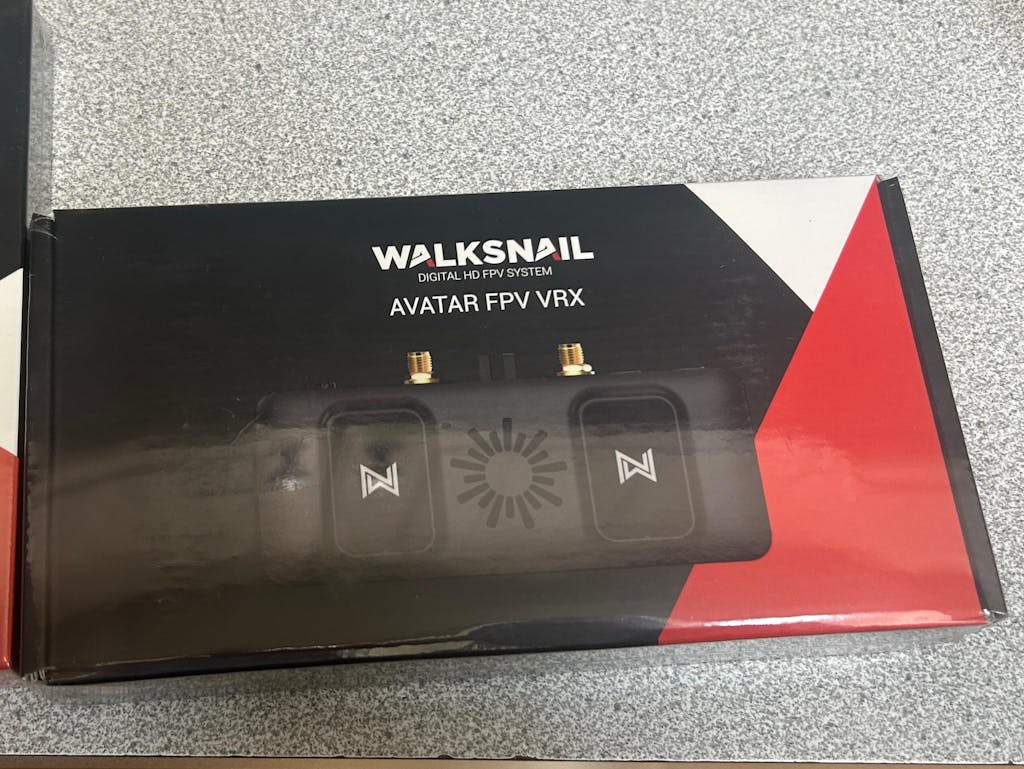
- Walksnail Avatar HD: A strong contender, offering an open digital system with competitive image quality and lower latency than early DJI systems. The Walksnail Avatar HD Goggles X are a popular choice.
- HDZero: Focused on ultra-low latency, HDZero aims to bridge the gap between analog responsiveness and digital clarity. It's a favorite among racers and those who prioritize minimal delay. The HDZero Goggle is a dedicated solution.
Hybrid & Future Systems: Bridging the Gap or Paving New Paths?
The FPV landscape is constantly evolving. Some goggles, like the Fat Shark Dominator HDO3, offer modular bays that can accept both analog receiver modules and digital modules (like HDZero or Walksnail VRX modules), providing flexibility. Newer players, such as the iFlight Skyviz Goggles, are also entering the digital market, promising "Vivid Vision, Ultimate Enjoyment" and further expanding options for pilots. These hybrid approaches allow pilots to use a single pair of goggles across multiple drone setups, offering a degree of future-proofing.
Decoding FPV Goggle Specs: Essential Features for Your Flight Experience
Beyond analog vs. digital, several technical specifications define your FPV experience. Understanding these will help you tailor your choice to your needs.
Field of View (FOV) & Aspect Ratio: Immersion vs. Practicality
- Field of View (FOV): This refers to the angular extent of the viewable image. A higher FOV means a larger, more immersive image that fills more of your vision. For cinematic and freestyle flying, a large FOV (e.g., 40-50 degrees) is often preferred for that "in the cockpit" feel. However, for racing, a smaller FOV (e.g., 30-38 degrees) can be advantageous as it requires less eye or head movement to see the entire screen, allowing for faster reaction times.
- Aspect Ratio: The ratio of the screen's width to its height.
- 4:3: The traditional FPV aspect ratio, often preferred by racers as it can make objects appear slightly larger and closer.
- 16:9: A wider, more cinematic view, common in digital systems and preferred by many freestylers and cinematic pilots. Some goggles can switch between these aspect ratios, or display a 4:3 image on a 16:9 screen with black bars.
Display Technology: OLED vs. LCOS, Resolution, and Brightness
The display is where the magic happens.
- OLED (Organic Light-Emitting Diode): Found in premium goggles (e.g., Fat Shark HDO series, Orqa FPV.One Pilot, DJI Goggles 2), OLED screens offer superior contrast, true blacks, vibrant colors, and excellent response times. They generally provide the most visually stunning experience.
- LCOS (Liquid Crystal On Silicon): Often used in more budget-friendly or older digital goggles. LCOS displays can achieve good brightness and resolution but typically don't match OLEDs for contrast and color vibrancy.
Resolution: Measured in pixels (e.g., 640x480 for analog, 1280x960, 1920x1080 for digital). Higher resolution means a sharper, more detailed image, reducing the "screen door effect" (where you can see the individual pixels). Brightness: Important for outdoor visibility, especially in bright conditions. Measured in nits; higher is better.
Latency: The Unseen but Critical Factor for Responsive Flying
Latency is the delay between your drone's camera capturing an image and that image appearing in your goggles. It's measured in milliseconds (ms) and is absolutely critical for responsive flying.
- Analog: Typically boasts the lowest latency, often below 20ms, making it ideal for high-speed racing and precision acrobatics.
- Digital: Early digital systems had noticeable latency, but newer generations have made significant strides. HDZero is renowned for achieving near-analog latency (often around 10-20ms). Walksnail Avatar systems typically offer latency in the 22-30ms range, while DJI systems can vary but are generally in a similar range or slightly higher depending on settings and signal conditions. For casual flying, cinematic, or even most freestyle, current digital latency is perfectly acceptable, but racers will still scrutinize every millisecond.
Receiver Modules & Antenna Compatibility: The Heart of Your Signal
- Receiver Modules: For analog goggles, a modular bay allows you to swap out receiver modules. High-performance modules like the ImmersionRC RapidFire and TBS Fusion use advanced algorithms (diversity and fusion) to combine signals from two antennas, providing a cleaner, more stable image and improved range.
- Antenna Compatibility: The right antennas are paramount. Most FPV systems use 5.8GHz circular polarized antennas (RHCP or LHCP) to reduce multipath interference. You'll typically use two antennas on your goggles: an omnidirectional antenna (like a stubby or pagoda) for general coverage, and a directional antenna (like a patch or helical) for focused range. Digital systems often have integrated antennas or specific recommendations. For example, DJI Goggles 2 come with their own compact antennas.
Form Factor and Ergonomics: Finding Your Perfect Fit and Comfort
How the goggles feel on your face and how they're designed significantly impact your flying comfort, especially during long sessions.
Box Goggles: The Budget-Friendly, Immersive Entry Point
Box goggles are characterized by a single, larger screen viewed through a lens, resembling a virtual reality headset. Pros:
- Affordability: Generally the cheapest option.
- Large, Immersive Image: The single screen can feel very immersive.
- Glasses Friendly: Often easier for pilots who wear prescription glasses to use without their glasses or with minimal discomfort.
- Simple Optics: Fewer complex lenses, often leading to a clearer image edge-to-edge.
Cons:
- Bulk & Weight: Can be large and somewhat cumbersome.
- Less Portable: Not as easy to pack as slimline goggles.
Examples include the Eachine EV800D (an excellent beginner choice) and some Skyzone Cobra X models.
Slimline Goggles: Compact, Premium, and Feature-Rich Designs
Slimline goggles feature two separate micro-displays, one for each eye, viewed through a set of optics. Pros:
- Compact & Lightweight: Much more portable and comfortable for extended wear.
- Premium Feel: Often boast advanced features, high-resolution OLED screens, and sophisticated optics.
- Stylish: Generally preferred for their sleeker appearance.
Cons:
- Higher Cost: Significantly more expensive than box goggles.
- IPD & Diopter Sensitivity: More critical to get the Inter-Pupillary Distance (IPD) and diopter settings correct for clear vision. Can be less accommodating for glasses wearers without diopter inserts.
Most high-end goggles, such as the DJI Goggles 2, Fat Shark Dominator HDO2, Orqa FPV.One Pilot, and Skyzone SKY04X, fall into this category.
Adjustability, Fit, and Diopter Support: Tailoring to Your Vision
- Inter-Pupillary Distance (IPD) Adjustment: Crucial for slimline goggles, IPD allows you to adjust the distance between the two screens to match the distance between your pupils, ensuring a clear, comfortable image for both eyes.
- Diopter Support: If you wear prescription glasses, look for goggles that either accommodate glasses directly (rare for slimline) or, more commonly, support diopter inserts. These are corrective lenses that slide into the goggle's optical path, allowing you to fly without your glasses. Many premium goggles offer a range of diopter inserts.
- Faceplate & Foam: A comfortable, light-sealing faceplate is essential. Different foam densities and shapes are available; some pilots even opt for aftermarket face foam for a better fit and less light leakage.
The Personalized FPV Goggle Navigator: Your Buyer's Guide to the Best
Now that we've covered the technicalities, let's map out your path to the perfect FPV goggles.
Step 1: Define Your Budget & Flying Style (Racing, Freestyle, Cinematic)
- Budget:
- Entry-Level (Under $250): Mostly analog box goggles (e.g., Eachine EV800D). Great for learning without breaking the bank.
- Mid-Range ($250 - $500): High-end analog slimline goggles (e.g., Skyzone SKY04L) or entry-level digital options if you find a good deal on an older model.
- Premium ($500+): Top-tier analog (e.g., Fat Shark HDO2, Orqa FPV.One Pilot) or the latest digital systems (DJI Goggles 2/Integra, Walksnail Avatar HD Goggles X, HDZero Goggle).
- Flying Style:
- Racing: Prioritize ultra-low latency. Analog (with RapidFire/TBS Fusion) or HDZero Goggle are prime choices. Smaller FOV (30-38 degrees) and 4:3 aspect ratio are often preferred.
- Freestyle: A balance of immersion, clarity, and low latency. Digital systems like Walksnail Avatar HD or DJI FPV Goggles are excellent. High-end analog like Skyzone SKY04X also excels. Larger FOV (40-50 degrees) and 16:9 aspect ratio are popular.
- Cinematic: Highest priority on image quality, clarity, and resolution. Latency is less critical. DJI Goggles 2/Integra and Walksnail Avatar HD Goggles X are fantastic for this, offering stunning visuals. Large FOV and 16:9 aspect ratio are ideal.
Step 2: Analog, Digital, or Both? Making the Video System Choice
- Go Analog if: You're on a tight budget, prioritize the absolute lowest latency for racing, prefer graceful signal degradation, or already have analog drones.
- Go Digital if: You crave crystal-clear, high-definition video, want a more immersive and detailed experience, and your budget allows. Consider the DJI ecosystem for ease of use and robustness, Walksnail Avatar for a more open digital platform, or HDZero for ultra-low latency digital.
- Go Hybrid/Both if: You want the flexibility to fly both analog and digital drones with one pair of goggles. Look for goggles with modular bays that can accommodate different receiver modules, such as the Fat Shark Dominator HDO3.
Step 3: Top Brands & Models for Every Pilot
- DJI: The market leader in integrated digital systems. DJI FPV Goggles V2 (still widely used), DJI Goggles 2 (smaller, lighter, 1080p OLED), and DJI Goggles Integra (similar to Goggles 2 but with integrated battery). Known for robust links and stunning clarity.
- Fat Shark: A legacy brand synonymous with high-end analog. The Dominator HDO2 and HDO3 (with modular bays for analog/digital) offer superb OLED displays and excellent build quality.
- Skyzone: Offers a fantastic balance of features, performance, and value. The SKY04X (OLED, modular) and SKY04L (LCOS, modular, budget-friendly) are highly regarded. The Skyzone SKY02X was a top pick in 2019, showcasing their consistent quality.
- Orqa: A premium European brand known for its high-quality optics and build. The Orqa FPV.One Pilot is a favorite among analog enthusiasts for its large FOV and vibrant OLED screens.
- Walksnail/Caddx: Key players in the open digital FPV space. Their Avatar HD Goggles X offer competitive performance to DJI with an open-source ethos.
- HDZero: The go-to for low-latency digital. The HDZero Goggle is purpose-built for speed and responsiveness.
- iFlight Skyviz: A newer entrant, leveraging its experience in FPV gears to offer digital goggles focused on "Vivid Vision." Keep an eye on their developments.
Step 4: Future-Proofing & Upgrade Paths for Longevity
No FPV gear is truly "future-proof," but you can make choices that extend your investment.
- Modular Systems: Goggles with modular receiver bays (common in analog, some digital like Fat Shark HDO3) allow you to upgrade your receiver as new technologies emerge.
- Firmware Updates: Choose brands that actively support their products with firmware updates, bringing new features and improvements.
- Cross-Compatibility: Consider systems that are more open, allowing you to mix and match components from different manufacturers, rather than being locked into a single ecosystem.
Beyond the Purchase: Maximizing Your FPV Goggle Investment
Buying the right goggles is just the beginning. Proper care and smart upgrades can significantly enhance your FPV journey.
Battery Management & Power Solutions for Extended Flight
Most slimline goggles use external LiPo batteries (often 2S or 3S).
- Battery Capacity: Carry multiple batteries or a larger capacity battery (e.g., 18650 cell packs) for longer flight sessions.
- Charging: Always use a balanced charger.
- Power Input: Check your goggles' voltage input range. Some have wider ranges than others.
- Integrated Batteries: Some newer goggles (like DJI Goggles Integra) have integrated batteries, simplifying setup but limiting hot-swapping.
Antenna Upgrades & Diversity Receivers: Boosting Your Signal
- Antenna Quality: Don't underestimate the impact of good antennas. Brands like Lumenier AXII, ImmersionRC SpiroNET, and TrueRC offer excellent performance.
- Diversity Receivers: These systems use two separate antennas and constantly switch to the one receiving the strongest signal, significantly improving signal stability and range. Most high-end analog modules (RapidFire, Fusion) are diversity.
- Antenna Types:
- Omnidirectional (Cloverleaf/Pagoda): Good all-around coverage.
- Directional (Patch/Helical): Offers superior range in a specific direction. Use one omni and one directional for a versatile setup.
Protective Cases, Cleaning Tips, and Essential Accessories
- Protective Case: A hard case is essential for protecting your valuable goggles from bumps, scratches, and dust during transport.
- Lens Protection: Always use lens caps when not flying. Keep lenses clean with a micro-fiber cloth and specialized lens cleaning solution. Avoid abrasive materials.
- Face Foam: Replace worn-out face foam for comfort and to prevent light leakage. Aftermarket options can offer a better fit.
- DVR (Digital Video Recorder): Many goggles have built-in DVRs to record your flights. This is invaluable for reviewing flights, finding lost drones, or sharing your adventures. Check the quality of the DVR recording – it's often lower than the live feed.
Frequently Asked Questions (FAQ) About FPV Goggles
What's the primary difference between OLED and LCOS displays in FPV goggles?
OLED displays (Organic Light-Emitting Diode) offer superior contrast with true blacks, more vibrant colors, and faster response times due to each pixel generating its own light. LCOS (Liquid Crystal On Silicon) displays are generally brighter and can achieve high resolutions, but typically don't match OLEDs for contrast and color depth, as they rely on a backlight. OLEDs are usually found in premium goggles.
Can I use different brand receivers (e.g., RapidFire, TBS Fusion) with my goggles?
Yes, if your goggles have a modular receiver bay (common in high-end analog goggles like Fat Shark and Skyzone). This allows you to remove the stock receiver and install advanced third-party modules like the ImmersionRC RapidFire or TBS Fusion, significantly upgrading your signal reception and performance.
Are expensive FPV goggles always better, especially for beginners?
Not necessarily. While more expensive goggles generally offer superior image quality, advanced features, and better build quality, a beginner might not fully appreciate or utilize these advantages. For someone just starting, a budget-friendly pair of box goggles like the Eachine EV800D provides an excellent, low-cost entry point to learn the ropes without fear of damaging expensive equipment. As skills progress, an upgrade makes more sense.
How important is Field of View (FOV) for different FPV flying styles like racing vs. cinematic?
FOV is quite important and often a matter of personal preference.
- For racing, many pilots prefer a smaller FOV (e.g., 30-38 degrees). This makes the entire screen visible with less eye movement, allowing for quicker target acquisition and reaction times.
- For cinematic and freestyle flying, a larger FOV (e.g., 40-50+ degrees) is often desired. It provides a more immersive, "in the cockpit" feeling, making the experience feel grander and more engaging.
What are the best budget-friendly FPV goggles for someone just starting out?
For beginners on a tight budget, Eachine EV800D box goggles are often recommended. They offer a large, clear screen, built-in diversity receiver, and are very affordable. If you can stretch your budget slightly, older Skyzone Cobra X models or even a used pair of mid-range analog slimline goggles can be good options, especially if paired with a decent modular receiver.
Your Clear Path to Unrivaled FPV Vision
Recap: Empowering Your FPV Journey with the Right Goggles
Choosing FPV goggles is a deeply personal decision, influenced by your budget, flying style, and desired visual experience. We've navigated the analog vs. digital divide, decoded essential specs like FOV and latency, explored form factors, and guided you through top brands and models. Remember to consider:
- Analog: Affordable, low latency, robust signal degradation. Ideal for racers and budget-conscious beginners.
- Digital: Stunning clarity, high resolution, immersive. Perfect for cinematic and freestyle pilots who prioritize visual quality.
- Key Specs: FOV, display type (OLED vs. LCOS), resolution, and especially latency, are critical for your flying experience.
- Comfort: Don't overlook IPD, diopter support, and faceplate fit for long-term enjoyment.
Ready to See the World from Above? Find Your Perfect FPV Goggles Today!
With this comprehensive guide, you're now equipped to make an informed decision. Whether you opt for the raw, responsive feel of analog or the breathtaking clarity of digital, the right FPV goggles will transform your drone flights into an unforgettable journey. So, define your needs, explore the options, and get ready to experience the world from a whole new perspective. Happy flying!
RELATED GUIDES
Copyright-safe media generated locally by FPVLovers