Long Range FPV Basics: How to Fly Beyond the Trees Safely
A beginner long-range guide exploring protocol choices (ELRS 915MHz vs 2.4GHz), battery options (Li-Ion vs LiPo), GPS safety, high-gain directional antennas, and pilot etiquette.
Long Range FPV Basics: How to Fly Beyond the Trees Safely
Long Range FPV Basics: Your Essential Guide to Extended Flight
Beyond the Backyard: Your Gateway to Long Range FPV
Ever dreamt of soaring past the familiar confines of your local park, exploring distant horizons with your FPV drone? Long Range (LR) FPV opens up a world of breathtaking vistas and epic journeys, allowing you to witness landscapes from a perspective few ever experience. But it's a discipline that demands precision, reliability, and a solid understanding of its core principles. This guide will demystify the tech, help you avoid common pitfalls, and set you on a practical roadmap to mastering long range FPV basics. Get ready to go beyond the backyard and unlock true aerial exploration!
What is Long Range FPV and Why Does it Matter?
Long Range FPV isn't just about flying far; it's about reliable, extended exploration. It’s a distinct style of FPV flying that prioritizes signal integrity, battery efficiency, and the ability to confidently navigate vast distances.
Defining 'Long Range' in FPV
Unlike freestyle or cinematic FPV, which often involve agile maneuvers or close-quarters filming, long range FPV focuses on distance, reliability, and exploration. While a freestyle drone might fly a few hundred meters, a true long range setup aims for kilometers – often 5-10km as a starting point, with advanced setups pushing well beyond 20-30km. The goal isn't speed or tricks, but smooth, stable flight to a distant point and back, capturing the journey.
The Unique Challenges of Extended Flight
Pushing the limits of distance introduces several critical challenges:
- Signal Degradation: Radio signals weaken significantly over distance, making reliable control and video transmission paramount. Obstacles like hills or buildings can completely block signals.
- Battery Life: Every gram and every amp-hour counts. Maximizing flight time requires efficient components and careful power management.
- Environmental Factors: Wind, temperature, and even atmospheric conditions can impact flight performance and signal quality over long distances.
- Increased Stakes: A lost signal or battery failure far from home can mean a lost drone. The margin for error is much smaller than in short-range flying.
The Thrill and Purpose of Long Range Exploration
Despite the challenges, the rewards of long range FPV are immense. Imagine soaring over untouched valleys, following winding rivers, or discovering hidden vistas previously only accessible by foot. It's the thrill of discovery, the satisfaction of a well-executed mission, and the profound sense of accomplishment that comes with pushing boundaries safely and responsibly. Long range FPV transforms your drone into a true explorer.
Essential Gear for Reliable Long Range FPV
Building a robust long range FPV drone starts with selecting the right components. Every piece of hardware plays a crucial role in ensuring your signal stays strong and your drone stays in the air.
Robust Control Links: ELRS vs. Crossfire
Your control link is your lifeline. For long range, standard 2.4GHz RC systems simply won't cut it due to their limited range and susceptibility to interference. The two dominant players in long range FPV control links are:
- ExpressLRS (ELRS long range setup): An open-source, high-performance radio control link known for its incredible range, low latency, and high refresh rates. ELRS operates on 2.4GHz, 900MHz (868/915MHz), and even 433MHz frequencies. Its open-source nature means a rapidly evolving ecosystem and a vibrant community. For long range, 900MHz ELRS (e.g., HappyModel ES900TX module with ES900RX receiver) offers superb penetration and range, often exceeding 30km with optimal setups. 2.4GHz ELRS (e.g., BetaFPV ELRS Micro TX module with EP1/EP2 receivers) is also highly capable, often reaching 10-20km, and benefits from smaller antennas.
- TBS Crossfire (Crossfire long range setup): A proprietary, highly reliable system from Team BlackSheep, operating on the 900MHz (868/915MHz) band. Crossfire is renowned for its rock-solid link, excellent penetration, and robust telemetry. Products like the TBS Crossfire Micro TX V2 and TBS Crossfire Nano RX are industry standards. While slightly more expensive than ELRS, its proven track record and extensive feature set make it a favorite for serious long range pilots. Typical ranges are similar to 900MHz ELRS, often 20-50km+.
Both systems offer incredible performance, but ELRS typically offers a better price-to-performance ratio and lower latency, while Crossfire is often praised for its "set it and forget it" reliability out of the box.
Powerful Video Transmission (VTX) & Antennas
Your video feed is your eyes. A powerful VTX and high-quality antennas are crucial for clear, long-distance video.
- VTX Power Output: For long range, you'll need a VTX capable of at least 500mW, with 1W (1000mW) or higher being ideal. Popular choices include the TBS Unify Pro32 HV (up to 1000mW) or the ImmersionRC TrampHV (up to 600mW). Always check local regulations regarding VTX power limits.
- Frequency Choices (long range FPV frequencies):
- 5.8GHz: Most common for FPV, but its short wavelength means it struggles with obstacles and has limited penetration. Best for shorter long-range flights (e.g., 1-5km) with a clear line of sight.
- 2.4GHz: Less common for video due to potential interference with 2.4GHz control links (if not using 900MHz control) and Wi-Fi, but offers better penetration than 5.8GHz.
- 1.2GHz/1.3GHz: Offers the best penetration and range for video, but requires significantly larger antennas and often a HAM radio license in many regions. It's less common for mini-quads but popular for fixed-wing long range.
- Antennas (long range FPV antenna guide): The quality and type of your antennas make a huge difference.
- On the Drone: You'll typically use an omnidirectional antenna like the Lumenier AXII 2/3 or TBS Triumph Pro. These provide a 360-degree radiation pattern, essential as your drone's orientation changes.
- On the Ground Station: This is where directional antennas shine. A high-gain patch antenna (e.g., TrueRC X-Air 5.8, TBS Triumph Pro Patch) or a helical antenna (e.g., TrueRC Singularity 5.8 for extreme range) will significantly boost your reception in a specific direction. Many pilots use a diversity receiver setup with one omni and one directional antenna for the best of both worlds.
GPS & Failsafe Systems: Your Digital Lifeline
A GPS module is non-negotiable for long range FPV. It provides critical data such as:
- Accurate Positioning: Displays your drone's coordinates, speed, and altitude on your OSD.
- Distance & Direction to Home: Essential for navigation back to your launch point.
- Return-to-Home (RTH): The most crucial long range FPV safety tip. In case of signal loss (failsafe activation), RTH automatically guides your drone back to its launch coordinates and lands it. Ensure your GPS module (e.g., Matek M8Q-5883 or the more accurate Matek M10-5883) achieves a solid 3D fix before every flight.
Optimized Power Systems: Batteries & ESCs
Long range means long flight times, which demands an optimized power system.
- Batteries:
- LiPo: Common FPV batteries (e.g., Tattu R-Line, Gaoneng GNB). For long range, choose higher capacity (mAh) and higher cell counts (e.g., 6S 1300mAh to 2200mAh) for better efficiency and less voltage sag.
- Li-Ion: For true endurance, Li-Ion packs (e.g., 6S2P or 6S3P configurations using Molicel P42A 21700 or Samsung 30Q 18650 cells) offer significantly higher energy density than LiPo, translating to much longer flight times at the expense of C-rating (max current output). These are crucial for building a long range FPV drone capable of extreme distances.
- ESCs: Choose efficient ESCs (Electronic Speed Controllers) that can handle continuous current without overheating. BLHeli_32 ESCs are generally preferred for their efficiency and advanced features.
Maximizing Your Range: Signal Optimization & Link Budget
Understanding how to optimize your radio signals is key to pushing your range limits safely and effectively.
Mastering Antenna Selection and Placement
Antennas are the most critical component for signal quality.
- Drone Antennas: Always use high-quality, circularly polarized (RHCP or LHCP, but ensure all antennas match) omnidirectional antennas on your drone. Placement is vital: ensure they are clear of carbon fiber (which blocks RF) and other electronics, ideally mounted vertically and as high as possible.
- Ground Station Antennas: For your FPV goggles or ground station receiver, a diversity setup with one omnidirectional and one high-gain directional antenna is ideal.
- Omni: Provides a wide field of view for close-range and initial flight.
- Directional: A patch antenna (e.g., TrueRC X-Air 5.8) or helical antenna offers much higher gain in a specific direction, extending your range significantly when pointed at the drone. Consider an antenna tracker for automated aiming on very long flights.
- Matching: Ensure all your antennas (VTX, VRX, control TX, control RX) are matched for frequency and polarization.
Understanding Frequencies, Power, and Interference
- FPV Frequencies:
- 5.8GHz: Great for clear video in open areas, but poor penetration.
- 2.4GHz: Better penetration, but susceptible to Wi-Fi and common RC interference.
- 1.2/1.3GHz: Best penetration for video, but larger antennas and legal restrictions.
- Power Output: More power generally means more range, but it also generates more heat and consumes more battery. Always operate within legal limits for your region. Higher power VTXs (e.g., 1W) are standard for long range.
- Interference: Avoid flying near Wi-Fi hotspots, cell towers, or other RF-heavy environments. Properly shielded components and clean wiring can reduce self-interference on your drone.
The FPV Link Budget Explained: Your Range Equation
The FPV link budget explained is simply an accounting of all the gains and losses in your radio signal path. It's the sum of:
- Transmitter Power (TX power): How strong your VTX/control TX signal is.
- Transmitter Antenna Gain: How effectively your TX antenna focuses the signal.
- Receiver Antenna Gain: How effectively your RX antenna captures the signal.
- Receiver Sensitivity: How weak a signal your receiver can still "hear."
- Path Loss: The natural signal degradation over distance, line of sight obstructions, and atmospheric absorption.
To maximize range, you want to maximize TX power and antenna gains, and minimize path loss (fly LOS) and noise. A positive link budget means a reliable signal; a negative one means signal loss.
Clear Line of Sight (LOS) and Fresnel Zone
Maintaining a clear line of sight (LOS) between your drone's antennas and your ground station antennas is paramount. Any obstacle – a hill, trees, buildings – will absorb or reflect your signal, drastically reducing range.
The Fresnel zone is an elliptical area around the direct line of sight path. For optimal signal, at least 60% of this zone should be clear of obstructions. Even seemingly small objects within the Fresnel zone can degrade your signal quality, leading to pixelation or control link drops. Always aim to keep your drone in an unobstructed view of your receiving antennas.
Building & Setting Up Your Long Range FPV Drone
A successful long range drone isn't just about components; it's about thoughtful design and meticulous setup.
Choosing the Right Frame and Motors for Efficiency
- Frame: For how to build long range FPV drone, frames for 7-inch, 8-inch, or even 10-inch propellers are common. These larger frames (e.g., iFlight Chimera7, Apex HD 7-inch) allow for larger, more efficient propellers and ample space for components. Look for designs that are aerodynamic and robust enough to carry larger batteries.
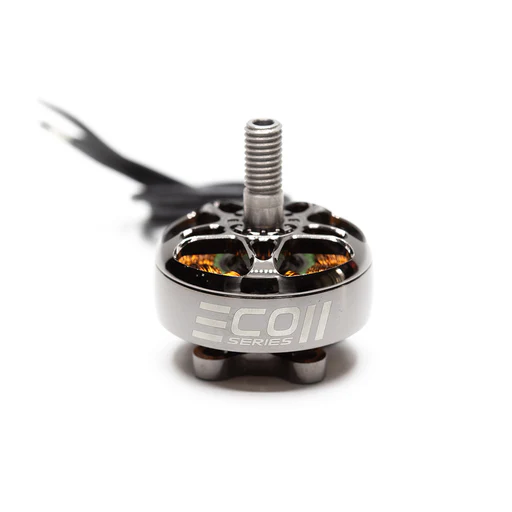
- Motors: Pair larger propellers with lower kV motors (e.g., 2207-1300kV or 2806.5-1300kV for 6S). This combination provides high thrust at lower RPMs, leading to greater efficiency and longer flight times.
Component Layout and Wiring for Reliability
- Antenna Separation: Crucial for minimizing interference. Your VTX antenna should be as far as possible from your control receiver antenna. If using 900MHz control and 5.8GHz video, this is less critical, but still good practice.
- GPS Placement: Mount the GPS module as high and as far away from noisy electronics (VTX, ESCs, motors) as possible to ensure a quick and accurate satellite lock.
- Clean Power: Use high-quality capacitors on your ESCs and main power lead to filter out electrical noise, which can interfere with your video and control signals. Route power wires away from signal wires.
Flight Controller & OSD Configuration for LR
- Flight Controller (FC): A robust FC like a HGLRC F722 or iFlight F7 is ideal.
- Betaflight/ArduPilot Settings:
- PID Tuning: A smooth, stable tune is paramount for efficient, long flights. Avoid aggressive PIDs that cause oscillations.
- GPS Setup: Configure your GPS for the correct protocol (UBLOX or NMEA) and baud rate. Ensure it's enabled for GPS Rescue.
- OSD Elements: Configure your On-Screen Display to show critical information: battery voltage, current draw, mAh consumed, RSSI (signal strength), GPS coordinates, distance from home, altitude, and a home arrow. This data is your dashboard for safe long range flights.
- Failsafe Configuration: Set up your failsafe to activate GPS Rescue (Return-to-Home) upon signal loss. This is your ultimate safety net.
Pre-Flight Checks and Initial Range Testing
Never skip this!
- Comprehensive Checklist:
- Check all physical connections, props, and screws.
- Verify battery voltage and health.
- Confirm GPS lock (at least 7+ satellites, 3D fix).
- Test failsafe (disarm motors, confirm RTH activation).
- Check OSD data accuracy (especially home point).
- Ensure video feed is clear and VTX power is set correctly.
- Initial Range Testing: Start with short-range flights in an open area to confirm everything works as expected. Gradually extend your range in controlled environments, paying close attention to RSSI and video quality, before attempting truly long flights.
Safety, Regulations, and Responsible Long Range Flying
Long Range FPV carries significant responsibility. Prioritizing safety and adhering to regulations is not optional; it's essential.
Navigating Local FPV Regulations and Airspace
Long range FPV safety tips start with understanding the law. Regulations vary drastically by country and region:
- VLOS (Visual Line of Sight): Many countries (e.g., USA FAA, EASA in Europe) mandate that drones must always be flown within the pilot's direct visual line of sight. This makes true long range FPV, by definition, often illegal without special waivers or permissions.
- No-Fly Zones: Always check airspace maps (e.g., AirMap, B4UFLY) to avoid airports, military bases, critical infrastructure, and other restricted areas.
- Registration & Licensing: Ensure your drone is registered and you hold any required pilot licenses for your region.
Always research and comply with your local drone laws. Ignorance is not an excuse.
Implementing Failsafe and Return-to-Home (RTH)
- Failsafe: This is your drone's programmed response to losing radio signal. For long range, it must be set to activate GPS Rescue/Return-to-Home.
- Return-to-Home (RTH): Your drone will ascend to a pre-set altitude, fly directly back to its launch point, and land automatically. Test RTH before every long range flight! Simulate a signal loss at a safe altitude and distance to ensure it functions correctly.
Spotters, Flight Plans, and Environmental Awareness
- Spotter: Flying with a dedicated spotter who maintains visual line of sight with your drone is a crucial safety measure, and often a legal requirement for FPV flights beyond a certain range.
- Flight Plans: Plan your route in advance. Identify potential obstacles, safe landing zones, and your expected return path. Consider wind direction and speed for efficiency.
- Weather: Never fly long range in high winds, rain, or low visibility. Check forecasts diligently.
- Environmental Awareness: Be mindful of wildlife, other aircraft (manned or unmanned), and people on the ground. Avoid flying over crowds or private property without permission.
Common Mistakes to Avoid in Long Range FPV
- Inadequate Testing: Not testing failsafe, RTH, or basic range before attempting a long flight.
- Poor Antenna Choices/Placement: Using cheap, unmatched, or improperly mounted antennas.
- Ignoring Battery Health: Flying with old, damaged, or insufficiently charged batteries.
- Pushing Limits Too Quickly: Attempting extreme distances without gradually building experience and confidence.
- Lack of Line of Sight: Flying behind hills, buildings, or dense foliage, which guarantees signal loss.
- Disregarding Regulations: Ignoring local laws and airspace restrictions.
Buyer's Guide: Recommended Gear for Your Long Range Journey
Ready to equip your drone for epic journeys? Here are some top recommendations for best long range FPV gear:
Top Control Link Systems for Extended Range
- ExpressLRS (ELRS):
- TX Modules: HappyModel ES24TX Pro (2.4GHz), BetaFPV ELRS Micro TX (2.4GHz), HappyModel ES900TX (900MHz).
- Receivers: HappyModel EP1/EP2 (2.4GHz), HappyModel ES900RX (900MHz).
- TBS Crossfire:
- TX Modules: TBS Crossfire Micro TX V2, TBS Crossfire Lite.
- Receivers: TBS Crossfire Nano RX, TBS Crossfire Diversity Nano RX.
High-Performance VTX and Antenna Combinations
- VTX:
- 5.8GHz: TBS Unify Pro32 HV (up to 1000mW), ImmersionRC TrampHV (up to 600mW).
- Antennas (long range FPV antenna guide):
- Drone Omni: Lumenier AXII 2/3, TBS Triumph Pro.
- Ground Station Directional: TrueRC X-Air 5.8 (patch), TBS Triumph Pro Patch, TrueRC Singularity 5.8 (helical for extreme range).
Reliable GPS Modules and Flight Controllers
- GPS Modules: Matek M8Q-5883, Matek M10-5883 (for superior accuracy and faster lock).
- Flight Controllers: HGLRC F722, iFlight F7, SpeedyBee F405 V3 – ensure they have dedicated UARTs for GPS and your control link.
Long-Lasting Batteries and Charging Solutions
- LiPo Batteries: Tattu R-Line 6S 1300mAh - 2200mAh, Gaoneng GNB 6S 1500mAh - 2200mAh.
- Li-Ion Packs: Custom-built 6S2P or 6S3P packs using high-quality cells like Molicel P42A (21700) or Samsung 30Q (18650).
- Chargers: ISDT Q8 Max, HTRC T240 DUO – capable of balancing and charging LiPo/Li-Ion safely.
Frequently Asked Questions About Long Range FPV
What equipment do I need to start long range FPV?
You'll need a reliable long range control link (ELRS or Crossfire), a powerful VTX with high-quality antennas (directional for your ground station), a GPS module with Return-to-Home capability, and high-capacity LiPo or Li-Ion batteries. A robust frame and efficient motors are also essential.
How can I maximize my FPV range and signal quality?
Focus on using high-gain, correctly polarized antennas on both your drone and ground station (directional for ground). Ensure a powerful VTX and a robust control link. Always maintain a clear line of sight (LOS) and understand the Fresnel zone. A well-tuned drone with minimal electrical noise also contributes significantly.
What are the most important safety tips for long range FPV?
Always perform thorough pre-flight checks, especially testing your failsafe and Return-to-Home functionality. Understand and comply with local drone regulations, fly with a spotter if possible, and meticulously plan your flight path. Never ignore battery health or weather conditions.
Is Long Range FPV legal everywhere?
No. Most aviation authorities (like the FAA in the US or EASA in Europe) require drones to be flown within Visual Line of Sight (VLOS) of the pilot. This means true long range FPV, where the drone goes beyond what you can see with your naked eye, often requires special waivers, permissions, or is restricted. Always check local regulations before flying.
What's the difference between ELRS and Crossfire for long range?
ELRS is an open-source system known for its high refresh rates, low latency, and excellent range at a more affordable price. It operates on 2.4GHz, 900MHz, and 433MHz. Crossfire is a proprietary TBS system operating on 900MHz, renowned for its rock-solid reliability, robust telemetry, and proven performance, albeit at a higher price point. Both are excellent choices for long range.
Embark on Your Long Range FPV Adventure
Long Range FPV is a rewarding discipline that combines technical skill with the thrill of exploration. By understanding the basics of gear selection, signal optimization, and paramount safety protocols, you're now equipped to take your FPV journey beyond the backyard. Remember to start small, test thoroughly, and always prioritize safety and regulatory compliance. The vast skies await your command!
Ready to build your ultimate long range FPV drone? Explore our other guides on specific component setups and advanced tuning techniques!
Copyright-safe raster media generated locally by FPVLovers