ESC Protocol Deep Dive: Bidirectional DShot, RPM Telemetry & Gate Drive Performance
A deep technical investigation into FPV ESC hardware topologies, DShot signaling protocols, and high-frequency gate drive switching dynamics.
1. ESC Hardware Architecture
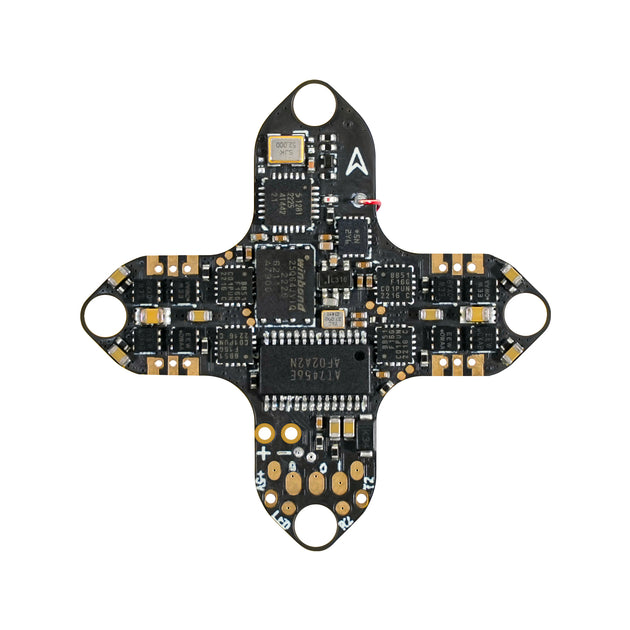
An Electronic Speed Controller (ESC) uses a microcontroller (e.g. STM32G0) to drive a three-phase bridge composed of six MOSFETs, controlling the brushless motor's coils.
[ESC Three-Phase MOSFET Topology]
           +---+       +---+       +---+
   V_BAT ->| Q1|------>| Q3|------>| Q5|
           +---+       +---+       +---+
             |           |           |
             +--(Phase A)+--(Phase B)+--(Phase C)
             |           |           |
           +---+       +---+       +---+
     GND ->| Q2|------>| Q4|------>| Q6|
           +---+       +---+       +---+
2. The DShot Communication Protocol
DShot is a digital protocol transmitting 16-bit packets from the FC to the ESC.
- DShot300: Operates at 300kbaud.
- DShot600: Operates at 600kbaud (Standard).
2.1 Bidirectional DShot & Telemetry
Enabling bidirectional DShot forces the ESC to transmit a telemetry packet back to the FC containing the exact motor RPM, measured via the back-electromotive force (Back-EMF) of the undriven phase.
3. Switching Frequency & Thermal Optimization
Higher PWM switching frequencies (e.g. 48kHz or 96kHz) smooth out motor operation and increase throttle resolution but increase switching losses in the MOSFET gates, leading to higher ESC temperatures.
RELATED GUIDES
Copyright-safe media generated locally by FPVLovers