LiHV vs LiPo Batteries: What Beginners Need to Know
A comparison guide explaining High Voltage LiPo (LiHV) cells, differences in max voltage (4.35V vs 4.2V), capacity gains, sag comparisons, and safety/degradation guidelines.
LiHV vs LiPo Batteries: What Beginners Need to Know
LiHV vs LiPo Battery for FPV: Differences & Performance
In the adrenaline-fueled world of FPV drones, every component choice can make or break your flight experience. Among the most critical decisions is your battery – the very heart of your quad. For years, LiPo batteries reigned supreme, but a newer contender, LiHV, has entered the arena, promising more power and longer flight times. But what exactly sets LiHV apart from traditional LiPo, and which one is the right choice for your FPV setup? Dive in as we unpack the fundamental differences, performance impacts, and crucial safety considerations to help you master your FPV power source.
Understanding the Fundamentals: LiHV vs. LiPo
At first glance, LiHV and LiPo batteries might look identical. They share similar form factors, capacities, and C-ratings. However, the critical distinction lies in their internal chemistry and, consequently, their maximum charge voltage. This seemingly small difference has significant implications for how they perform and how you handle them.
The Core Voltage Difference Explained
The fundamental distinction between LiPo and LiHV batteries revolves around their nominal voltage and, more importantly, their fully charged cell voltage.
- Standard LiPo Batteries: These batteries are designed to be safely charged to 4.2V per cell. This means a 4S (four-cell) LiPo pack will fully charge to 16.8V (4 x 4.2V), and a 6S pack to 25.2V (6 x 4.2V). Their nominal voltage, the voltage at which they spend most of their discharge cycle, is typically stated as 3.7V per cell.
- LiHV Batteries: Standing for Lithium-ion High Voltage, LiHV cells can safely be charged to 4.35V per cell. This translates to a higher overall pack voltage: a 4S LiHV charges to 17.4V (4 x 4.35V), and a 6S LiHV charges to 26.1V (6 x 4.35V). Their nominal voltage is often stated as 3.8V per cell.
This 0.15V per cell difference might seem minor, but it's the key to the performance benefits of LiHV.
LiPo Battery Chemistry and Characteristics
Traditional Lithium Polymer (LiPo) batteries have been the backbone of the FPV hobby for well over a decade. Their chemistry provides a good balance of energy density, power output, and a relatively stable discharge curve. LiPo batteries are known for:
- High Energy Density: Packing a lot of power into a relatively small and light package.
- High Discharge Rates (C-rating): Capable of delivering large currents quickly, essential for the demanding power needs of FPV motors.
- Established Reliability: Their widespread use means they are well-understood, and safety protocols are thoroughly documented.
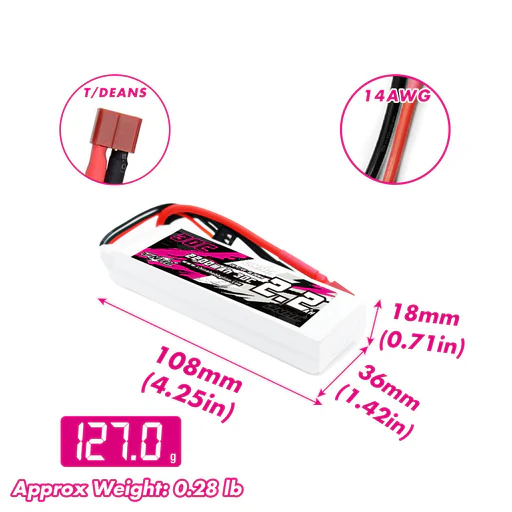
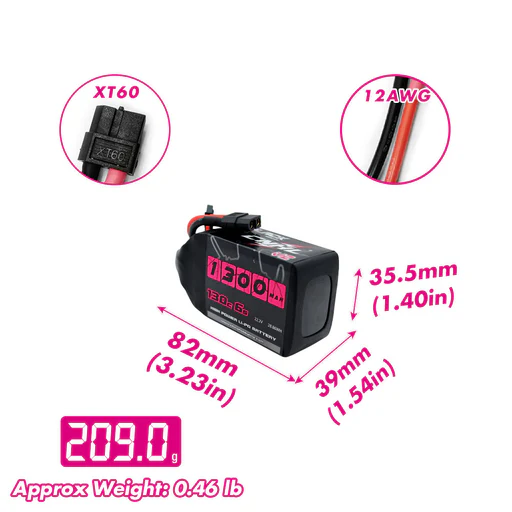
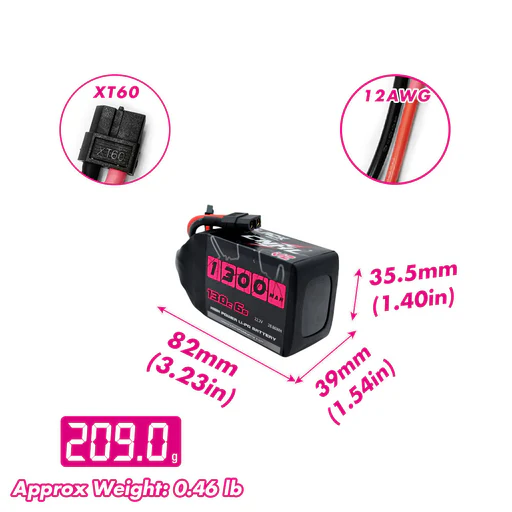
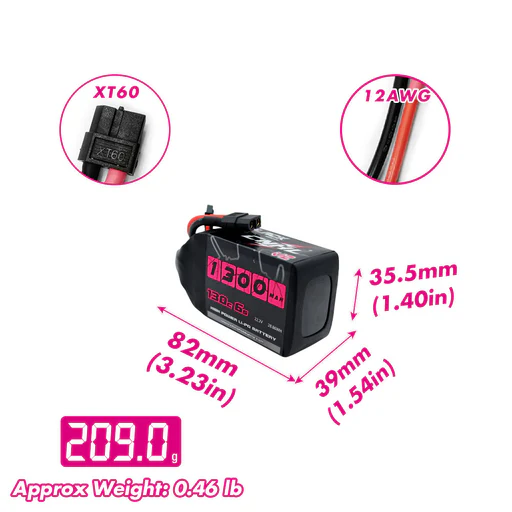
A typical 1300mAh 4S 100C LiPo battery, like a Tattu R-Line V3 or GNB LiPo, has been the go-to choice for 5-inch freestyle and racing drones, offering a dependable power source.
LiHV: The 'High Voltage' Evolution
LiHV batteries represent an evolution in lithium polymer chemistry. By making a slight modification to the electrolyte composition, manufacturers have enabled the cells to withstand a higher maximum charge voltage without compromising stability or safety (when handled correctly).
This higher voltage ceiling directly translates to more stored energy for a battery of the same nominal capacity (mAh). Since energy (Watt-hours) is calculated as Voltage (V) x Capacity (Ah), a higher voltage inherently means more energy is stored in the pack. This additional energy is the secret sauce behind the performance advantages of LiHV.
Performance on the Field: Flight Time, Power, and Punch
The theoretical differences between LiHV and LiPo manifest as tangible improvements in real-world FPV flying. From extended airtime to more aggressive throttle response, LiHV batteries can undeniably elevate your drone's performance.
Impact on Flight Time and Energy Density
The most immediately noticeable benefit of LiHV is the potential for extended flight times. Because LiHV batteries store more energy (Watt-hours) for the same nominal capacity (mAh) and physical size/weight, your drone can stay in the air longer.
For example, a 1500mAh 4S LiPo stores 1500mAh * 16.8V = 25.2 Wh (Watt-hours) when fully charged. A 1500mAh 4S LiHV, however, stores 1500mAh * 17.4V = 26.1 Wh. This 0.9 Wh difference represents a 3.5% increase in total energy. In practice, this can translate to a 5-10% increase in flight time, depending on your drone's efficiency and flying style. This means an extra 30 seconds to a minute of precious airtime, which can be a game-changer for long-range freestyle or cinematic flights.
Power Output and Throttle Response
Beyond just flight time, LiHV batteries deliver a noticeable boost in power output and throttle response, often described as more "punch." This comes from the higher average voltage maintained throughout the discharge cycle.
When your motors draw current, a higher voltage means they can achieve higher RPMs and deliver more thrust. The relationship is fundamental: Power (P) = Voltage (V) x Current (I). With a higher V, the motor can produce more P for the same I, or produce the same P with less I. This results in:
- Quicker acceleration: Your drone will feel snappier off the ground and during rapid changes in direction.
- Reduced voltage sag: Under heavy throttle, LiHV batteries tend to maintain a higher voltage for longer, preventing the "squishy" feeling some pilots experience with LiPo packs that sag heavily.
- Increased RPM: Motors like the BrotherHobby Avenger 2806.5 or T-Motor F60 Pro IV paired with a 6S LiHV will spin faster and produce more thrust compared to the same setup on a 6S LiPo, especially when pushed hard.
This extra "pop" is particularly appealing to freestyle pilots who crave aggressive maneuvers and racers looking for every competitive edge.
Weight-to-Power Ratio Considerations
LiHV batteries offer a slightly improved power-to-weight ratio. Since they pack more energy into a similar physical size and weight compared to a LiPo of the same nominal capacity, you get more performance for the same amount of mass.
For FPV racing, where every gram counts, this can be a significant advantage. A lighter quad with higher power delivery will accelerate faster and be more agile. For freestyle, it means more dynamic flight without adding bulk.
Discharge Rate (C-Rating) Implications
The C-rating of a battery indicates its maximum safe continuous discharge rate. While C-ratings apply to both LiPo and LiHV, the higher voltage of LiHV can subtly influence performance here.
Because P = V * I, a higher voltage means that for a given power demand from your motors, the battery needs to supply slightly less current (I). This can potentially lead to less stress on the cells, slightly reduced heat generation, and a tendency for the battery to experience less voltage sag under extreme loads, assuming the C-rating is accurately represented.
Charging and Safety: Mastering Your Power Source
While the performance benefits of LiHV are clear, they come with a crucial caveat: charging requirements and safety protocols are paramount. Mismanaging LiHV charging can lead to dangerous situations, just like with any lithium-based battery.
Specific Charging Requirements for LiHV Batteries
This is perhaps the most critical difference in practical terms: LiHV batteries demand a charger with a dedicated 'LiHV' charging mode.
Modern FPV chargers, such as the iSDT Q6 Nano, ToolkitRC M6D, or HOTA D6 Pro, feature selectable charging modes for LiPo, LiHV, LiFe, and sometimes LiIon. When charging a LiHV battery, you must select the LiHV mode. This tells the charger to terminate the charge cycle at 4.35V per cell instead of 4.2V per cell.
Practical Tip: Always double-check your charger settings before starting a charge. A quick glance at the screen to confirm "LiHV" is selected can prevent undercharging and ensure you get the full benefits.
Can You Use a LiPo Charger for LiHV? (And Vice Versa)
- Charging LiHV with a LiPo setting: If you charge a LiHV battery using a standard LiPo setting, the charger will stop at 4.2V per cell. Your LiHV battery will not be damaged, but it will not be fully charged, essentially performing like a standard LiPo for that flight. You'll miss out on the extended flight time and extra punch.
- Charging LiPo with a LiHV setting: DANGER! This is where it gets critical. NEVER charge a standard LiPo battery using a LiHV setting. Attempting to charge a LiPo to 4.35V per cell will result in severe overcharging. This can cause irreversible damage to the battery, lead to significant swelling (puffing), thermal runaway, and potentially a fire. Always verify the battery type before selecting the charging mode.
Essential Safety Practices for Both Battery Types
Regardless of whether you're flying LiPo or LiHV, adherence to strict safety practices is non-negotiable. The higher energy density of LiHV batteries means even greater caution is warranted.
- Never leave charging unattended: Batteries can fail rapidly. Always supervise the charging process and be ready to intervene.
- Use a fire-safe bag: Always charge and store your batteries in a LiPo-safe bag or metal ammunition box. This can contain a fire if a catastrophic failure occurs.
- Proper storage voltage: For both LiPo and LiHV, store your batteries at their recommended storage voltage of 3.8V-3.85V per cell. This significantly extends battery lifespan and reduces the risk of incidents. Most modern chargers have a "Storage" mode.
- Avoid physical damage: Punctures, severe impacts, or crushing can lead to internal shorts and thermal runaway. Inspect batteries for damage after every crash.
- Never over-discharge: Do not fly your batteries down below 3.3V-3.5V per cell under load. Over-discharging damages the cells and reduces their lifespan.
- Safe disposal: Dispose of damaged or old batteries safely by fully discharging them (e.g., with a salt water bath) and then taking them to a proper recycling facility.
Choosing Your Weapon: When to Fly LiHV, When to Stick with LiPo
The decision between LiHV and LiPo isn't about one being inherently "better" than the other; it's about which battery type best suits your flying style, budget, and FPV setup.
Ideal Scenarios for LiHV: Pushing Performance Limits
LiHV batteries are the prime choice for pilots who:
- Are FPV racers: Every millisecond and ounce of power counts. The extra punch and reduced sag can provide a competitive edge.
- Are aggressive freestyle pilots: For those who love power loops, dive bombs, and quick directional changes, the immediate throttle response and sustained power of LiHV provide that desirable "pop." Brands like CNHL Black Series LiHV or Lumenier LiHV are popular for this.
- Prioritize maximum flight time: If you're building a long-range cruiser or simply want a few extra minutes in the air for cinematic shots, LiHV offers a tangible benefit.
- Have compatible charging equipment: If you already own a charger with LiHV mode or are willing to invest in one, the barrier to entry is low.
When LiPo Still Shines: Reliability and Cost-Effectiveness
LiPo batteries remain an excellent choice and are often preferred by:
- Beginners: LiPo batteries are less demanding in terms of specific charging modes, making them slightly simpler to manage for newcomers.
- Pilots on a budget: LiPo batteries are generally more affordable than their LiHV counterparts, allowing you to buy more packs for the same money.
- Those prioritizing maximum battery longevity: While hotly debated, some argue that consistently charging to 4.2V per cell is less stressful on the battery's chemistry over hundreds of cycles compared to 4.35V, potentially leading to a longer overall lifespan (though proper care is key for both).
- Setups not fully utilizing the extra voltage: If your drone is underpowered or you fly very conservatively, the marginal gains from LiHV might not be worth the extra cost or charging complexity.
Compatibility with Your FPV Setup (ESC, Motors, VTX)
Before making the switch to LiHV, it's crucial to verify that your drone's components can handle the slightly higher voltage.
- ESCs (Electronic Speed Controllers): Most modern ESCs, especially those rated for 6S LiPo (25.2V fully charged), can typically handle 6S LiHV (26.1V fully charged) without issue. For instance, popular 4-in-1 ESCs like the SpeedyBee F405 V3 or HGLRC Zeus F7 are usually rated for 6S, meaning they can handle LiHV. However, always check the maximum input voltage specification of your ESC.
- Motors: Motors are generally tolerant to slight voltage increases. The higher voltage will simply make them spin faster, drawing more current. Ensure your ESCs can handle the increased current draw, and your motor KV is appropriate for the slightly higher voltage to avoid overheating.
- VTX (Video Transmitter) and Camera: Most modern VTXs and FPV cameras have wide input voltage ranges (e.g., 7-26V for a 6S system). As long as your components are rated for the equivalent LiPo cell count, they should be fine with LiHV. Always consult the product specifications.
Practical Tip: When in doubt, always check the individual component's specification sheet. If it explicitly states "Max 25.2V (6S LiPo)," then 26.1V LiHV might be pushing it. If it says "Max 27V" or similar, you're likely safe.
Longevity and Durability: Protecting Your Investment
A common concern among FPV pilots is whether charging to a higher voltage compromises the long-term health and cycle life of LiHV batteries. While there's a theoretical basis for this, proper care can largely mitigate potential issues.
Cell Health and Cycle Life Considerations
Charging any lithium-based battery to its absolute maximum voltage puts more stress on the cell chemistry. For LiHV, this means consistently charging to 4.35V per cell. This can potentially lead to a slightly reduced overall cycle life compared to a LiPo that is consistently charged to 4.2V per cell.
However, in the real world of FPV, battery lifespan is often more impacted by:
- Aggressive discharge cycles: Pushing batteries hard consistently.
- Over-discharging: Letting voltage drop too low.
- Physical damage: Crashes and impacts.
- Improper storage: Leaving batteries fully charged or fully discharged for extended periods.
By adopting good battery management practices, the difference in cycle life between LiPo and LiHV for the average FPV pilot is often negligible.
Optimal Storage Voltage for Both LiHV and LiPo
This is a universal rule for all lithium-based batteries: store them at 3.8V-3.85V per cell. This is the voltage at which the internal chemistry is most stable, minimizing degradation and puffing over time.
- Never store batteries fully charged for more than a day or two.
- Never store batteries fully discharged.
Always use your charger's "Storage" mode if you don't plan to fly within 24-48 hours.
Monitoring Battery Health: Signs of Wear and Tear
Regardless of type, all FPV batteries will eventually degrade. Here are signs to watch for:
- Puffing: Any noticeable swelling or puffiness of the battery pack is a clear sign of internal gas buildup and means the battery is unsafe to use. Retire it immediately.
- Excessive Voltage Sag: If your battery voltage drops dramatically under load, even when the resting voltage seems fine, its internal resistance has increased, and it can no longer deliver power efficiently.
- Significantly Reduced Flight Times: If a pack that used to give you 4 minutes now only gives 2 minutes, even with a full charge, it's nearing the end of its life.
- Uneven Cell Voltages: After charging, if one cell consistently reads much lower or higher than the others, it indicates a failing cell.
The FPV Pilot's Buyer's Guide: Selecting Your Next Battery
Choosing the right battery is crucial for maximizing your FPV enjoyment. Here's what to consider whether you're going LiHV or LiPo.
Key Specifications to Look For (C-Rating, Capacity, Cell Count)
- Cell Count (S-count): This determines the voltage of the pack (e.g., 4S for 14.8V nominal, 6S for 22.2V nominal). Match this to your drone's motor and ESC rating.
- Capacity (mAh): This indicates how much energy the battery can store. Higher mAh means longer flight times but also more weight. Common capacities for 5-inch drones are 1300mAh to 1500mAh for 4S, and 1050mAh to 1300mAh for 6S.
- C-Rating: This is the maximum continuous discharge rate. For FPV, look for high C-ratings (e.g., 75C, 100C, 120C) from reputable brands. A higher C-rating means less voltage sag under load, but be wary of exaggerated ratings from unknown brands.
Reputable Brands and Quality Assurance
The FPV battery market is vast, but quality varies. Investing in batteries from well-known and trusted brands is always recommended. They generally offer more consistent performance, accurate C-ratings, and better internal cell matching. Some popular brands include:
- Tattu (especially R-Line series)
- GNB (Gaoneng)
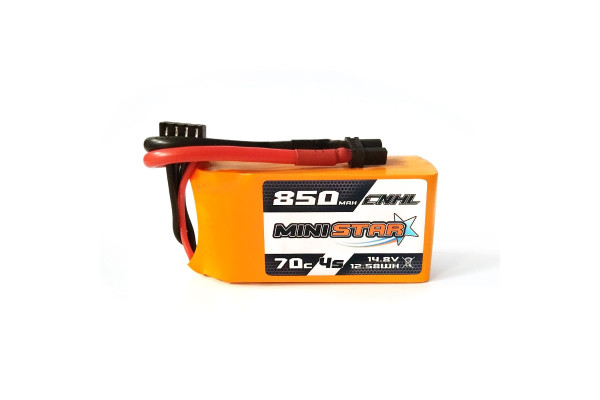
- CNHL (Black Series, MiniStar)
- Lumenier
- HRB
- Acehe
Cheaper batteries from unknown brands might save you money upfront, but they often sag more, degrade faster, and can pose greater safety risks.
Budget vs. Performance: Finding Your Sweet Spot
LiHV batteries typically cost slightly more than their LiPo counterparts due to the specialized chemistry and manufacturing processes.
- For budget-conscious pilots: LiPo batteries offer excellent performance for their price and are a reliable choice.
- For performance enthusiasts: If you're chasing every bit of extra power and flight time, and your budget allows, the added cost of LiHV is often justified by the improved flying experience.
Consider your flying style and how much you value the marginal performance gains against the additional investment.
Frequently Asked Questions (FAQ)
Can I mix LiHV and LiPo batteries on the same drone?
While technically possible if your components support the higher voltage, it's generally not recommended to mix battery types in terms of performance consistency. Always use packs of the same cell count and type for optimal results and predictable flight characteristics.
Does LiHV really give significantly more flight time?
Yes, LiHV batteries offer a measurable increase in flight time due to their higher energy density. The exact percentage varies based on drone setup and flying style, but a 5-10% increase is common. This translates to a noticeable difference in the air.
Is LiHV more dangerous than LiPo?
Due to their higher energy density, LiHV batteries require even stricter adherence to safety protocols, especially during charging. When handled correctly with the right equipment (a charger with a dedicated LiHV mode) and proper storage, they are just as safe as LiPo. Improper charging (e.g., charging a LiPo on LiHV mode) is the main risk.
What happens if I charge a LiHV battery with a LiPo setting?
Your LiHV battery will only charge to 4.2V per cell, effectively becoming a standard LiPo pack for that cycle. It won't be damaged, but you won't get the full performance benefits of LiHV (extra flight time and punch).
Do I need a special ESC for LiHV?
Most modern ESCs are designed to handle up to 6S (25.2V fully charged LiPo), which means they can typically handle 6S LiHV (26.1V fully charged) without issue. The small voltage increase is usually within the tolerance of well-designed ESCs. However, always check your ESC's maximum voltage rating to be absolutely sure. If your ESC is rated for "6S LiPo" only and has a strict voltage cutoff near 25.2V, it might be an issue. If it states a higher absolute voltage (e.g., "Max 27V"), you're generally safe.
Conclusion: Powering Your FPV Journey with Confidence
The choice between LiHV and LiPo ultimately boils down to your priorities: raw performance and extended flight time versus cost-effectiveness and established reliability. LiHV offers a tangible edge for those pushing the limits of FPV, whether in competitive racing or aggressive freestyle, providing that extra "punch" and precious seconds of flight. LiPo, on the other hand, remains a robust, dependable, and often more budget-friendly workhorse that continues to power countless FPV adventures.
By understanding their core differences, mastering safe charging practices with the right equipment, and considering your specific FPV setup and flying style, you can make an informed decision that not only elevates your flying experience but also ensures the longevity and safety of your valuable FPV batteries.
Which battery type powers your FPV adventures? Share your experiences and tips in the comments below, and don't forget to subscribe for more FPV insights!
Source: chinahobbyline.com
chinahobbyline.com