LiPo Performance Engineering: Internal Resistance, Voltage Sag & Thermal Physics
A scientific research paper exploring Lithium Polymer battery dynamics, examining internal resistance curves, high-current discharge sag, and thermal degradation risks.
1. The Chemistry of LiPo Discharge
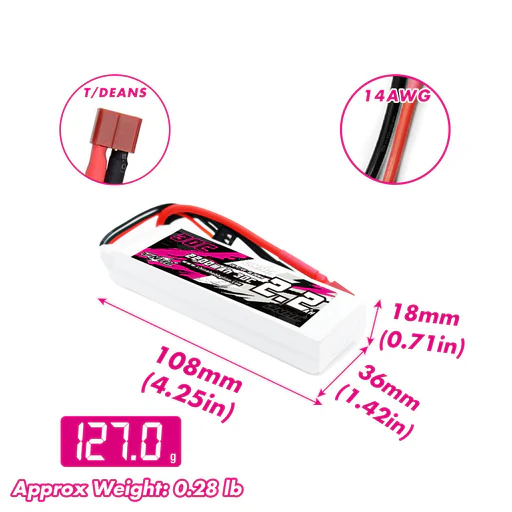
Lithium Polymer (LiPo) batteries store electrical energy chemically. During flight, lithium ions move from the anode to the cathode, creating an external current.
1.1 Internal Resistance (IR) & Ohmic Sag
Every cell possesses an internal resistance ($R_{int}$). When drawing a high current $I$ (often exceeding 100A in FPV punchouts), the terminal voltage drops instantly due to ohmic losses:
$$V_{terminal} = V_{oc} - I \cdot R_{int}$$
This voltage sag reduces overall motor RPM, limiting maximum thrust.
2. Decoding C-Ratings & Capacity
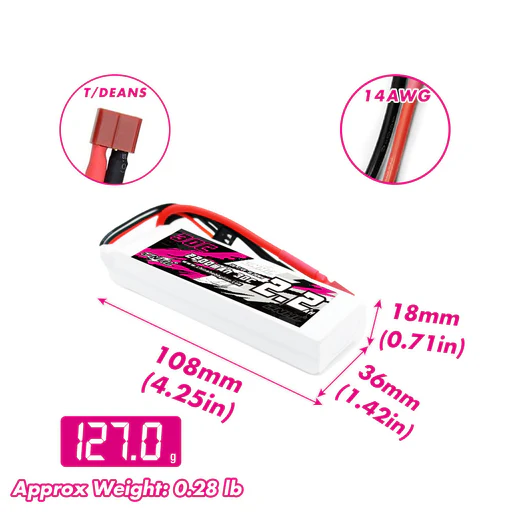
The C-rating represents the maximum continuous discharge rate of the pack:
$$I_{max} = \text{Capacity (Ah)} \cdot \text{C-Rating}$$
2.1 The C-Rating Myth
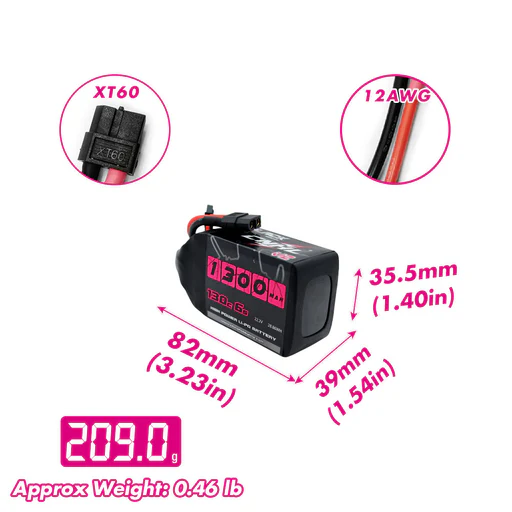
Many FPV packs claim 150C+ continuous ratings. However, continuous discharge at these levels would melt the internal nickel tabs within seconds. Real continuous C-ratings rarely exceed 40-50C.
3. Thermal Degradation & Swelling
Drawing current raises cell temperature. If the internal temperature exceeds $60^\circ\text{C}$, the polymer electrolyte degrades, producing gas that causes cell swelling (puffing) and irreversible capacity loss.
RELATED GUIDES
Source: chinahobbyline.com
chinahobbyline.com